
Building an Early-Fall Activewear Capsule With Relaxed Bottoms, Soft Layers and Performance Cores
Early-fall assortments are being merchandised as a season rather than a single drop. Across benchmark women's activewear brands, current-season new-arrival pages mix core performance pieces with knitwear, light outerwear, fleece layers and relaxed wide-leg or straight-leg trousers, and present them as one coordinated wardrobe instead of three unrelated categories. The development consequence is easy to miss: a capsule assembled one style at a time tends to arrive with several different fabric qualities, several separate minimum-order commitments, and colours that were approved separately and compared together for the first time in a lookbook.
HUCAI Sportswear develops women's activewear capsules through OEM and ODM programmes, and the pattern we see most often is not a design problem. It is a planning problem: the hero piece, the relaxed bottom and the soft layer are briefed separately, so the shared decisions — fabric family, colour story, sample order, MOQ planning — are made after the fact. This article explains how to plan an early-fall capsule in the order that keeps those decisions shared.
Quick Answer
An early-fall activewear capsule works better when every style has a defined role first — hero performance core, relaxed bottom, or soft layer — because role determines how many fabric families, colours and sample rounds the capsule actually needs. Plan two fabric families and two to three coordinated colours, sample the hero core first, and let the other pieces inherit those confirmed decisions rather than being approved in isolation.
Table of Contents
- Who This Article Is For
- Define Capsule Roles Before You Choose Styles
- Choose the Hero Performance Core First
- Add the Relaxed Bottom Without Breaking the Core
- Add a Soft Layer That Shares the Colour Story
- Consolidate Fabric Families and Colour Before Sampling
- Plan the Sample Sequence and MOQ Before You Start
- Decision Check: Is This Capsule Ready for a Sample Request?
- Founder's Technical Insight (Jean Yuan)
- FAQ
- Final Takeaway
Who This Article Is For
- Primary reader: growing women's activewear brands building a first or second seasonal capsule
- Secondary reader: established brands adding relaxed bottoms and light layers to an existing performance line
- Product stage: assortment planning and product definition, before the first sample is cut
- Problem being solved: a capsule that fragments into too many fabrics, too many colours and too many separate minimum-order commitments
- Who may not need this article: buyers adding one standalone style to an already-approved fabric and colour programme
What you gain from this article: a role-first planning sequence for an early-fall capsule, the fabric and colour questions to confirm before sampling, and a practical sample-order and MOQ structure that keeps a coordinated set genuinely coordinated in bulk.
Define Capsule Roles Before You Choose Styles
A seasonal capsule is not a short collection. It is a small set of styles whose roles are deliberately different, so one piece carries volume and repeat purchase while the others extend the wardrobe and the price ladder. When every style is briefed as a hero, the capsule competes with itself and the shared decisions become expensive.
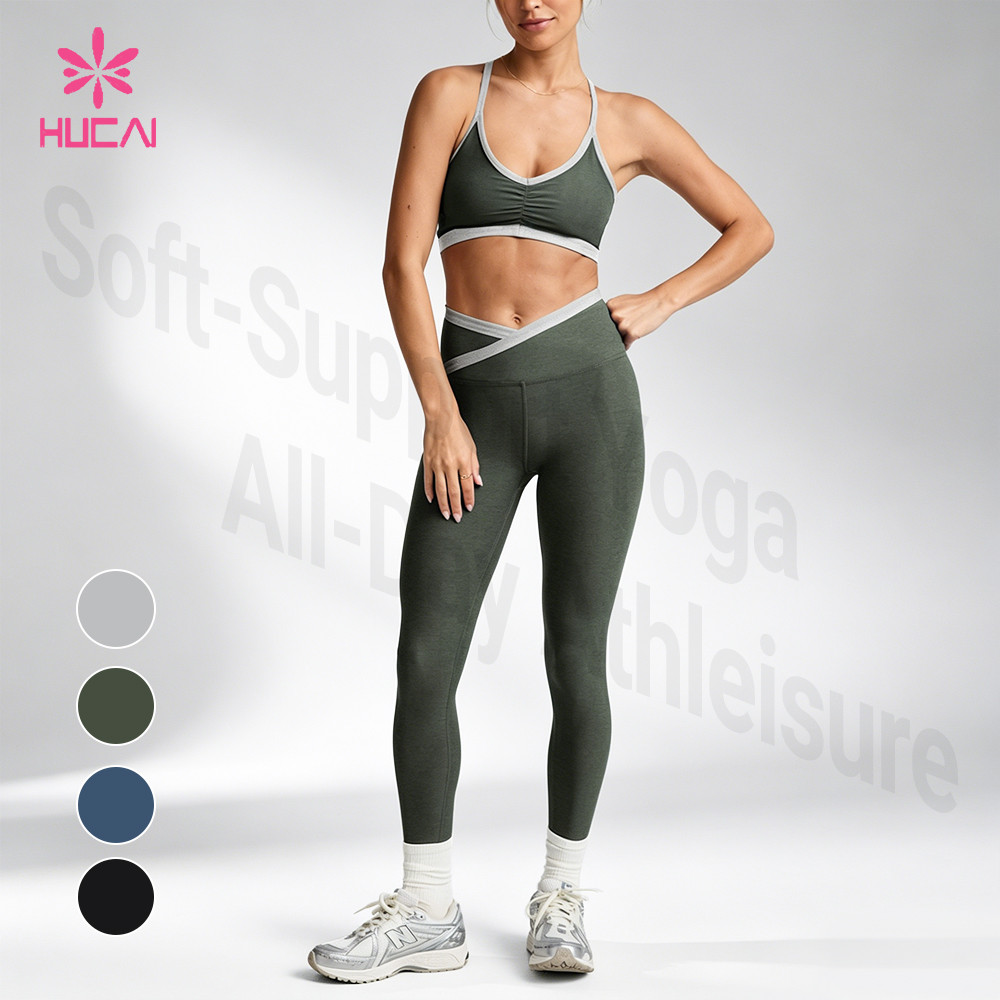
In practice an early-fall capsule resolves into three roles. The performance core is the piece a buyer would reorder: a leggings or sports bra in a fabric the brand intends to keep for at least two seasons. The relaxed bottom carries the capsule from training into commute and everyday wear. The soft layer makes it a season: a light fleece, half-zip or fitted zip layer that sits over the core without hiding it.
Writing those three roles down before style selection changes the questions a brand sends to a manufacturer. Instead of five separate style requests, the brief becomes one capsule request with a stated role for each piece and a stated relationship between them. That is where a coordinated programme such as a matching set collection becomes useful: the pieces are discussed as a system rather than as isolated products.
Choose the Hero Performance Core First
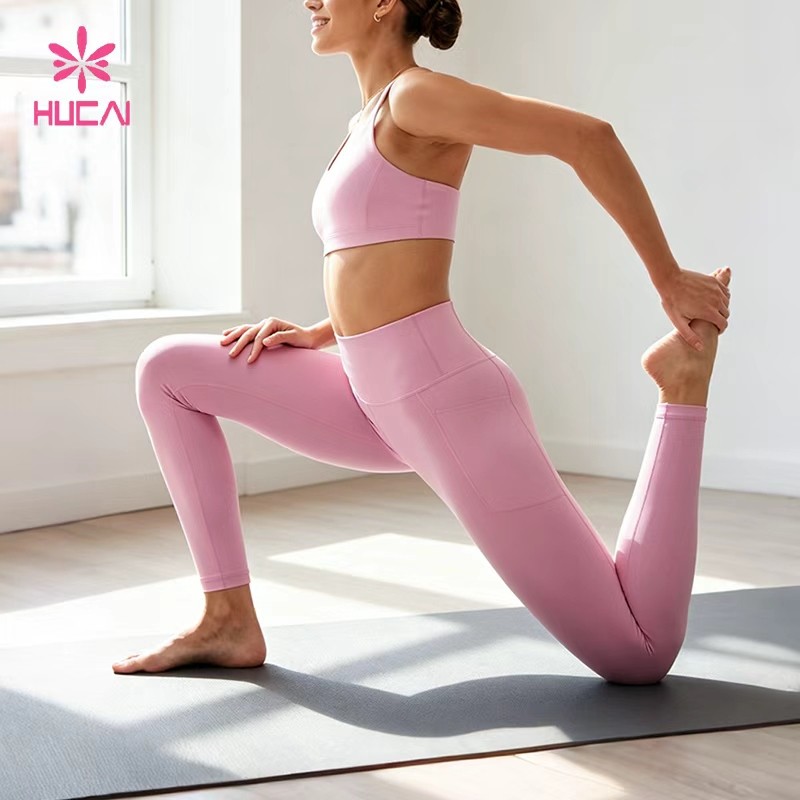
The hero core should be confirmed before anything else, because it fixes the fabric family, the colour standard and the fit language the rest of the capsule will inherit. In most women's programmes that means a leggings and a bra developed together, since the waistband and underband decisions interact with the same stretch and recovery behaviour of the base fabric.
Three questions decide whether a core piece can carry a season. First, recovery: how quickly the knit returns after being stretched through a full range of movement, and whether that recovery holds across the sizes the brand intends to sell. Second, opacity: whether the fabric stays appropriate under tension in the lighter as well as the darker colours in the capsule. Third, waistband stability: whether the rise and band construction hold position through sitting, hinge and squat patterns instead of rolling or migrating.
These are specification questions, not preference questions, and they are settled during development rather than at bulk. In HUCAI Sportswear's development reviews, the core is confirmed with a fabric direction, a measurement chart and a recovery target before any coordinated piece is briefed, so the relaxed bottom and the soft layer are developed against a fixed reference instead of a moving one. Buyers with a confirmed core specification usually move through an OEM leggings programme more directly.
Add the Relaxed Bottom Without Breaking the Core
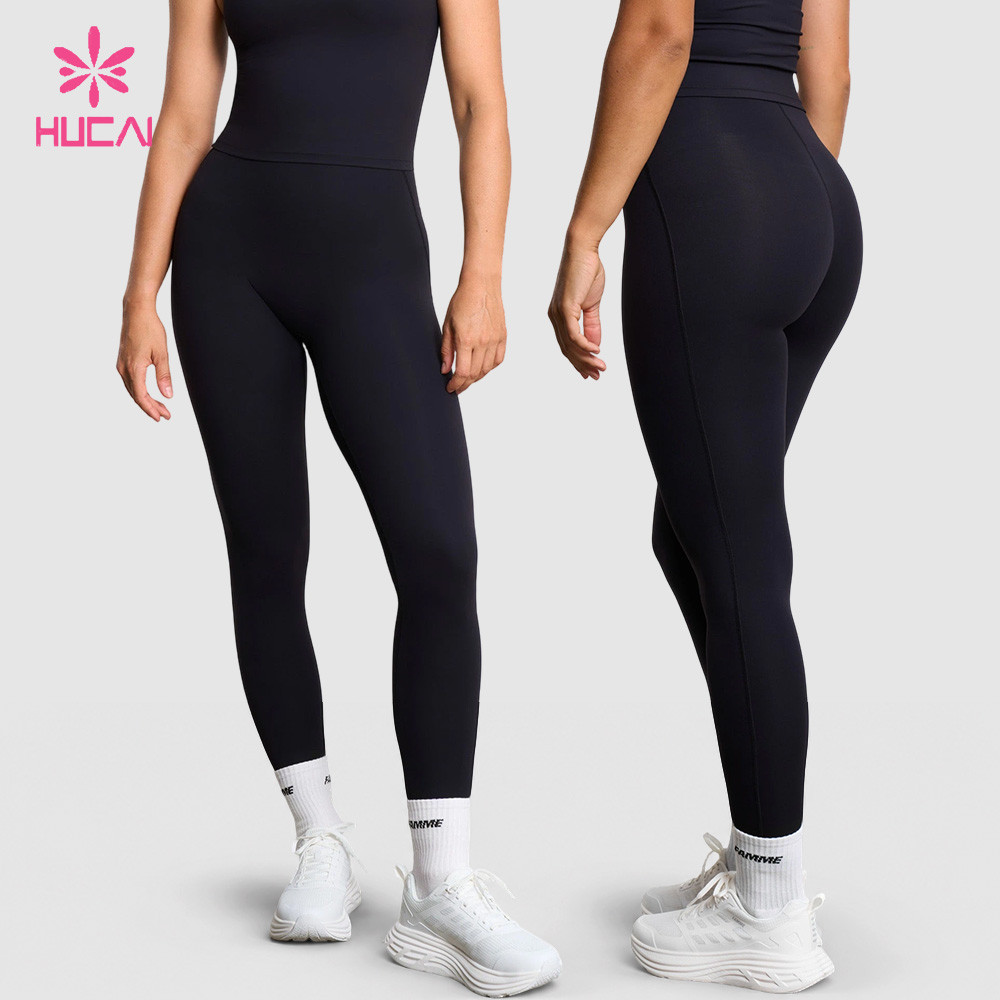
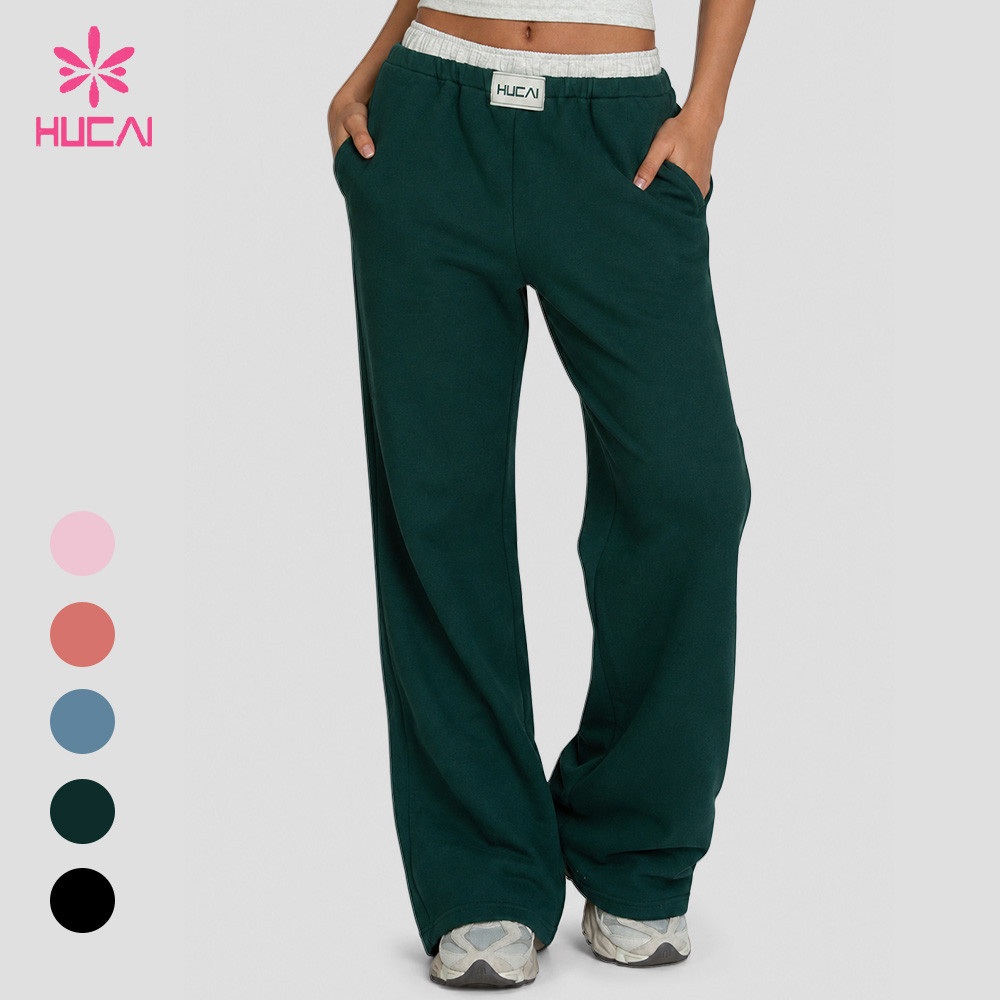
The mistake that costs the most in an early-fall capsule is treating the relaxed bottom as the core legging with a wider leg. Length and leg opening are the smallest part of what changes. A relaxed silhouette depends on drape, and drape depends on fabric weight and structure, so a knit chosen for compression and recovery usually behaves the opposite way in a wide-leg shape: it clings instead of falling, and the hem reads thin rather than deliberate.
Four construction points decide whether a relaxed bottom belongs in the same capsule as the core. The waistband has to hold a heavier garment without relying on compression, which usually means a different band construction rather than a thicker version of the existing one. The rise and crotch curve need to suit a seated or commuting posture as well as a standing one. The knee and hem have to keep their shape after long wear instead of bagging. And the pocket placement has to suit the way the garment is worn, not the way it is photographed.
For many brands the practical answer is a second fabric family dedicated to bottoms rather than a compromise fabric that performs weakly in both roles. That decision carries a real cost, so it has to be made before styles are finalised. Buyers comparing silhouettes can review the current relaxed jogger and wide-leg bottoms group against their assortment plan.
Add a Soft Layer That Shares the Colour Story
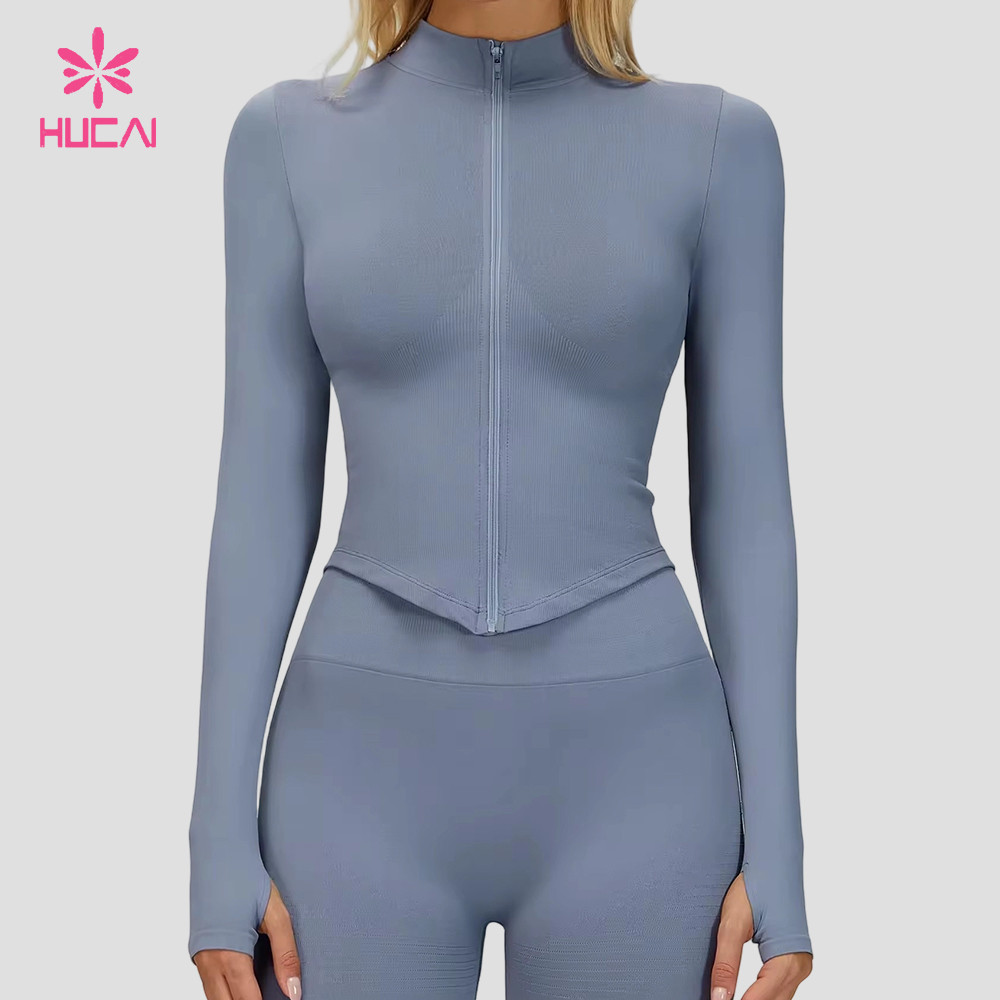
The third piece is what makes an early-fall capsule read as a season. A light layer — a half-zip, a fitted zip jacket or a soft brushed fleece — adds coverage and layering without turning the capsule into winter product. It also carries the highest visual risk, because it is the piece that sits next to the core in a lookbook and exposes any colour or proportion mismatch.
Two decisions dominate. The first is layering ease: the room designed into the chest, shoulder and upper arm so the layer sits over a bra or fitted top without compressing it. Layering ease is not the same as an oversized fit, and it is expressed as intended layering rather than a single measurement. The second is hem and sleeve placement: where the hem falls relative to the legging rise and waistband, and whether the sleeve ends early enough to keep the hands usable. A hem that lands on the widest part of the hip breaks the proportion of an otherwise correct set.
Because the layer usually carries the longest development cycle and the highest material uncertainty, it is better developed after the core is approved and alongside the relaxed bottom, so the three pieces are fitted against each other rather than independently. A layered programme such as the current light layering collection shows how hem, sleeve and colour decisions are typically grouped.
Consolidate Fabric Families and Colour Before Sampling
This is the module most capsules skip, and it decides whether the capsule ships as a set. Two fabric families and two to three coordinated colours is a practical working limit for a first seasonal capsule. Beyond that, lab dips multiply, trim and thread matching fragments, and distinct minimum-order commitments rise faster than the number of styles.
Colour is the harder half of the problem, because the same colour reference behaves differently on different fabric structures. A shade approved on a brushed fleece will not read identically on a smooth knit or a rib, and the difference shows most on a light neutral and a deep saturated tone. Industry colour-grading frameworks such as AATCC grey-scale assessment and the colourfastness test methods referenced under ISO and ASTM exist because colour agreement has to be judged under defined lighting and against a defined tolerance rather than by eye in a showroom.
Consumer feedback in fitness and activewear communities raises the same point: matching sets that looked coordinated in product photography arriving with pieces that read as different shades in daylight. The cause is rarely one bad dye lot. It is normally a colour standard approved once against one fabric and applied across three. HUCAI Sportswear therefore treats colour as a per-fabric decision inside one capsule, with the tolerance agreed for each fabric direction rather than assumed across the programme, and fabric selection is reviewed against the intended garment role before the colour standard is locked. The current fabric selection guidance sets out how that review is structured.
Plan the Sample Sequence and MOQ Before You Start
Sample order matters more in a capsule than in a single-style project, because each round carries fabric and colour decisions forward. The practical sequence is: sample the hero core first and confirm fabric, recovery, opacity and fit; then sample the relaxed bottom against that confirmed core; then sample the soft layer last, so layering ease and hem placement are judged against real approved pieces rather than against a measurement chart alone.
Timing should be planned, not assumed. Sample development usually takes about 10-15 days, depending on style, fabric, trim, logo, revision requirements and confirmed details, and that figure refers to a round rather than to a whole capsule. Bulk production often takes about 25-30 days after pre-production details and approvals are confirmed, depending on project scope, materials, processes, quantity and scheduling. A multi-piece capsule therefore needs its sample rounds sequenced deliberately, because running all pieces in parallel multiplies revisions instead of reducing them.
MOQ is usually where a good capsule plan becomes a commercial one. The current public MOQ starts from 200 pcs per style, and the final colour, size, fabric, trim and customization planning depends on the confirmed project. Two fabric families and two to three colours across four to six styles can be planned at that baseline; six families and six colours across the same number of styles usually cannot. HUCAI Sportswear reviews MOQ per capsule rather than per style during project review, so the fabric and colour split is visible before sampling starts, and the sample development policy explains how revision rounds and approvals are handled across a multi-piece programme.
Decision Check: Is This Capsule Ready for a Sample Request?
Before requesting samples, confirm the following:
- Role clarity: every style is labelled hero performance core, relaxed bottom or soft layer, and no two styles compete for the same role.
- Hero core confirmed: fabric direction, recovery target, opacity requirement, waistband construction and size grading are agreed before the other pieces are briefed.
- Fabric families capped: the capsule is planned around a defined number of fabric families, and any additional family is justified by a garment role rather than by preference.
- Colour standard per fabric: each colour is approved against each fabric it will be produced in, with an agreed tolerance and a defined light source for assessment.
- Sample sequence and MOQ mapped: the order of sample rounds, the revision owner and the style-level minimum quantity are written down for the whole capsule, not for the first style only.
If three or more criteria are confirmed, the direction is ready for a structured sample request. If fewer than three are resolved, additional development planning will reduce sample revision cycles and control cost.
Development Next Step
If your capsule has a confirmed direction and reference pieces, we can review the programme as one project. For buyers starting from reference images, a collection concept or a seasonal theme, share the images, the target market, the intended roles for each piece and your priority colours, and we will develop the capsule through an ODM development programme. For buyers who already hold a tech pack, a measurement chart and confirmed fabric requirements for the core piece, send the specification set and we will review it through OEM service before the coordinated pieces are added.
Founder's Technical Insight: Jean Yuan's Development Note
From Jean Yuan's bench: when brands bring us an early-fall capsule, the failure that reaches the sample room most often is not a fit problem. It is a coordinated-set problem, and it usually starts with the colour standard.
The mechanism is straightforward once you see it on the table. A brand approves a colour on the hero core fabric — usually a smooth, lightly brushed knit — and the same reference is then applied to a relaxed bottom in a heavier looped or flecked knit and to a soft layer in a brushed fleece. Those three fabrics take dye and reflect light differently. On the flat swatch they look close. On a finished garment in daylight, the fleece reads lighter than the knit and the heavier bottom reads deeper, so a set approved as one colour arrives looking like three. If the capsule also carries a contrasting trim, the gap becomes visible at once, because contrast has no tolerance for a two-to-three millimetre drift in shade.
The second mechanism is shrinkage behaviour. Two fabric families in one capsule rarely share the same relaxation and shrinkage profile. If the core and the relaxed bottom are cut from one approved pattern block without separate shrinkage allowances, the wash test separates them: one piece relaxes in length, the other holds, and the set no longer matches in bulk even though every measurement was correct on the cutting table.
What we watch closely in the sample room before bulk yardage is released is therefore a short, unglamorous list. Confirm the colour standard separately for each fabric in the capsule, under a stated light source, with the acceptable tolerance written down. Confirm that live pieces from each fabric family have been washed before approval, not only the flat fabric. Confirm that each family has its own shrinkage allowance built into the pattern rather than inheriting one from the hero core. Confirm that trims, threads and elastic are matched to the nearest fabric they sit against, not to the hero fabric.
Clearing those four points before cutting bulk is usually the difference between a capsule that ships as a set and one that ships as three products. HUCAI Sportswear builds that colour, shrinkage and trim review into pre-production confirmation, so the checks are recorded against the capsule rather than repeated style by style.
FAQ
How many styles should an early-stage capsule include?
Four to six styles is a practical range for a first seasonal capsule: commonly two performance cores, one or two relaxed bottoms and one or two soft layers. The number matters less than the role split — each style should add a distinct role rather than repeat one with a different trim.
How many fabric families are practical?
Two fabric families are practical for most first capsules; three is the usual ceiling once a dedicated bottom weight is genuinely required. Each additional family adds its own dyeing behaviour, shrinkage profile, minimum quantity and trim matching, so the count should be justified by garment role rather than by preference.
Should all pieces share colours?
They should share a colour story, but not necessarily an identical colour approval. Because the same reference can appear differently on different fabric structures, the workable approach is two to three coordinated colours, each approved separately for each fabric it will be produced in, with a written tolerance.
Which style should be sampled first?
Sample the hero performance core first. It fixes the fabric direction, recovery and opacity targets, colour standard and fit language that the other pieces inherit. Sampling the relaxed bottom and the soft layer after the core is approved reduces the number of revision rounds compared with running all three in parallel.
How can MOQ be consolidated across a capsule?
Consolidate by limiting fabric families and colours rather than by increasing the quantity of a single style. The current public MOQ starts from 200 pcs per style, and final colour, size, fabric, trim and customization planning depends on the confirmed project, so a capsule planned around two families and two to three colours is easier to place than one split across six colour approvals.
Do relaxed bottoms need a different fabric from the core leggings?
Usually yes, if the silhouette is genuinely wide-leg, straight-leg or heavily relaxed. A fabric chosen for compression and recovery tends to cling rather than drape, so it rarely produces the intended fall in a relaxed shape. A dedicated bottom weight is normally a cleaner solution than a compromise fabric that performs weakly in both roles.
What causes set colours to look different in bulk?
Most often the colour standard was approved on one fabric and applied to several. Different knit structures, surface finishes and weights take dye and reflect light differently, and the gap shows most in light neutrals, deep saturated tones and any capsule carrying a contrast trim. Approving each colour against each fabric it will be produced in removes the most common cause.
How long does an early-fall capsule take to develop?
Plan it as a sequence rather than a single lead time. Sample development usually takes about 10-15 days per round, depending on style, fabric, trim, logo, revision requirements and confirmed details, so a four-to-six-style capsule normally runs two to three sequential rounds. Bulk production often takes about 25-30 days after approvals are confirmed, depending on project scope, materials, quantity and scheduling.
Final Takeaway
An early-fall capsule is a planning decision before it is a design decision. Define the three roles, confirm the hero performance core first, and let the relaxed bottom and the soft layer inherit the fabric, colour and fit standards the core has already proved. Cap the programme at the number of fabric families and colours it can support, approve colour per fabric rather than once, and sequence the sample rounds so each carries confirmed decisions forward instead of reopening them. Done in that order, the capsule reaches bulk as one coordinated set; done in the other order, it arrives as four products that happen to share a lookbook.
About HUCAI Sportswear
- Founded in 1998, specializing in women's activewear and sportswear manufacturing
- OEM and ODM development support for sports bras, leggings, shorts, tops, relaxed bottoms and light layers
- Capsule-level colour, fabric and shrinkage review built into pre-production confirmation
- Structured sample development and sample-to-bulk consistency control
- AQL 2.5-based inspection as part of the quality workflow
Current certification information can be reviewed during supplier evaluation based on the project and documentation requirements. Recycled or certified material options can be reviewed based on project requirements.