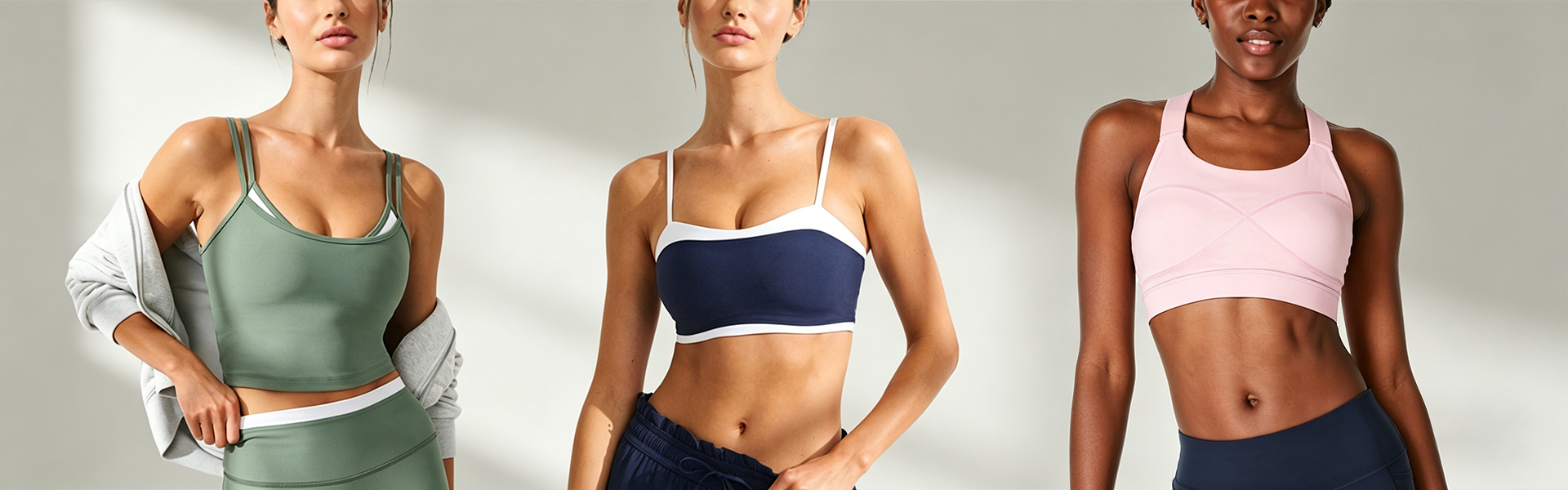
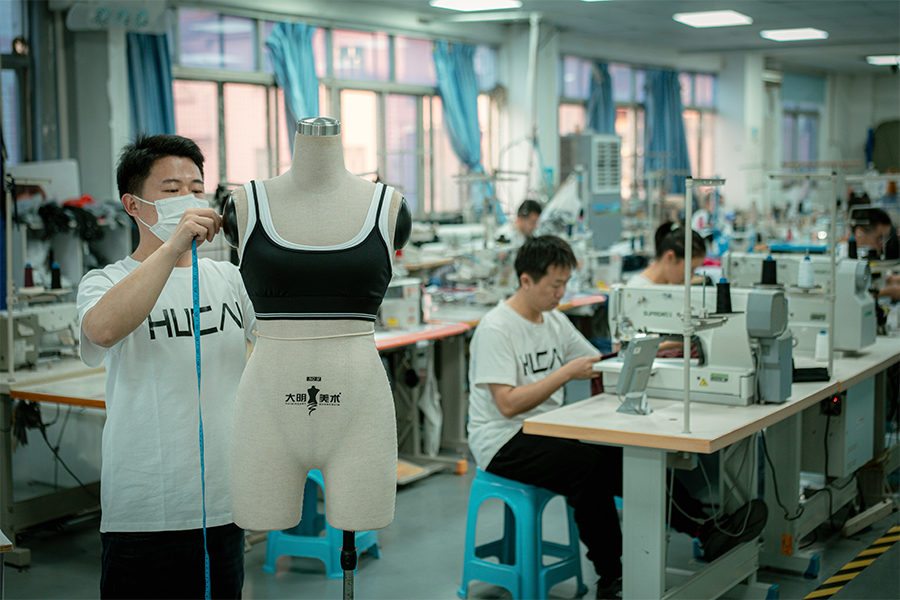
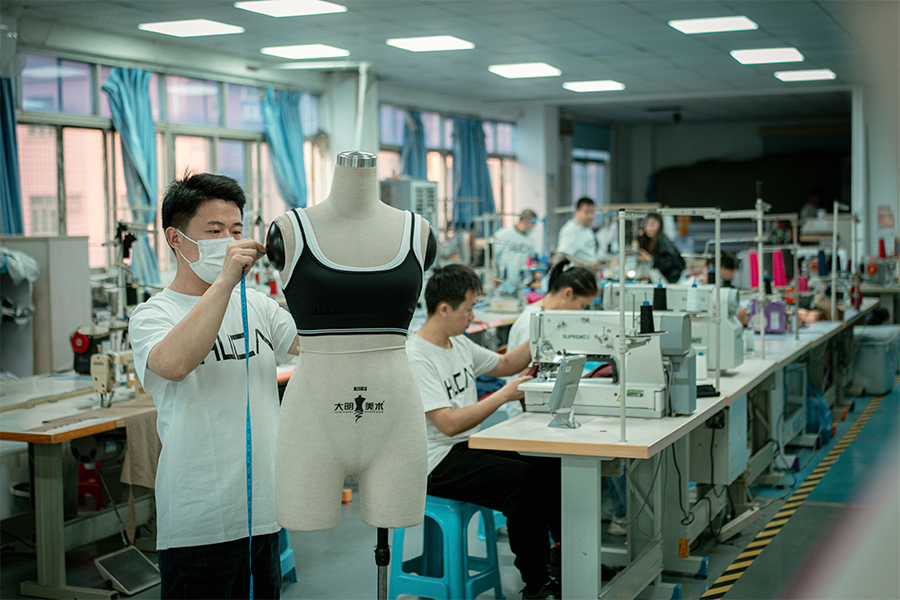
TO BE A LEADER OF SPORTSWEAR MANUFACTURER, CREATE MORE VALUES FOR SPORTS BRANDS

Custom Sports Bra Development System for Private Label Brands

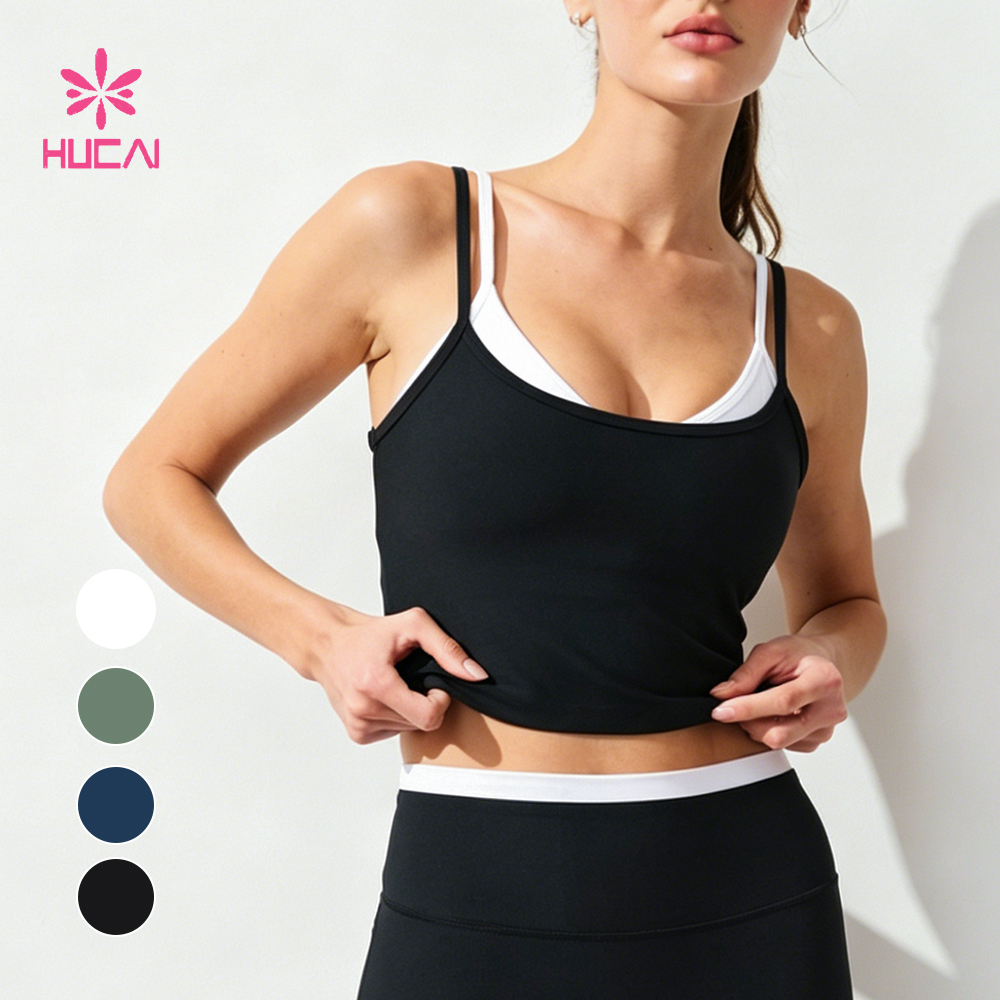
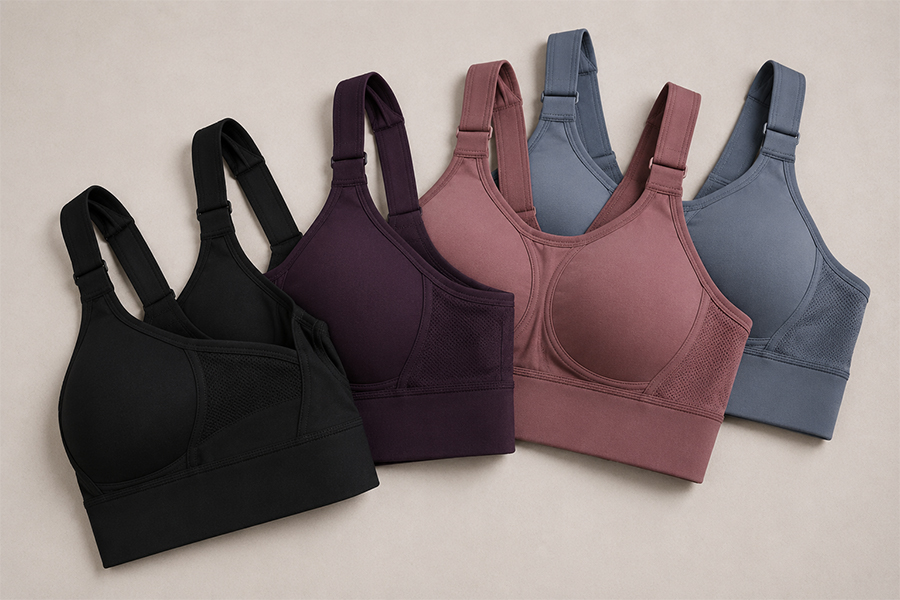
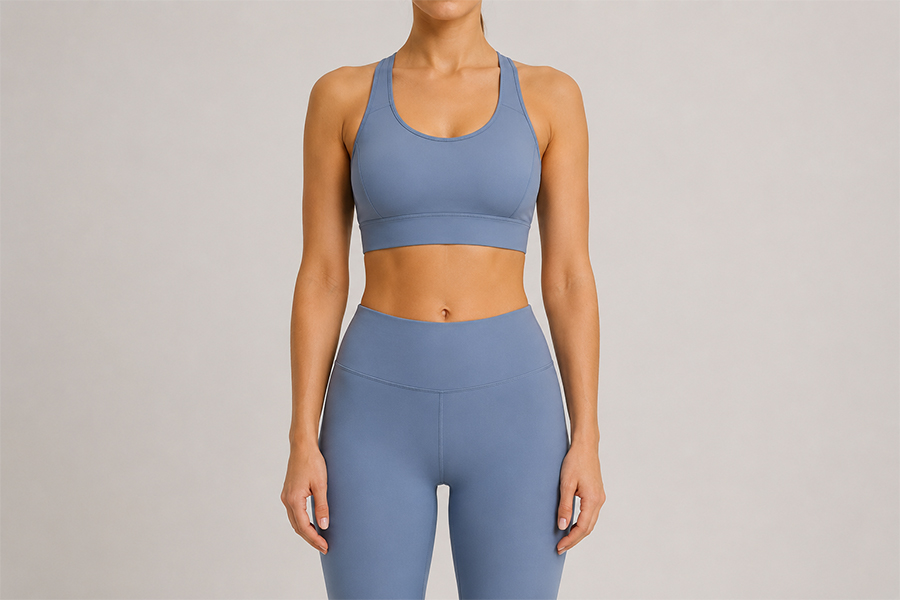
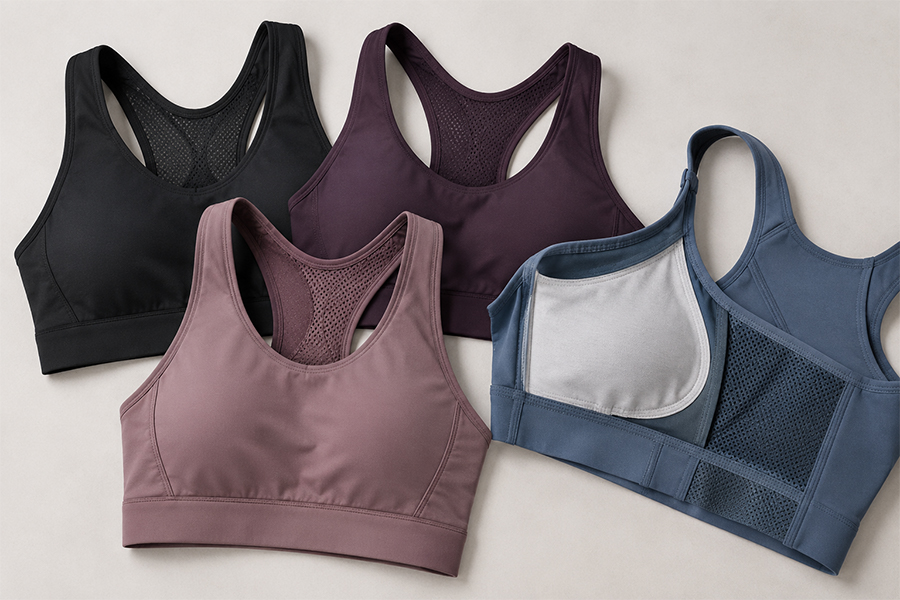
Develop private label sports bras with clearer decisions on support level, underband pressure, strap structure, cup coverage, padding, lining comfort, fabric recovery, fit review, and sample-to-bulk consistency. HUCAI sportswear supports women’s sportswear brands with OEM, ODM, and private label sports bra development, from tech packs or reference images to sample-ready details and bulk production follow-up.
Home / Sports Bra Development

Who This Sports Bra Development Page Is For

Different women's activewear brands enter sports bra development at different stages. Some already have tech packs, some have reference bras, and some are still defining support level, underband structure, strap type, neckline coverage, padding direction, lining comfort, or private label branding details.

Sports Bra Styles by Use Scenario and Development Direction

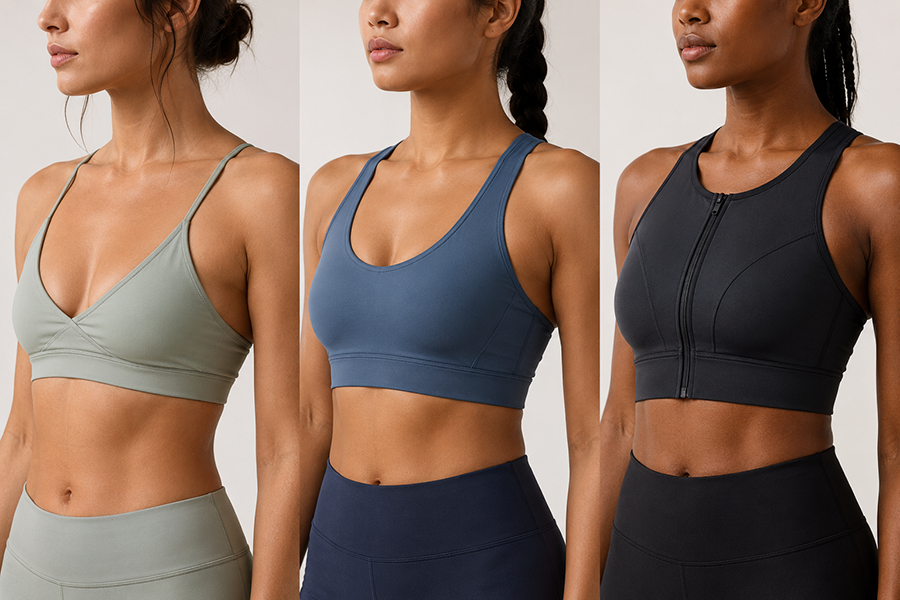
Different sports bra styles should not be developed from the same support assumption. Yoga, studio, training, running, HIIT, all-day athleisure, and matching set bras each require different decisions on support level, underband pressure, strap load, neckline coverage, padding, lining comfort, and sample review.
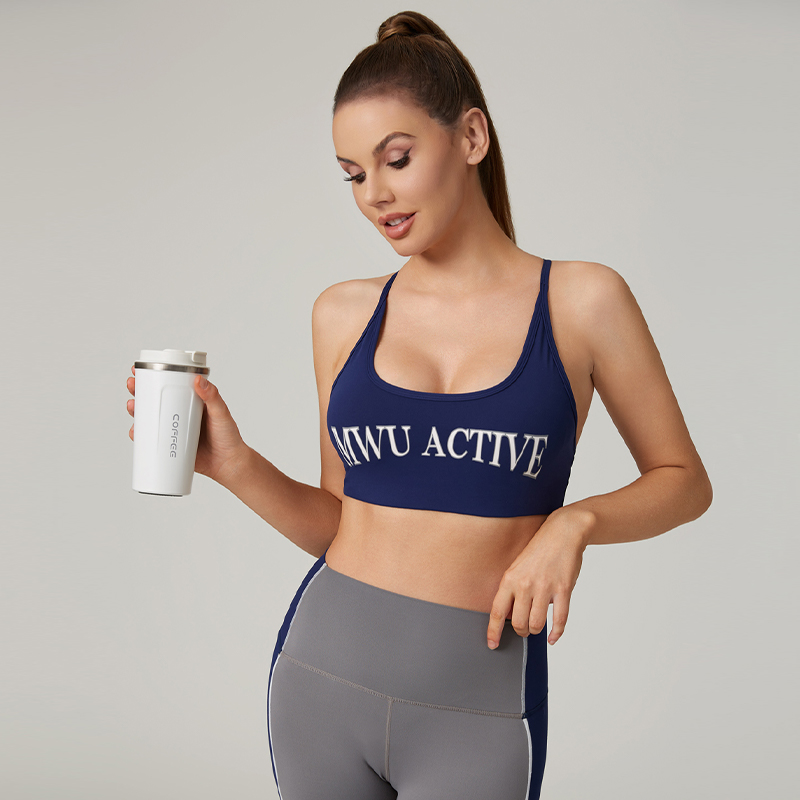
Low-support yoga bra

Low-Support Yoga Bra

Review soft handfeel, gentle hold, low seam pressure, smooth neckline, light padding, and distraction-free studio comfort.

Soft-Support Pilates Bra

Soft-Support Pilates Bra

Review comfort pressure, stretch recovery, neckline coverage, underband softness, and light support for controlled studio movement.

Medium-support training bra

Medium-Support Training Bra

Review fabric recovery, underband stability, strap load, cup coverage, lining comfort, and movement support for gym and studio training.

High-Support Running Bra

High-Support Running Bra

Review stronger underband hold, strap stability, bounce control, coverage, compression balance, and size grading before sampling.

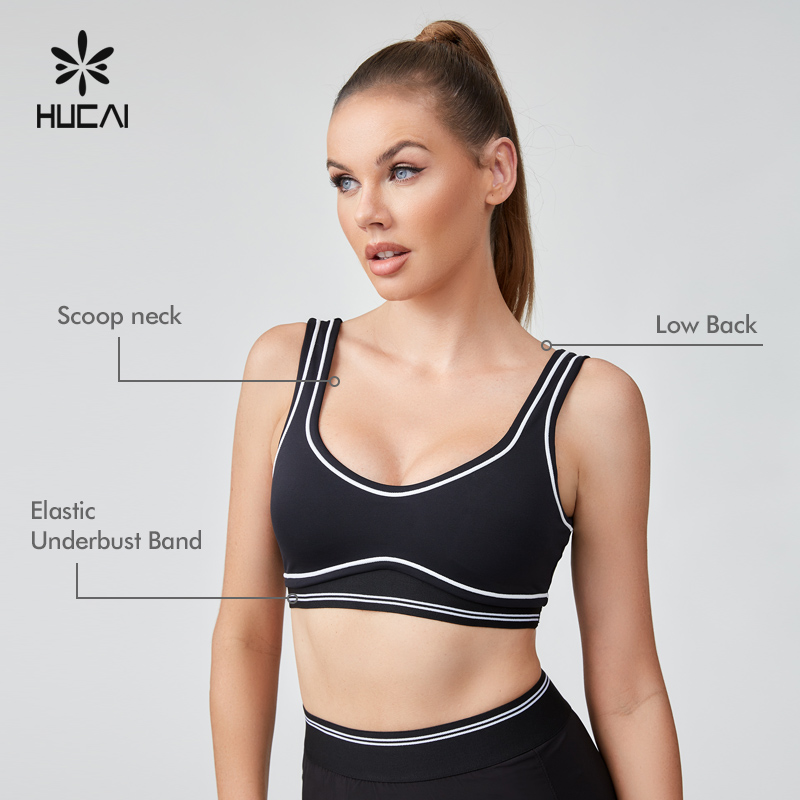
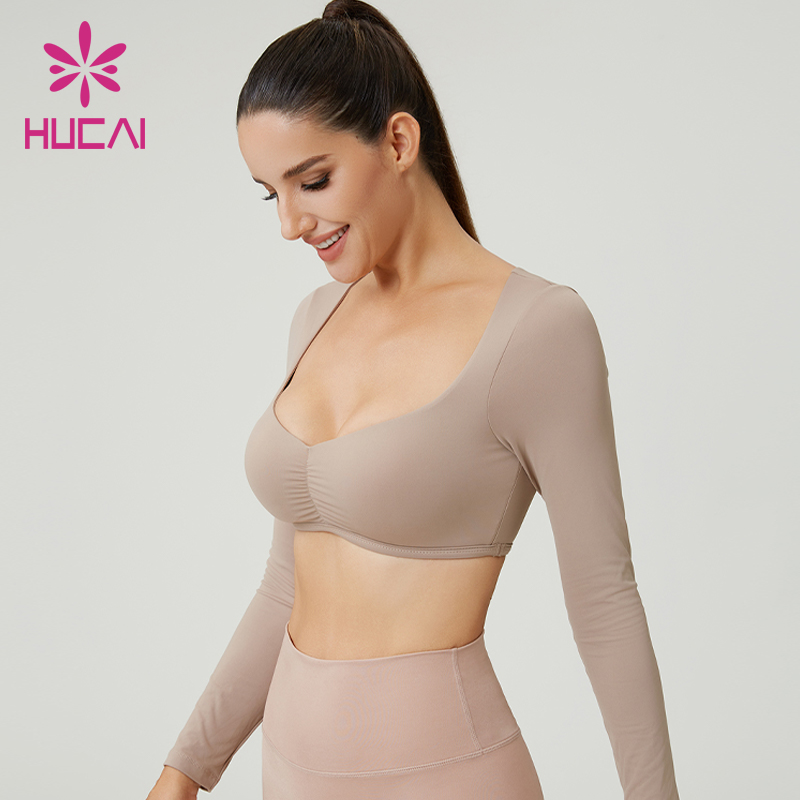
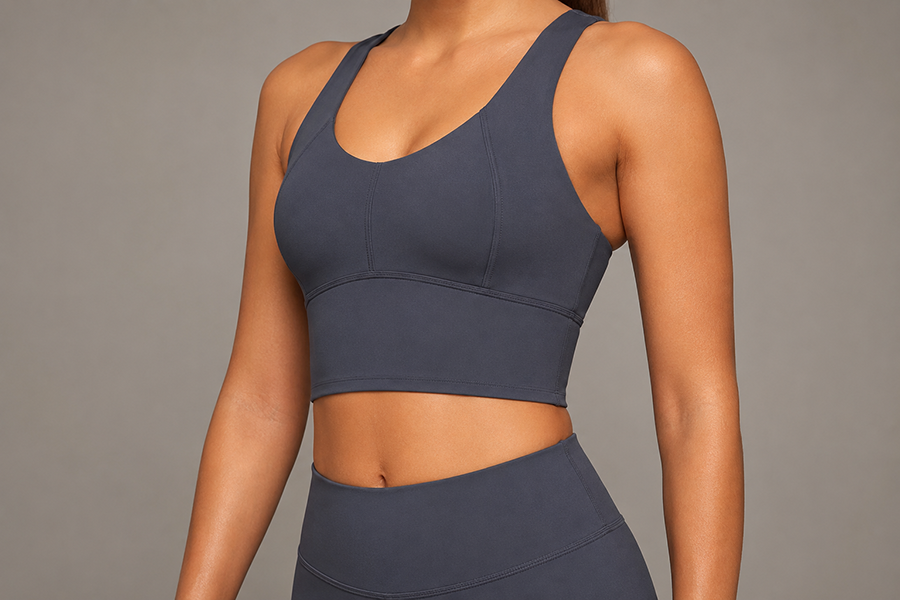
Longline Sports Bra

Longline Sports Bra

Review longline underband length, body coverage, hem pressure, fabric recovery, support feel, and matching set styling.

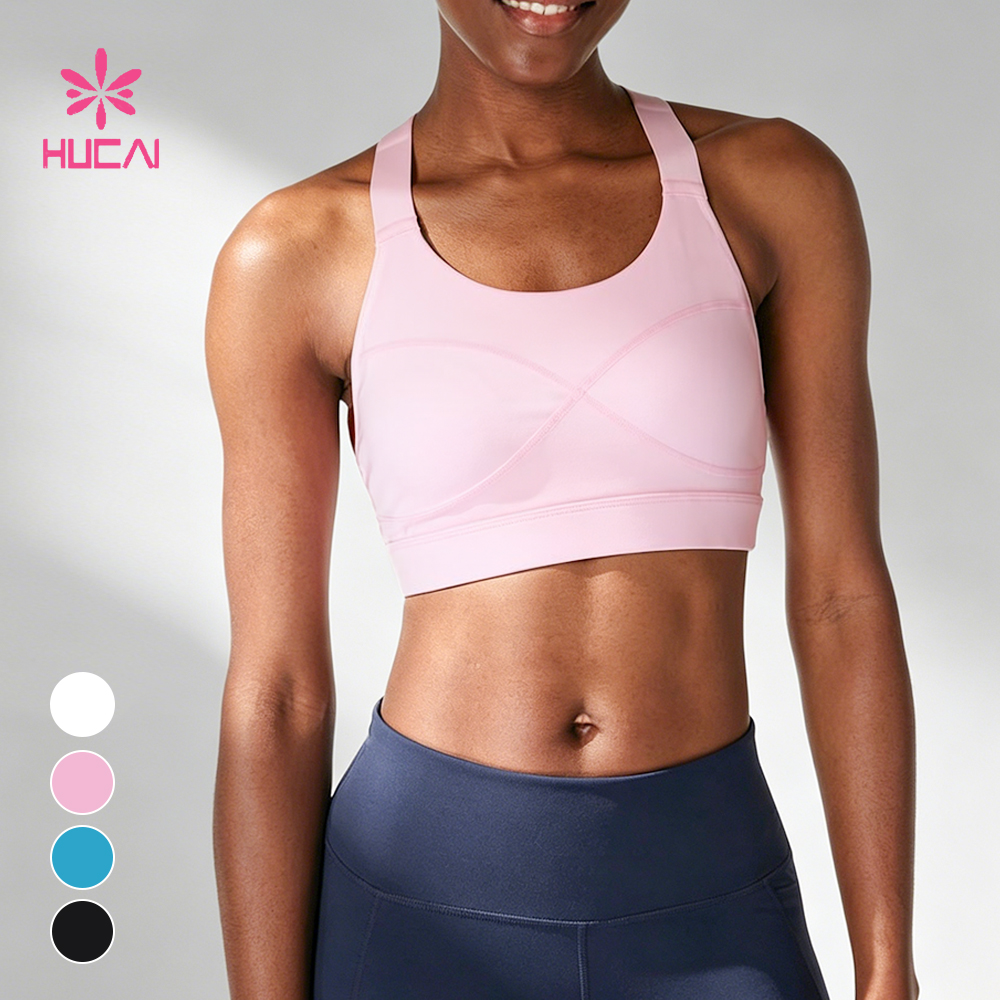
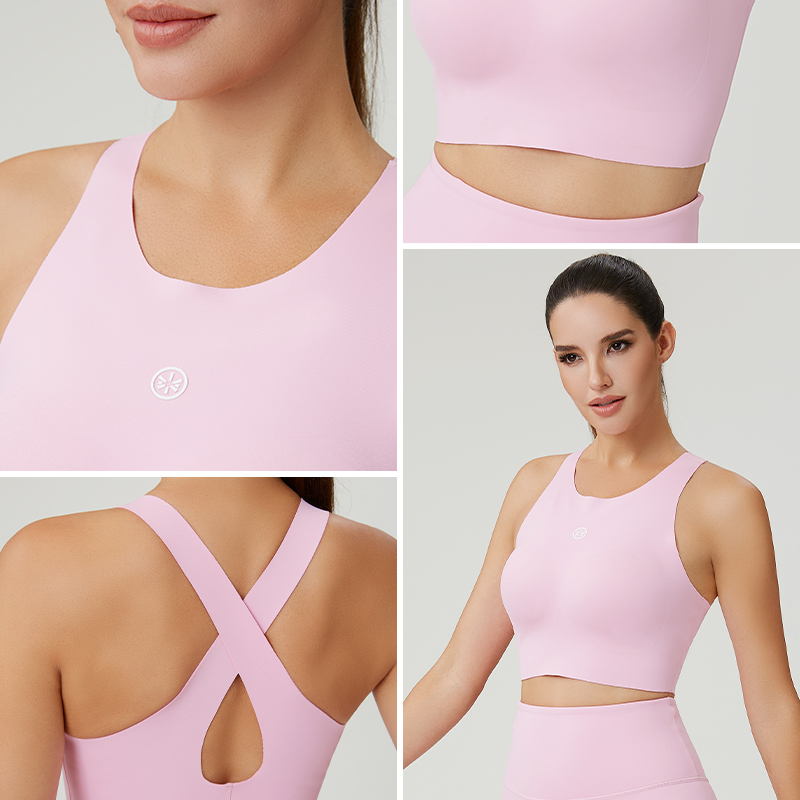
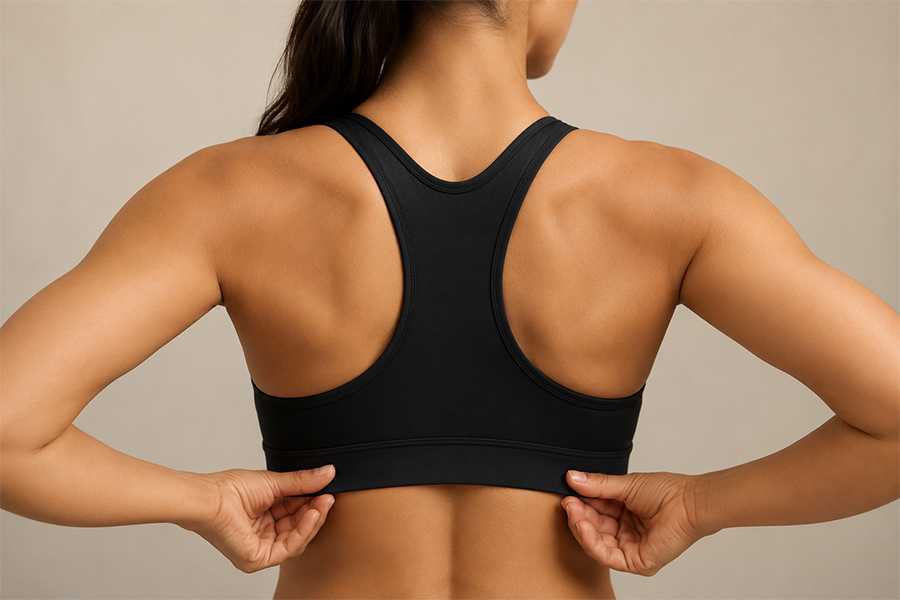
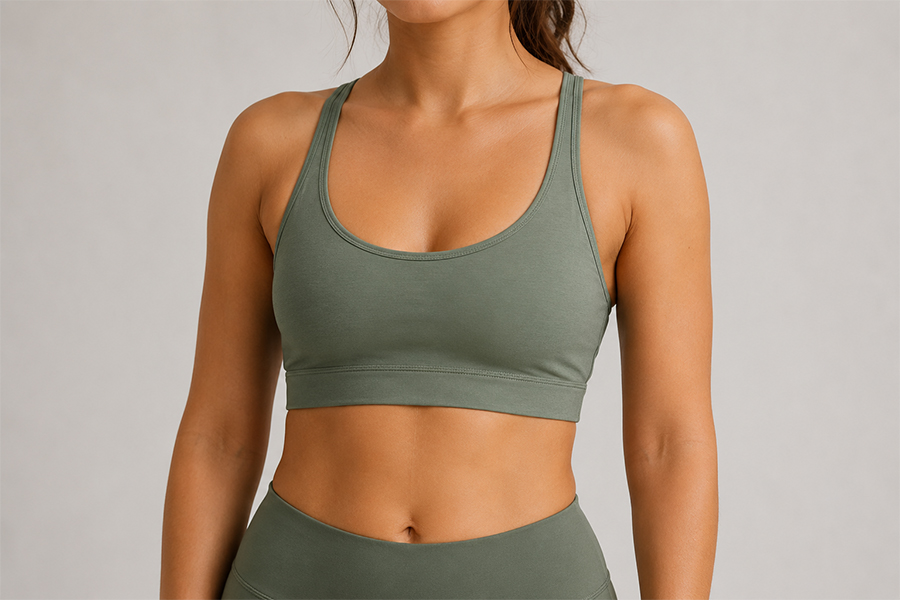
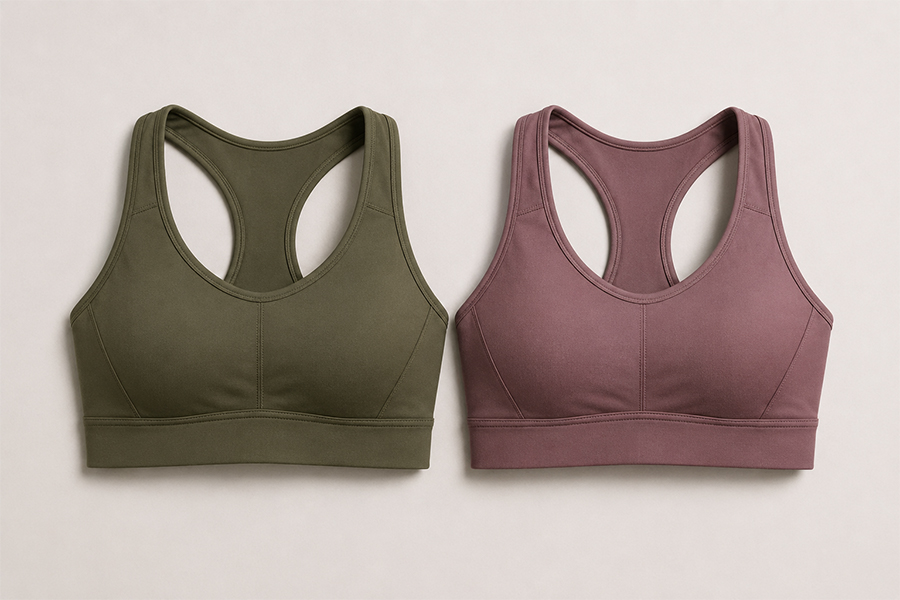
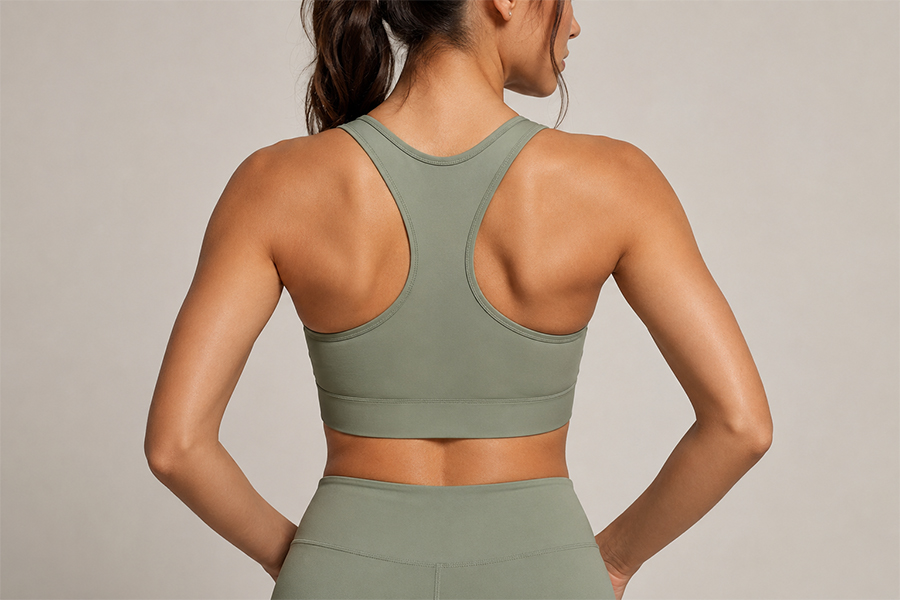
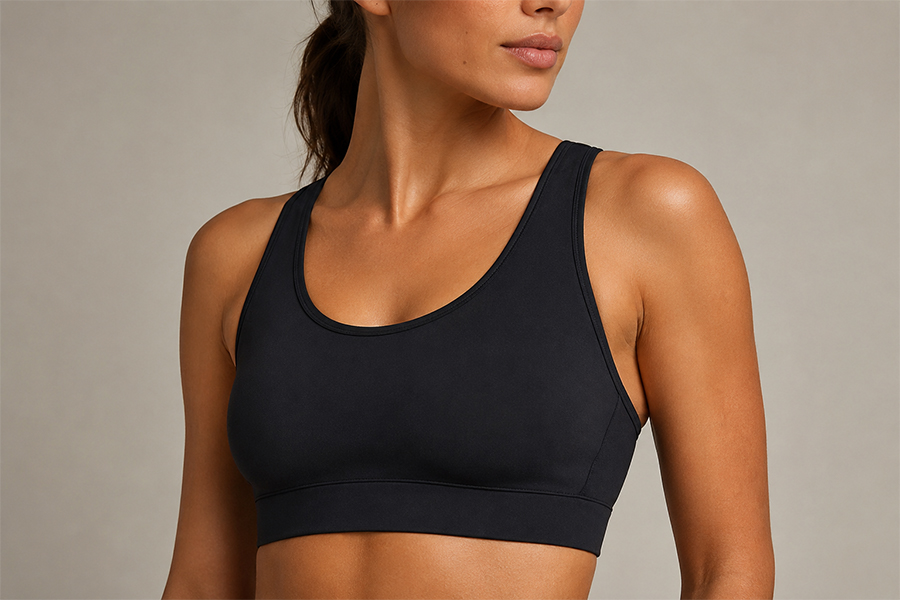
Racerback Sports Bra

Racerback Sports Bra

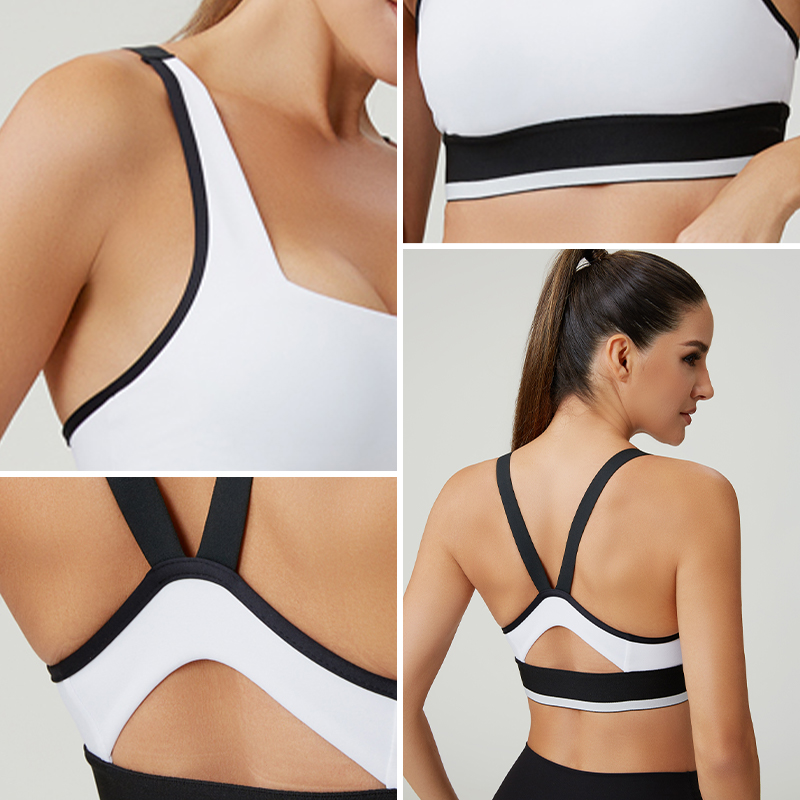
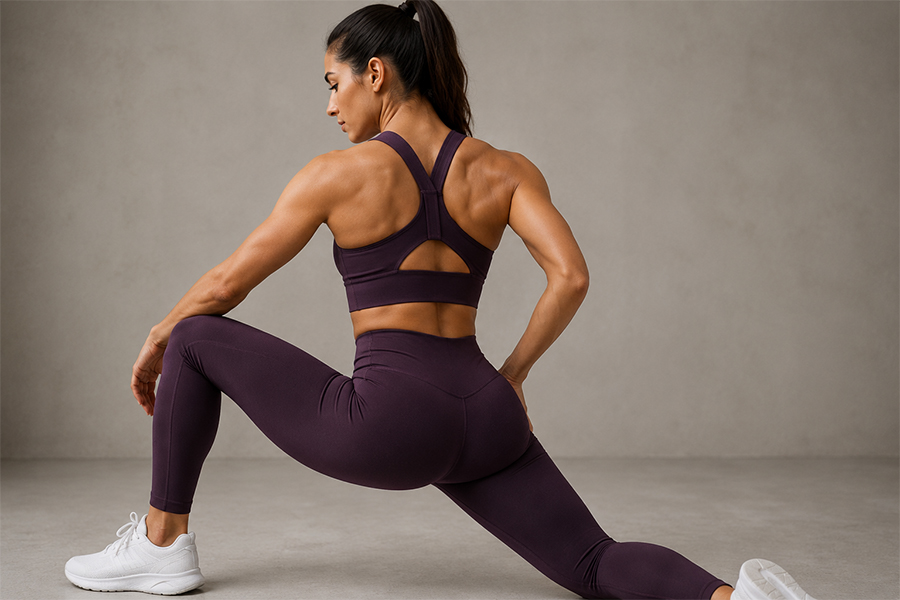
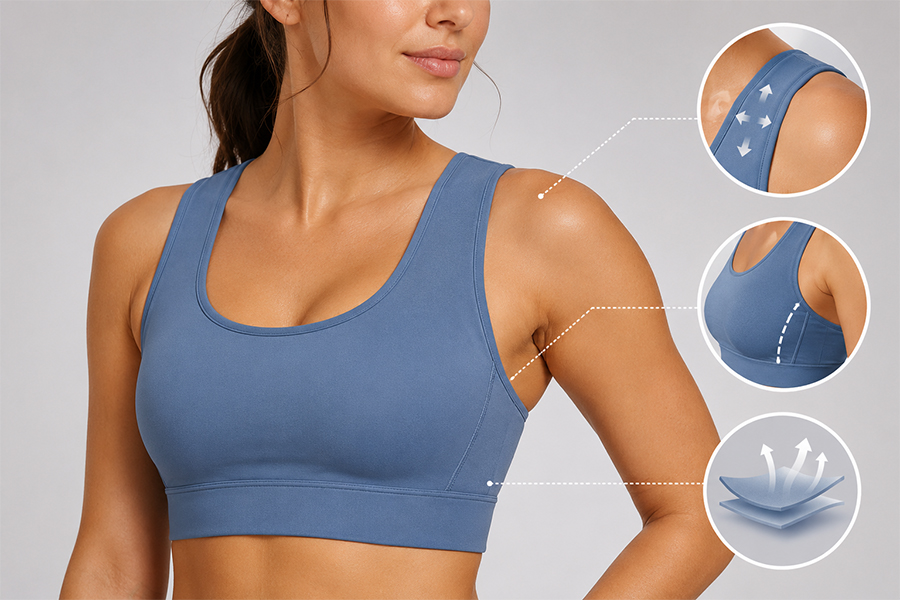
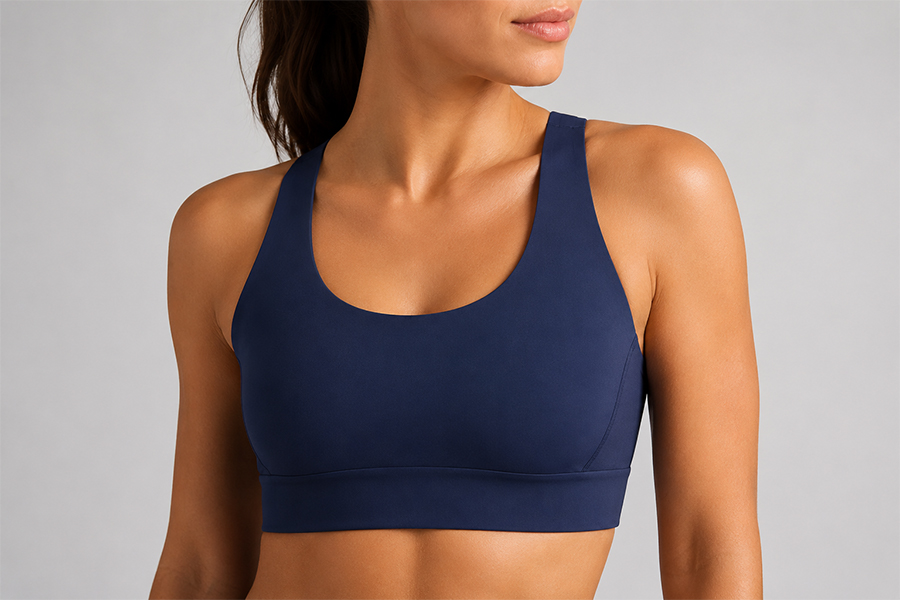
Review shoulder mobility, back tension, strap angle, armhole comfort, support distribution, and training movement range.

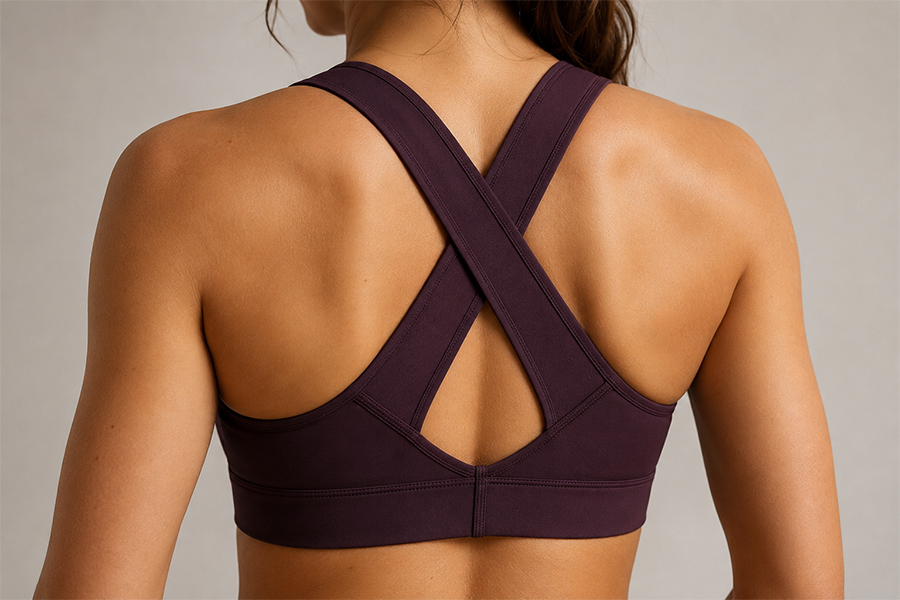
Cross-Back or Strappy Bra

Cross-Back or Strappy Bra

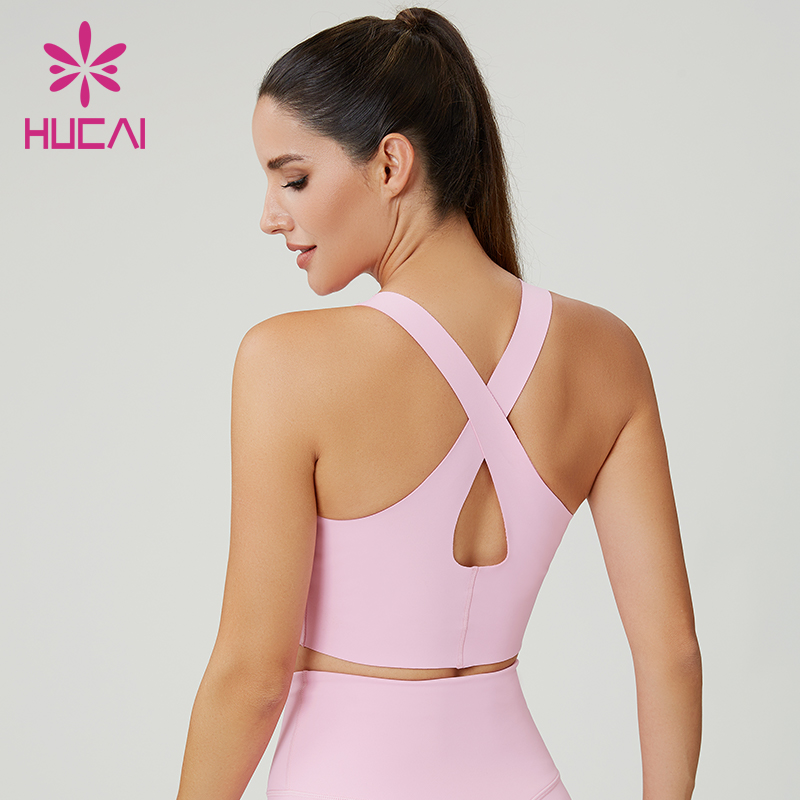
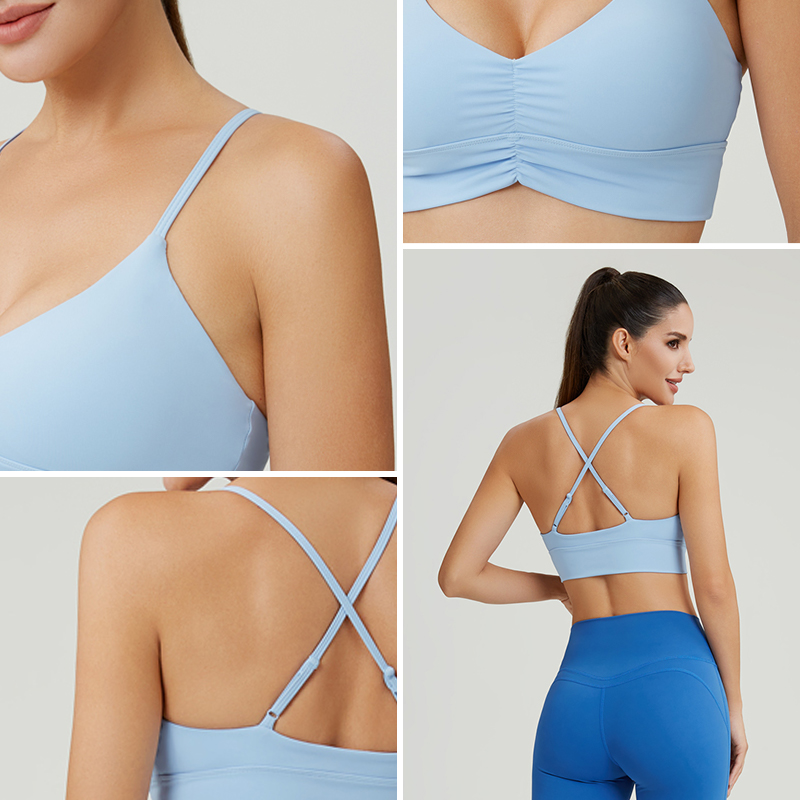
Review strap placement, stretch tension, back appearance, support limitation, stitching stress, and visual balance.

Adjustable Strap Bra

Adjustable Strap Bra

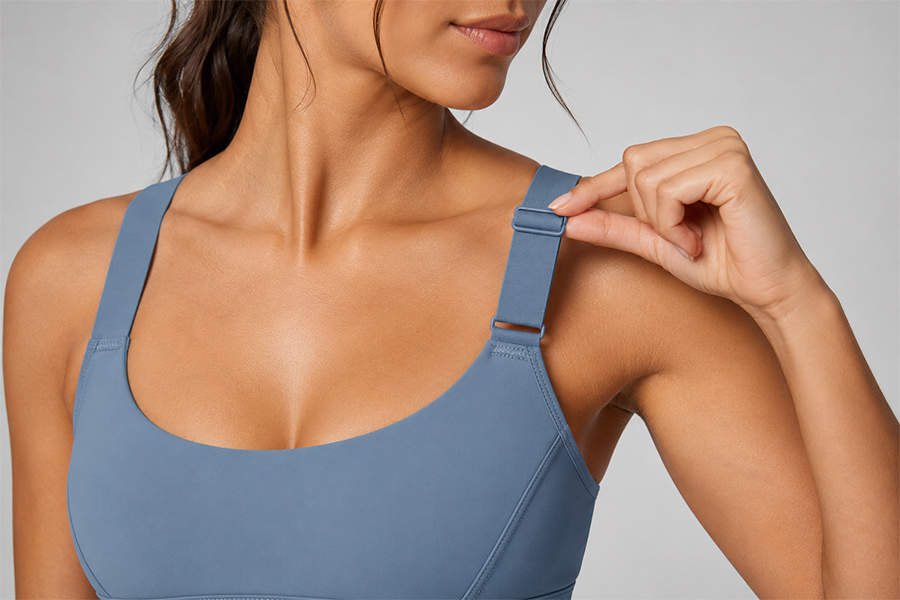
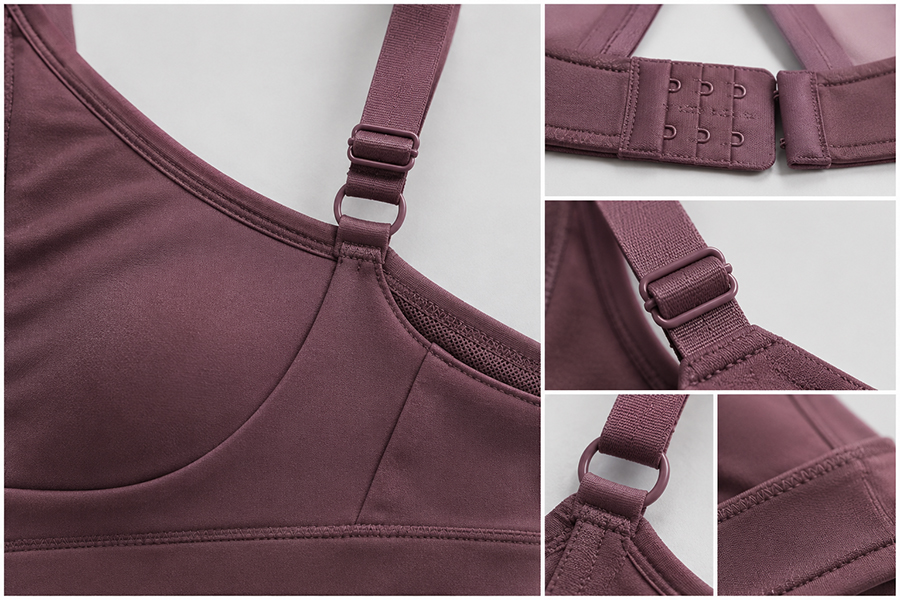
Review slider position, strap width, hardware comfort, pressure adjustment, size range, and support consistency.

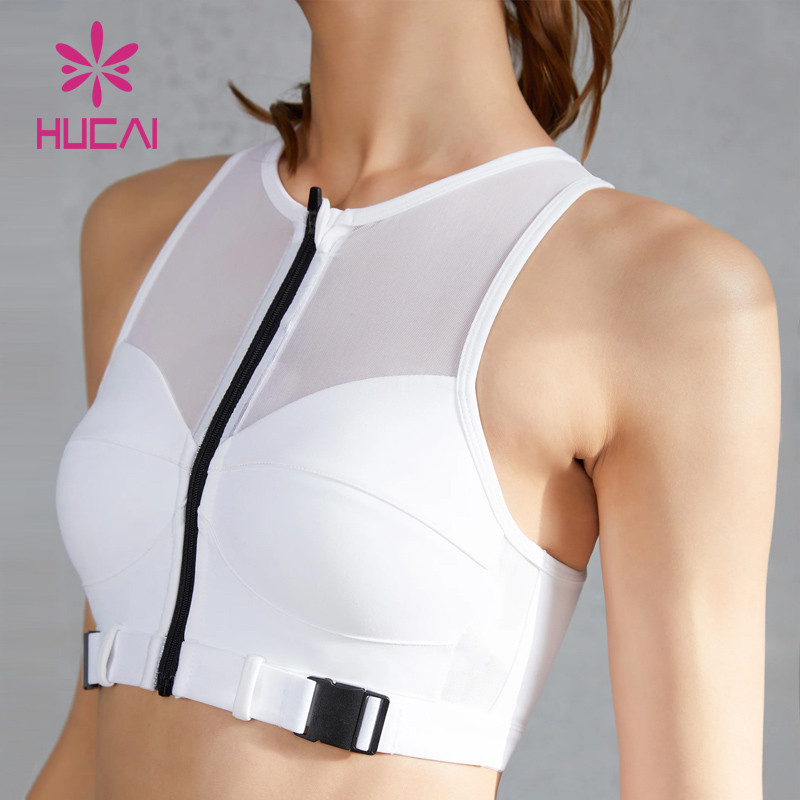
Zip-Front Sports Bra

Zip-Front Sports Bra

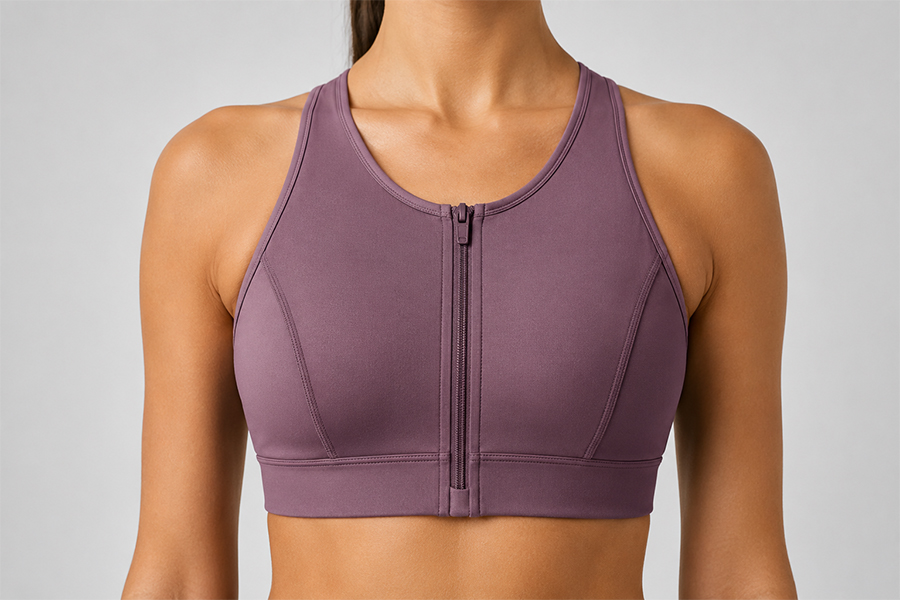
Review zipper stability, inner guard, neckline safety, underband hold, support level, and repeated wear comfort.

High-Neck Coverage Bra

High-Neck Coverage Bra

Review front coverage, neckline pressure, armhole curve, fabric stretch, breathability, and training comfort.

Padded Crop Bra

Padded Crop Bra

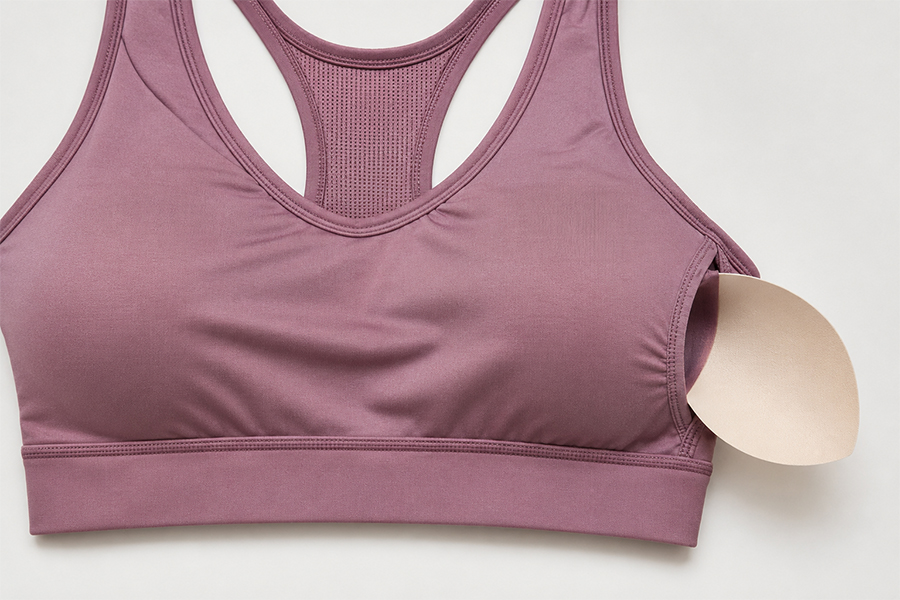
Review removable or fixed padding, pad pocket stability, lining tension, crop length, coverage, and all-day wear comfort.

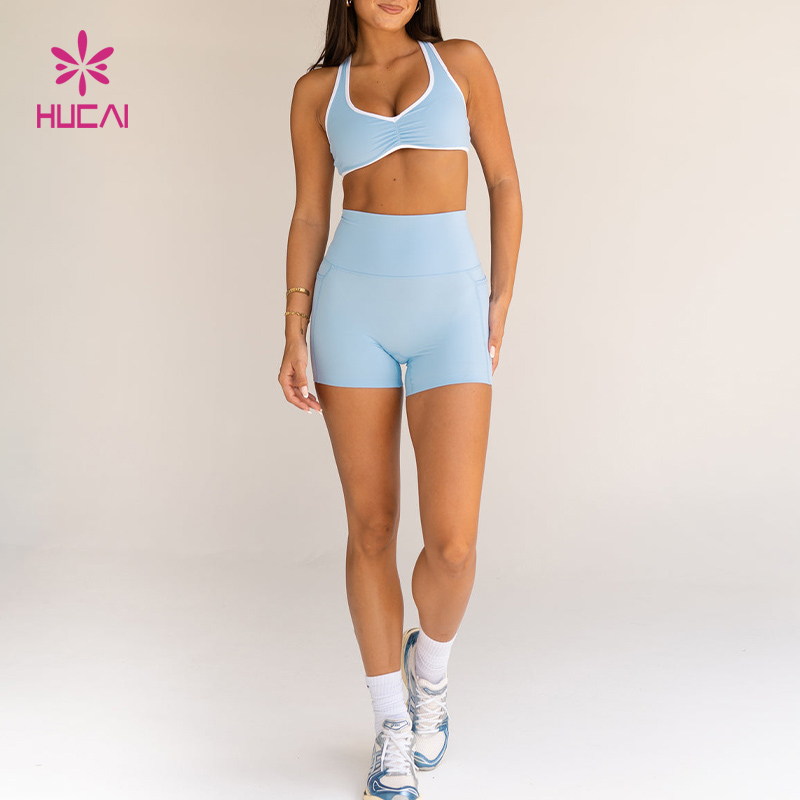
Matching Set Sports Bra

Matching Set Sports Bra

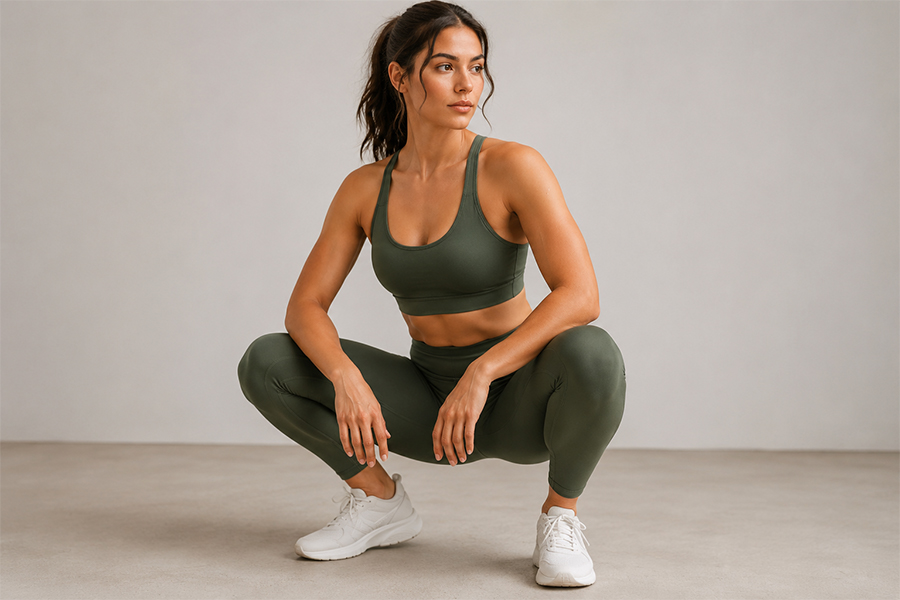
Review fabric and color coordination with leggings or shorts, support level, logo placement, neckline, and collection consistency.

Why Sports Bra Development Is Easy to Underestimate

A sports bra may look simple in product photos, but the final wearing experience depends on how support level, underband pressure, strap structure, cup coverage, padding, lining, fabric recovery, and size grading work together. Many problems only appear during movement, washing, repeated wear, sample fitting, or bulk production.

1. Support Level Is Not Only a Label

Low, medium, and high support should be reviewed through fabric power, underband hold, strap load, cup coverage, activity level, and size range.

2. Underband Stability Affects the Whole Fit

A sports bra can ride up, dig in, or lose hold if underband width, elastic recovery, body length, and pressure balance are not reviewed together.

3. Strap Design Changes Support and Comfort

Thin straps, wide straps, racerback, cross-back, and adjustable straps distribute pressure differently. Strap angle and stretch should be checked before sampling.

4. Padding Can Create Repeated Revisions

Removable pads, fixed pads, pad pockets, lining tension, and cup shape can affect coverage, washing behavior, shifting, and bulk comfort.

5. Coverage Should Match the Activity

A neckline that works for yoga may not be enough for running or HIIT. Front coverage, side coverage, and armhole curve should match the intended use.

6. Bulk Support May Differ from Sample Support

If fabric approval, elastic tension, lining, padding, measurements, and pre-production standards are not locked clearly, bulk sports bras may feel different from the approved sample.

Sports Bra Development Architecture

Sports bra development should be reviewed as a support system, not only as a style sketch. Product role, support level, fabric direction, underband structure, strap and back design, cup and padding, coverage, fit, and sample-to-bulk control all affect the final wearing experience.
sports bra

Product Role

Define whether the sports bra is for yoga, studio, training, running, HIIT, all-day athleisure, larger-bust support, or matching set development before choosing structure.

Support Level

Support Level

Review light support, medium support, high support, compression support, underband hold, bounce control, and activity intensity before sampling.

Fabric Direction

Fabric Direction

Review nylon-spandex, polyester-spandex, brushed handfeel, cool-touch direction, power mesh, lining fabric, GSM, stretch, recovery, and skin comfort.

Underband Structure

Underband Structure

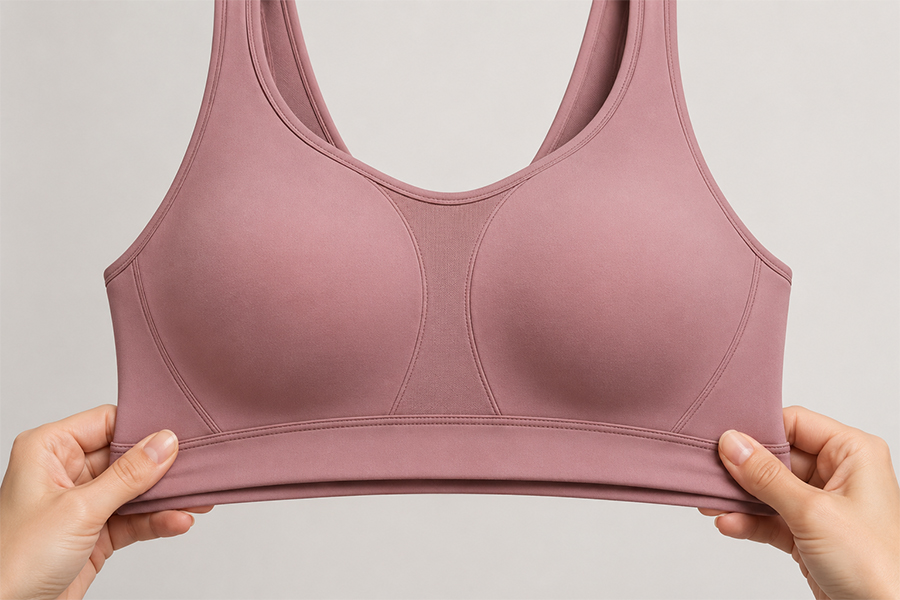
Review underband width, elastic direction, longline length, pressure balance, hem stability, and ride-up risk.

Leggings gusset and movement comfort

Strap and Back Design

Review racerback, cross-back, adjustable straps, wide straps, strap angle, back tension, shoulder pressure, and movement comfort.

Leggings seam placement and chafe control

Cup, Padding and Lining

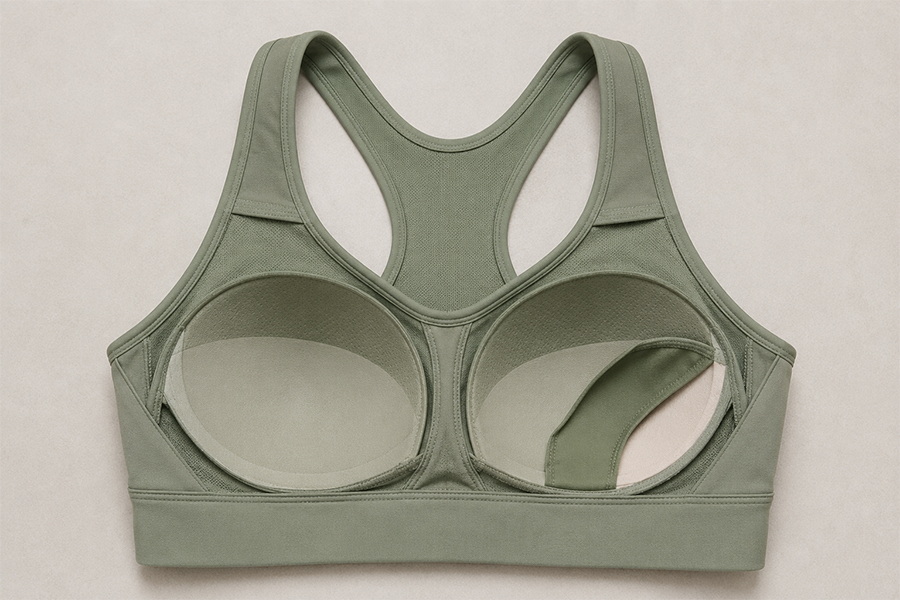
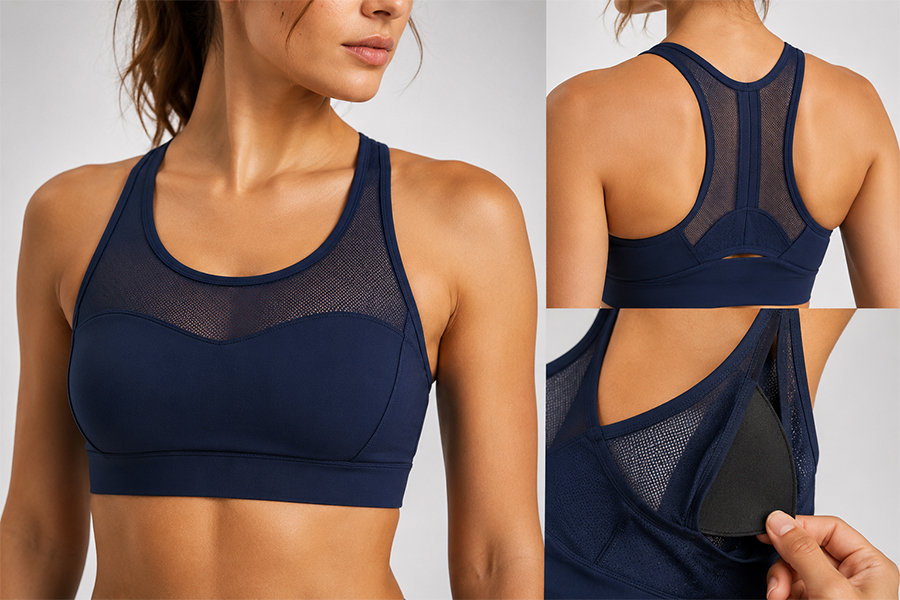
Review cup coverage, removable pads, fixed pads, pad pocket, lining tension, power mesh, and wash behavior.

Leggings opacity and squat coverage

Coverage and Fit

Review neckline, armhole curve, side coverage, body length, size grading, bust coverage, and comfort across the intended size range.

Sample-to-Bulk Control

Sample-to-Bulk Control

Align fabric approval, elastic and lining approval, fit sample, pre-production confirmation, measurement review, QC checkpoints, and bulk support consistency.

Fabric Guide for Private Label Sports Bra Development

Fabric selection should be based on the sports bra support role, not only on touch feeling. Yoga, studio, training, running, high-support, padded, and matching set bras require different decisions on stretch recovery, compression feel, lining, underband elastic, breathability, skin comfort, and sample-to-bulk control.
  • Soft-Support Studio Fabric Direction

    For yoga, Pilates, studio, and all-day sports bras, the fabric direction should focus on soft handfeel, gentle recovery, low seam pressure, skin comfort, and easy movement rather than strong compression.

    Best for low-support bras, soft-support crop bras, longline studio bras, and matching set sports bras where comfort and clean fit are the main development priorities.

    A
    Soft-support fabric direction for private label sports bra development
  • Medium-to-High Recovery Training Fabric Direction

    For training, gym, running, and high-movement sports bras, fabric should be reviewed for stronger recovery, support feel, sweat comfort, lining stability, underband hold, and fit consistency across sizes.

    This direction is suitable for medium-support and high-support sports bra projects where fabric power, strap load, underband pressure, and sample fitting need to be reviewed together.

    B
    High recovery training fabric direction for custom sports bras
  • Lining, Mesh and Elastic Support Direction

    Sports bras often depend on more than the shell fabric. Lining fabric, power mesh, pad pocket fabric, underband elastic, strap elastic, and inner finishing all affect support, comfort, washing behavior, and bulk consistency.

    This direction should be reviewed when developing padded bras, racerback bras, adjustable strap bras, zip-front bras, or higher-support sports bra styles.

    C
    Lining mesh and elastic support direction for sports bra development

Fabric Decision Table for Sports Bra Development

Fabric FactorWhy It Matters in Sports BrasWhat Buyers Should Confirm
HandfeelDefines skin comfort, premium feel, and all-day wearability, especially for yoga, Pilates, studio, and soft-support bras.Target fabric touch, support positioning, and brand price level.
RecoveryAffects whether the bra keeps support after stretch, repeated wear, movement, and washing.Recovery requirement for yoga, training, running, high support, or all-day wear.
Support PowerAffects compression feel, bounce control, underband stability, strap load, and cup coverage.Light, medium, high, compression, or activity-specific support direction.
BreathabilityAffects sweat comfort, heat buildup, lining feel, and wearability during gym, running, or HIIT use.Shell fabric, lining, mesh direction, and ventilation requirement.
LiningAffects skin comfort, coverage, internal support, pad pocket stability, and pressure distribution.Lining type, thickness, stretch, handfeel, and support role.
Underband ElasticAffects ride-up control, underband pressure, longline stability, and size consistency across the range.Elastic width, recovery, pressure, construction, and target support level.
Padding CompatibilityAffects cup shape, coverage, washing behavior, pad movement, and customer comfort.Removable pads, fixed pads, pad thickness, pad pocket, and lining tension.
Stretch DirectionAffects movement comfort, support stability, neckline recovery, armhole fit, and overall sample performance.2-way, 4-way, compression stretch, or support stretch direction.
Color ConsistencyAffects matching sets, seasonal color stories, lining shade, and repeat-order consistency.Lab dip, shell and lining shade, set coordination, and bulk fabric color control.
Bulk ConsistencyAffects whether approved sample support, fit, handfeel, padding, and underband pressure are repeated in production.Fabric approval, lining approval, elastic approval, PPS, measurements, and QC checkpoints.

Use Scenario Matrix for Private Label Sports Bras

Sports bras should be developed around the intended use scenario before confirming support level, fabric, strap, underband, cup, padding, lining, and coverage details. A yoga bra, training bra, running bra, and all-day athleisure bra should not always follow the same development logic.
Use ScenarioDevelopment FocusFabric DirectionStructure DetailsCommon Risk
Yoga / PilatesSoft support, low pressure, skin comfortSoft nylon-spandex, brushed handfeel, gentle recovery fabricLight underband, smooth neckline, low seam pressure, removable padsFeels soft but lacks recovery after repeated wear
Studio TrainingMedium comfort support, mobility, clean fitSupportive stretch fabric with smooth lining directionRacerback, longline underband, cup coverage, stable armholeSupport feels fine standing but weak during movement
Gym TrainingSupport, sweat comfort, movement stabilityMedium-to-high recovery fabric, breathable lining, support knitUnderband hold, wide strap or racerback, cup coverage, flat seamsStraps or underband may create pressure complaints
Running / CardioBounce control, stable fit, sweat comfortHigher recovery fabric, power mesh, supportive lining systemStronger underband, secure straps, higher coverage, stable cup areaBra may ride up or support may differ across sizes
HIIT / High MovementCompression balance, coverage, support stabilityStrong support fabric with stable lining and elastic recoveryHigh coverage neckline, secure straps, reinforced seams, firm underbandToo much compression can reduce comfort or mobility
All-Day AthleisureComfort, clean look, easy wearabilitySoft-touch fabric, moderate support, matte or brushed directionLongline shape, crop length, smooth finishing, light paddingLooks good in photos but feels restrictive after long wear
Larger Bust SupportPressure distribution, coverage, support consistencySupportive stretch fabric, stable lining, strong underband elasticWide straps, stable underband, higher coverage, size grading reviewShoulder pressure or side coverage issues may appear
Matching Set BraColor matching, coordinated handfeel, set balanceSame or compatible fabric with leggings, shorts, or tank topsSupport matched to bottom style, logo placement, neckline balanceColor or handfeel mismatch across set pieces

Sports Bra Support, Underband and Cup Construction Engineering

Sports bra construction should be reviewed through support level, underband structure, strap and back system, cup coverage, padding, lining, neckline, armhole curve, seam placement, and size grading. These details affect comfort, movement, support, sample revision, and final production quality.
Low support sports bra construction

Low-Support Structure

Low-support sports bras should be reviewed for soft pressure, smooth fabric, light underband hold, neckline comfort, and studio movement rather than strong compression.

Medium support sports bra construction

Medium-Support Structure

Medium-support sports bras should balance fabric recovery, underband hold, strap load, cup coverage, and movement comfort for training, gym, and studio use.

High support sports bra construction

High-Support Structure

High-support sports bras need stronger review of bounce control, underband stability, strap width, cup coverage, lining support, and size grading before sampling.

Compression and encapsulation support sports bra

Compression vs Encapsulation

Compression can reduce movement, while cup shaping or encapsulation can improve coverage. The support direction should match the target activity and customer group.

Sports bra underband width construction

Underband Width

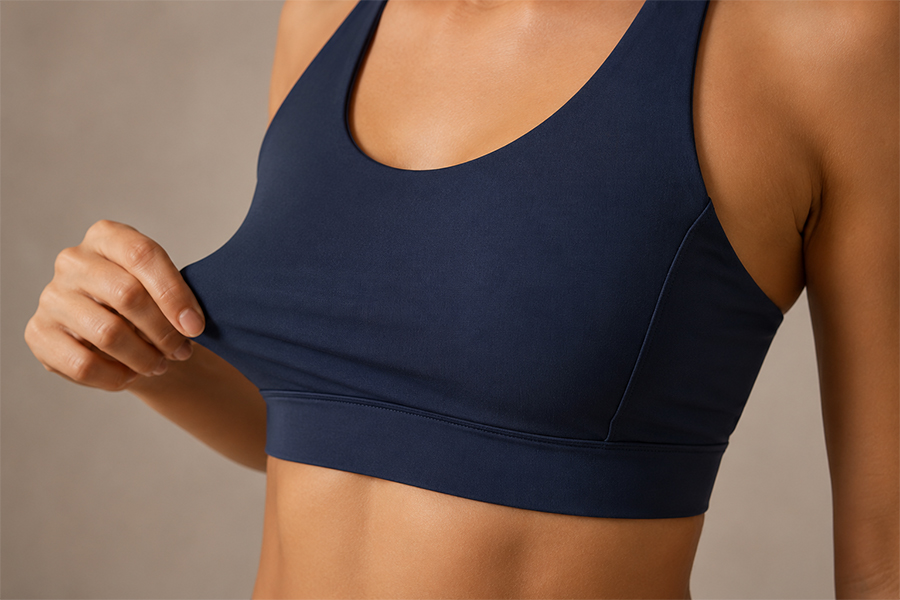
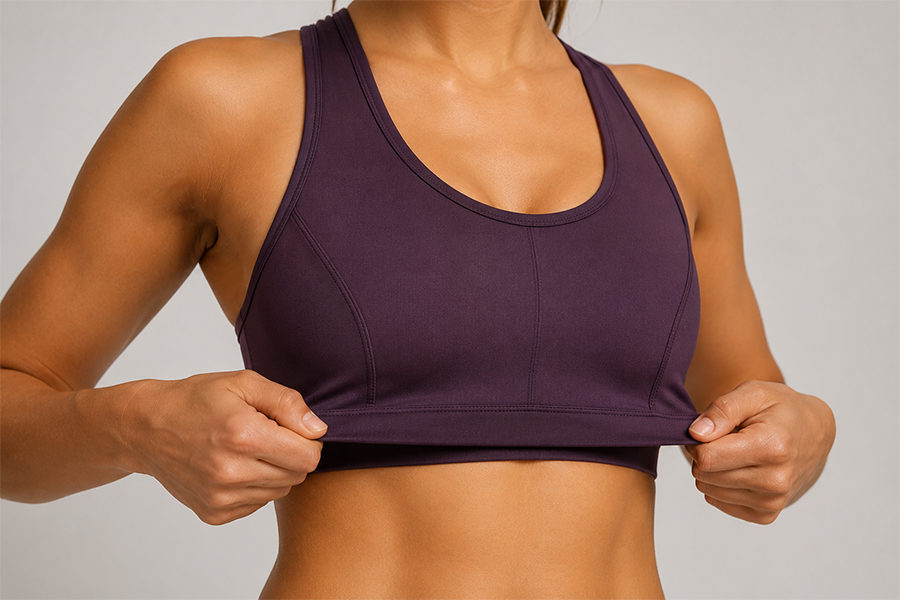
Underband width affects pressure, stability, longline appearance, and ride-up risk. A wider underband does not automatically mean better comfort or support.

Sports bra underband elastic recovery

Underband Elastic Recovery

Elastic recovery should support repeated wear and washing. Weak elastic may reduce hold, while overly firm elastic may create pressure complaints.

Sports bra underband pressure and size grading

Underband Pressure Balance

Underband pressure should be reviewed across sizes. Smaller sizes should not feel too tight, while larger sizes should not lose support during movement.

Longline sports bra hem stability

Longline Hem Stability

Longline sports bras need body length, hem pressure, fabric recovery, and rolling risk review before sample approval, especially for training or matching set styles.

Racerback sports bra support structure

Racerback Structure

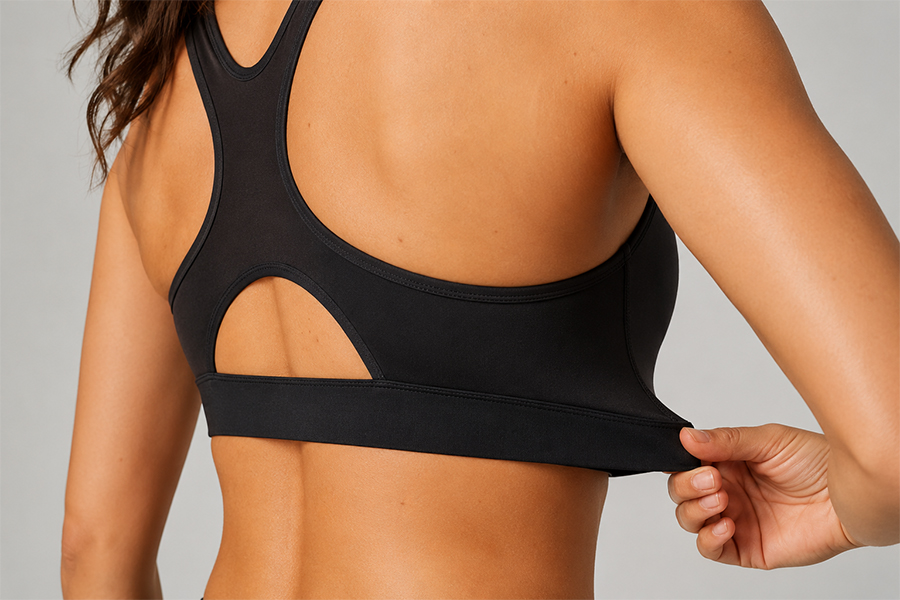
Racerback sports bras can support shoulder mobility and back stability, but strap angle, back tension, armhole comfort, and support distribution should be reviewed.

Cross-back sports bra strap construction

Cross-Back Structure

Cross-back designs can create a strong visual identity, but strap stretch, seam stress, support limitation, and wearing comfort should be checked in sampling.

Adjustable strap sports bra system

Adjustable Strap System

Adjustable straps allow more fit flexibility, but hardware position, strap width, slider comfort, and pressure distribution should be reviewed during sample fitting.

Wide strap sports bra support

Wide Strap Support

Wide straps can distribute pressure more evenly, especially for medium or high support bras, but shoulder comfort and visual balance still need review.

Removable padding sports bra construction

Removable Padding

Removable pads support flexible wear, but pad pocket shape, opening position, lining tension, pad size, and washing behavior should be reviewed before bulk.

Fixed padding sports bra construction

Fixed Padding

Fixed padding can reduce pad shifting, but cup shape, pad thickness, sewing method, lining compatibility, and skin comfort should be checked carefully.

Sports bra lining and power mesh construction

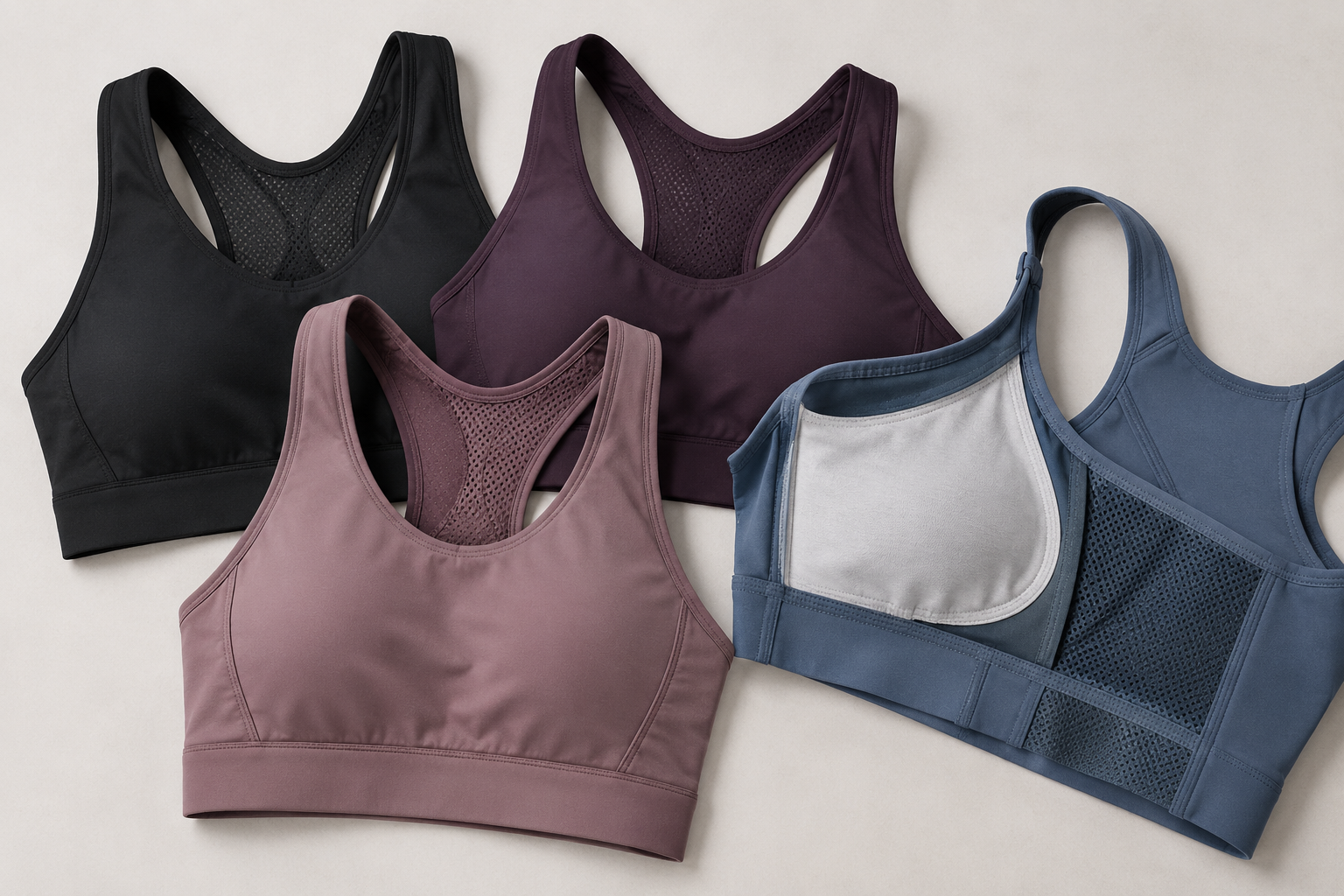
Lining and Power Mesh

Lining and power mesh can improve support and coverage, but they also affect breathability, pressure, opacity, skin comfort, and bulk consistency.

Sports bra neckline armhole and side coverage

Neckline and Side Coverage

Neckline, armhole curve, and side coverage should match support level and activity scenario to reduce cup gap, side exposure, or coverage complaints.

Craft, Functional Details and Private Label Options

Sports bra customization should not be limited to logo placement. Branding method, stitching, padding, lining, strap hardware, mesh, zipper, color approval, label, packaging, and support consistency should be reviewed according to fabric stretch, activity scenario, MOQ, cost level, and sample performance.
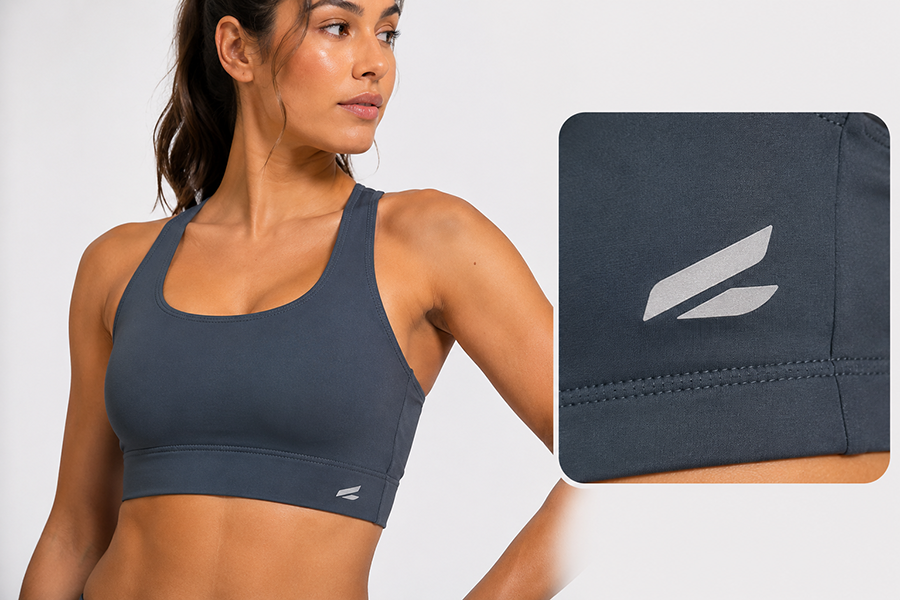
Sports bra heat transfer logo detail

Heat Transfer Logo

Heat transfer logos should be reviewed with fabric stretch, placement area, washing direction, color contrast, support structure, and bulk consistency before final approval.

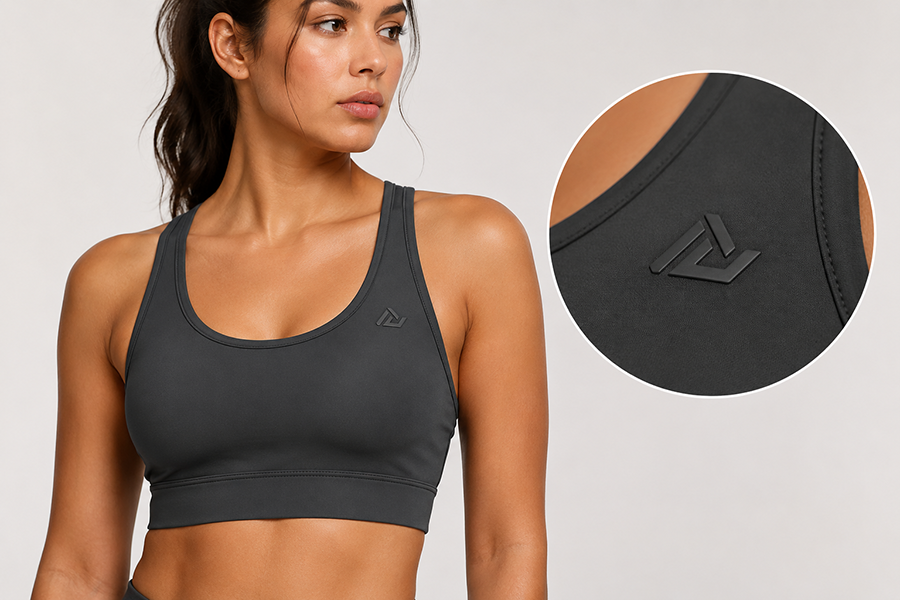
Sports bra silicone or rubber logo detail

Silicone or Rubber Logo

Silicone or rubber logos can add a dimensional branding effect, but thickness, flexibility, placement, fabric stretch, and skin comfort should be checked during sampling.

Sports bra woven label and care label placement

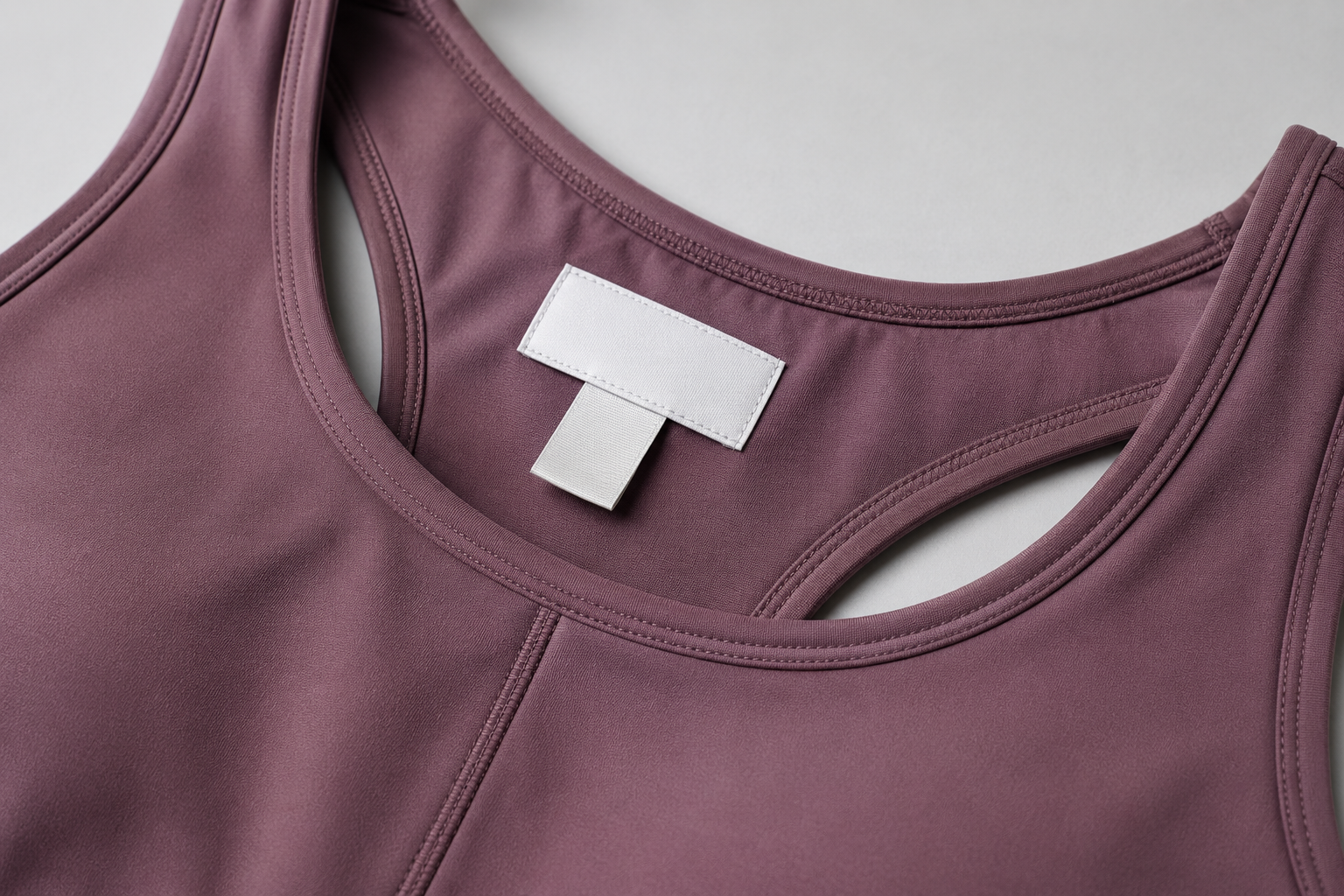
Woven Label and Care Label

Woven labels, size labels, and care labels should support brand identity without creating skin irritation, underband discomfort, or pressure points.

Sports bra hangtag and packaging detail

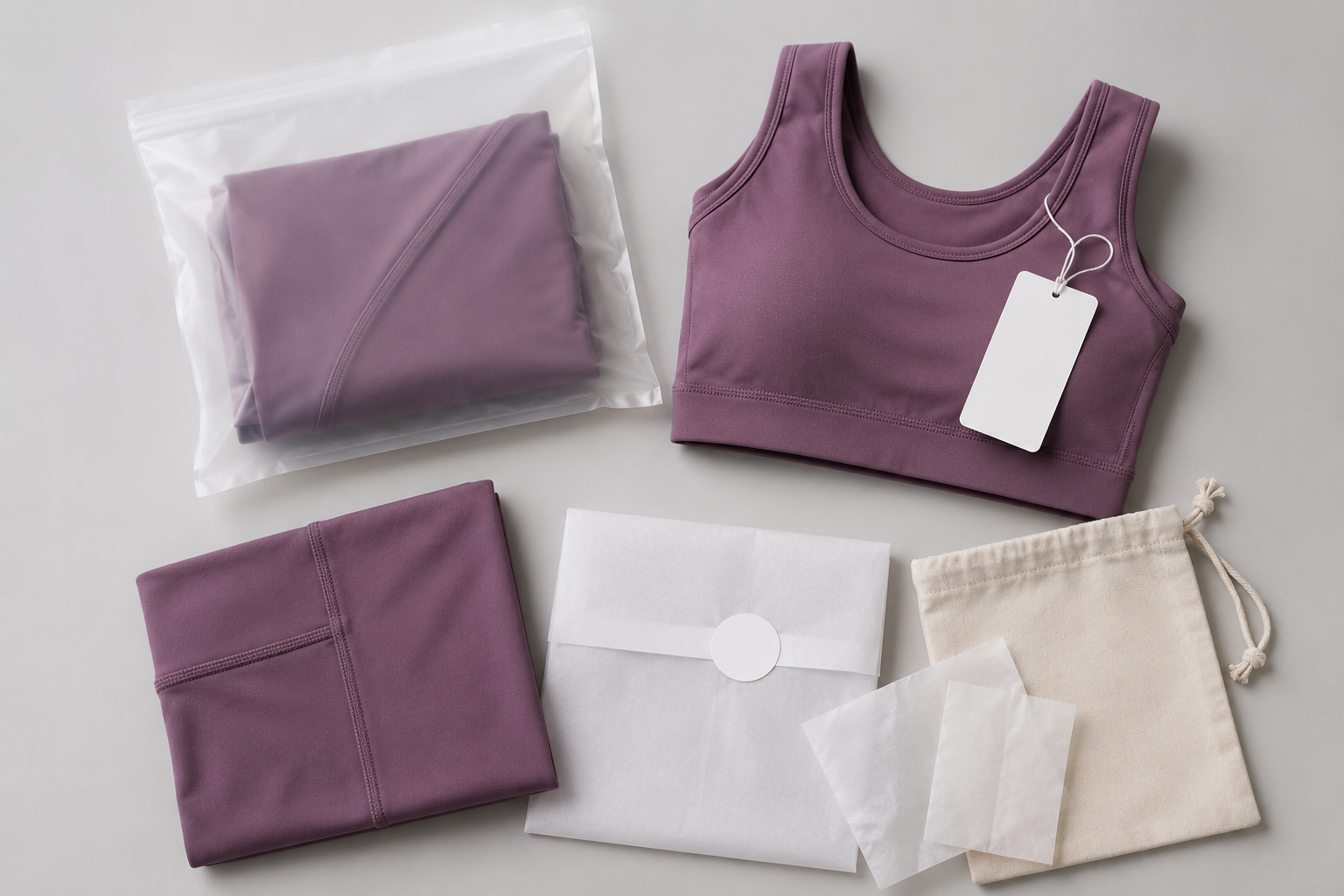
Hangtag and Packaging

Hangtags, polybags, barcode stickers, folding method, and packaging details should match the buyer's retail, wholesale, or private label delivery requirements.

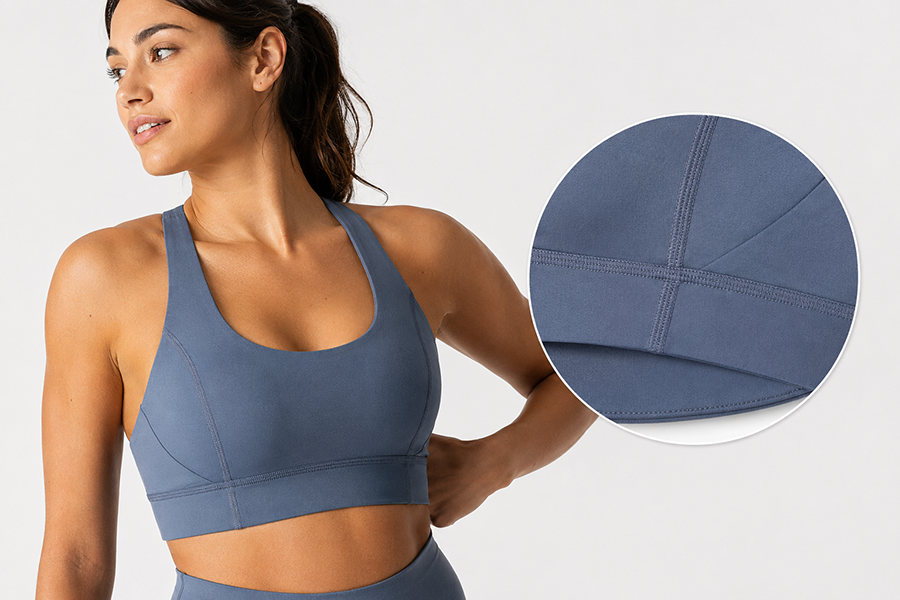
Sports bra flatlock stitching detail

Flatlock Stitching

Flatlock stitching can reduce seam bulk and friction during movement. Stitch tension, seam placement, fabric thickness, and lining structure should be reviewed together.

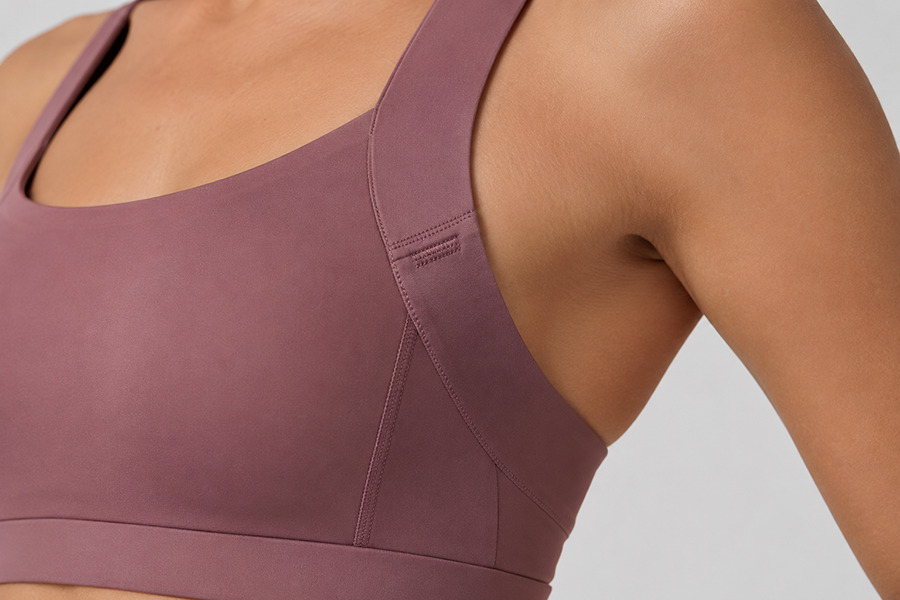
Sports bra bartack reinforcement detail

Bartack Reinforcement

Bartack reinforcement can be useful around strap attachment, zipper ends, elastic joins, and high-tension construction points where repeated movement may create pulling risk.

Sports bra adjustable hardware detail

Adjustable Hardware

Sliders, rings, hooks, and adjustment parts should be reviewed for comfort, durability, pressure, strap width, skin contact, and bulk order consistency.

Sports bra front zipper construction detail

Front Zipper Direction

Front zipper sports bras need zipper stability, inner guard, top stop position, neckline safety, underband hold, skin comfort, and washing behavior review.

Sports bra mesh panel or lining detail

Mesh Panel or Lining

Mesh can support breathability or internal support, but placement, stretch, transparency, lining tension, and skin comfort should be confirmed during sample fitting.

Sports bra bonded edge construction detail

Bonded Edge Direction

Bonded edge construction can create a cleaner low-bulk look, but fabric compatibility, adhesive behavior, washing performance, support role, and MOQ should be reviewed first.

Sports bra color and lab dip approval

Color and Lab Dip Approval

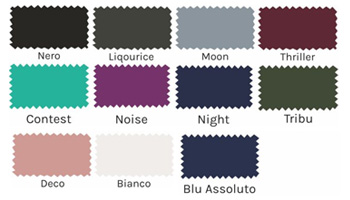
Color approval should include lab dip review, lining shade, shell fabric shade, matching set coordination, stretch behavior, and bulk fabric shade control.

Private label sports bra support story

Private Label Support Story

For premium sports bra programs, the support story should connect fabric, underband, strap structure, coverage, padding, lining, color, and brand positioning.

Common Sports Bra Development Problems and Diagnosis

Many sports bra problems are not obvious in flat product photos. Ride-up, weak support, shoulder pressure, pad shifting, cup gap, side coverage issues, lining discomfort, color mismatch, and sample-to-bulk support differences usually come from fabric, elastic, pattern, padding, construction, size grading, or approval process decisions made before bulk production.
Customer ProblemLikely Development CauseWhat We ReviewSample Stage Action
Bra rides up during movementUnderband width, pressure, elastic recovery, or body length is not balancedUnderband construction, elastic direction, body length, fabric recovery, size gradingAdjust underband width, elastic tension, or body length before sample approval
Support feels weak during trainingSupport level, fabric power, strap structure, or underband hold is not strong enoughFabric recovery, strap load, underband pressure, cup coverage, activity levelIncrease support through fabric, strap, underband, or coverage adjustment
Straps dig into shouldersStrap width, strap angle, back tension, or support load is not balancedStrap width, stretch, angle, shoulder pressure, back structureRevise strap width, strap angle, or back structure during sample fitting
Pads shift after washingPad pocket shape, opening position, lining tension, or pad size is not suitablePad pocket, pad thickness, lining fabric, opening position, wash behaviorAdjust pad pocket shape, opening position, or pad specification
Cup area feels emptyCup shape, neckline, coverage, padding, or size grading does not match the body shapeCup depth, neckline, side coverage, pad shape, size gradingRevise cup coverage, neckline depth, padding direction, or grading
Side coverage is not enoughArmhole curve, side panel height, neckline, or strap position is too openArmhole shape, side panel height, coverage, strap position, size rangeIncrease side coverage or adjust armhole curve before bulk approval
Compression feels uncomfortableFabric power, underband pressure, pattern tension, or lining support is too strongFabric stretch, support target, underband pressure, neckline, lining, fit sampleReduce pressure through fabric choice, pattern adjustment, or underband review
Lining feels rough or hotLining fabric, mesh, seam placement, or fabric thickness is not suitable for skin contactLining handfeel, breathability, seam bulk, mesh placement, skin contact areaReview lining fabric, mesh placement, or internal seam construction
Front zipper feels unstableZipper quality, inner guard, top stop, neckline tension, or underband hold is not balancedZipper, inner guard, top stop, neckline, underband, stretch areaRevise zipper structure, add comfort guard, or adjust neckline tension
Matching set color does not alignTop and bottom fabric, dye lot, lining shade, finishing, or material base may differFabric source, dye lot, shell shade, lining shade, finish, set coordinationConfirm set shade under the same light and approval standard before cutting
Logo cracks or peels after stretchLogo method, placement, heat pressure, fabric stretch, or washing behavior is not suitableHeat transfer method, stretch zone, wash direction, logo size, placementTest logo on stretch area before confirming bulk decoration
Bulk support feels different from approved sampleFabric approval, elastic tension, padding, lining, PPS, or QC checkpoints were not locked clearlyApproved sample, bulk fabric, elastic, padding, lining, measurements, sewing, QC standardAlign PPS, measurement spec, fabric, elastic, padding, and QC checkpoints before bulk

How to Start Your Custom Sports Bra Project

Start with what you already have: a tech pack, reference images, a support direction, or private label requirements.
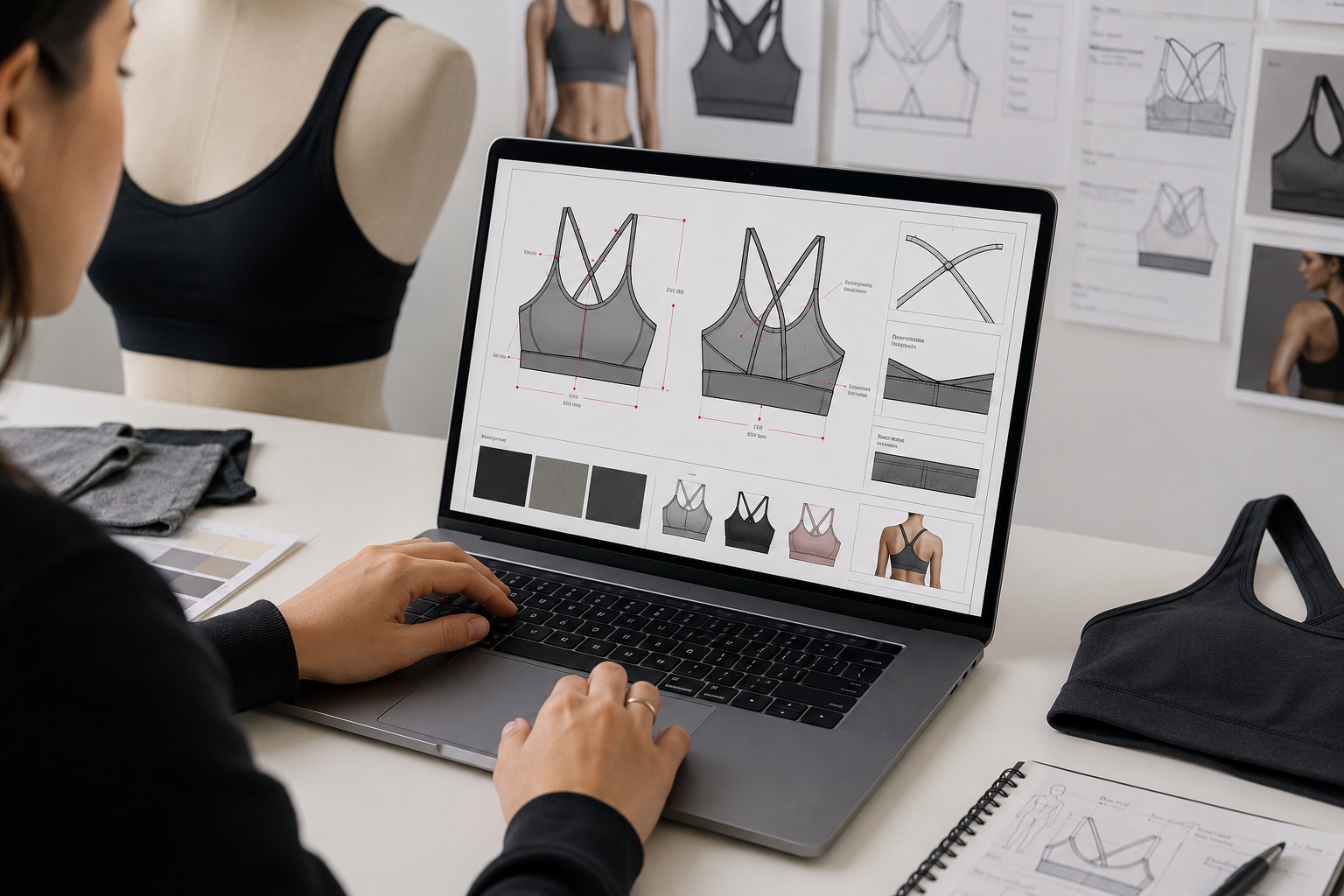
Sports bra tech pack for OEM development

I Have a Tech Pack

Share your sports bra tech pack, measurement spec, fabric direction, support level, underband details, strap construction, padding direction, logo placement, size range, and estimated quantity. This path is best for OEM sports bra projects where the design is already clear.

Sports bra reference images for ODM sample development

I Have Reference Images

Send front, back, side, and detail reference images, then tell us the target support level, neckline, strap type, underband direction, padding preference, fabric handfeel, color direction, and usage scenario. This helps us translate visual ideas into an ODM sample direction.

Support direction for custom sports bra development

I Only Know the Support Direction

If you only know that you want a yoga bra, training bra, high-support running bra, longline bra, padded crop bra, or matching set bra, we can help define the fabric, underband, strap, cup coverage, padding, and sample priorities before development starts.

Private label details for custom sports bra project

I Need Private Label Details

Share your logo, label, hangtag, packaging, color plan, and brand positioning. We can review how these private label details should be matched with support level, fabric choice, MOQ structure, sample planning, and bulk production preparation.

FAQ — Custom Sports Bra Development

Before starting a private label sports bra project, brands often need to confirm support level, underband stability, strap structure, cup coverage, padding, lining, MOQ, sample revision, and bulk consistency. These answers help you prepare your tech pack, reference images, or support direction before moving into OEM or ODM development with HUCAI sportswear.
  • How should brands define sports bra support level before sampling?

    Brands should define support level by activity use, body coverage, fabric behavior, underband control, strap structure, and expected movement intensity. A yoga bra, studio bra, training bra, and running bra should not follow the same development logic. Low-support bras need comfort and flexibility. Medium-support bras need balanced hold. High-support bras need stronger structure, more stable recovery, and better coverage. Defining support level early helps reduce unclear sample revisions.

  • What is the difference between low, medium, and high support sports bras?

    Low-support sports bras are usually designed for yoga, pilates, stretching, and light studio movement, where softness and comfort matter most. Medium-support bras need more hold for training, gym sessions, and daily activewear. High-support bras are developed for higher-impact movement and need stronger fabric recovery, coverage, underband stability, strap control, and construction support. The difference is not only fabric thickness. It is the full structure of the bra.

  • Why is underband control so important in sports bra development?

    Underband control is important because it strongly affects both support and comfort. If the underband is too loose, the bra may not provide enough hold. If it is too tight, it can create pressure, rolling, or discomfort during movement. The right underband depends on support level, elastic quality, fabric recovery, body coverage, and size range. For sports bra samples, underband feel should be reviewed together with strap tension and neckline security.

  • How do strap, neckline, and coverage affect sports bra support?

    Strap, neckline, and coverage directly affect how secure and comfortable a sports bra feels. Wider or more stable straps may help higher-support styles, while lower necklines may be better suited to low-support or studio pieces. Coverage should match activity use and target customer expectations. A high-support training bra usually needs more secure coverage than a soft yoga bra. These details should be reviewed together, not as separate design choices.

  • What fabrics work best for different sports bra support levels?

    Different support levels need different fabric behavior. Low-support bras usually need soft-touch fabrics with gentle stretch and comfortable recovery. Medium-support bras need more balanced compression and movement control. High-support bras need stronger recovery, firmer structure, stable opacity, and good compatibility with underband and strap construction. Choosing one fabric for every bra style may simplify development, but it can weaken support accuracy and customer experience.

  • What should brands check during sports bra sample review?

    Sports bra samples should be checked for support feel, underband comfort, strap pressure, neckline security, coverage, pad position, fabric recovery, and movement stability. Appearance alone is not enough. A bra can look good on a model or flat sample but still feel unstable during training or too restrictive during yoga. The review should match the intended support level so the sample is judged by the right activity scenario.

  • Can one sports bra collection include yoga, training, and running bras?

    Yes, one sports bra collection can include yoga, training, and running bras if each product has a clear support role. The collection should not treat every bra as a visual variation only. It should separate low, medium, and high support by activity, fabric structure, coverage, strap design, and underband control. Color and trim language can still stay coordinated so the line feels connected, even when the support logic differs.

  • What should we prepare before starting a custom sports bra project?

    Prepare the intended activity level, target support level, reference images, fabric direction, size range, cup or pad preference, strap and neckline direction, logo placement, and any existing tech pack or sample. If the project is mature, OEM review can be more efficient. If the support structure is still unclear, ODM discussion can help define the product role before sampling. Clear support goals reduce repeated revisions and improve development alignment.

Contact Us to Send Technical package

Please add the technical package file in the attachment so that we can serve you faster. Our service staff will contact you within 2 hours
  • Contact Us to Send Technical
    • *Email
      Full Name
      Phone
FOLLOW US
Whatsapp: +86 13602338395E-mail:admin@hcsportswear.comaddress:Building A4, No. 5, Nanmian Industrial park, Humen Town, Dongguan, Guangdong, China
Let's Talk
Hucai activewear manufacturer has 25 years of experience in producing fashion sportswear. We specialize in offering one-stop OEM and ODM services to sportswear brands and fitness influencers in Europe, the USA, Australia, and the Middle East. Our team of 25 professionals provides customized proposals and a wide range of design options.With over 100 skilled workers, 15 technical staff, and 4 pattern makers, we use MES systems and smart equipment, backed by a 5-step quality control process. Hucai is BSCI certified and has a global logistics network to ensure quality and timely delivery. For any inquiries, please feel free to contact us. We look forward to working with you!
*Email
Name
Phone
*Title
*Content
Upload
  • Only supports .rar/.zip/.jpg/.png/.gif/.doc/.xls/.pdf, maximum 20MB.
Hucai salesmen will read your requirements and reply to your message in the first time. Hucai salesmen will contact you by email, WhatsApp, phone and other means.Please pay attention to the email with the suffix “@hcsportswear.com”or“@fcsportswear.com”.