
Built-In Bra Tanks and Bra-Top Hybrids: What Brands Need to Define Before Sampling
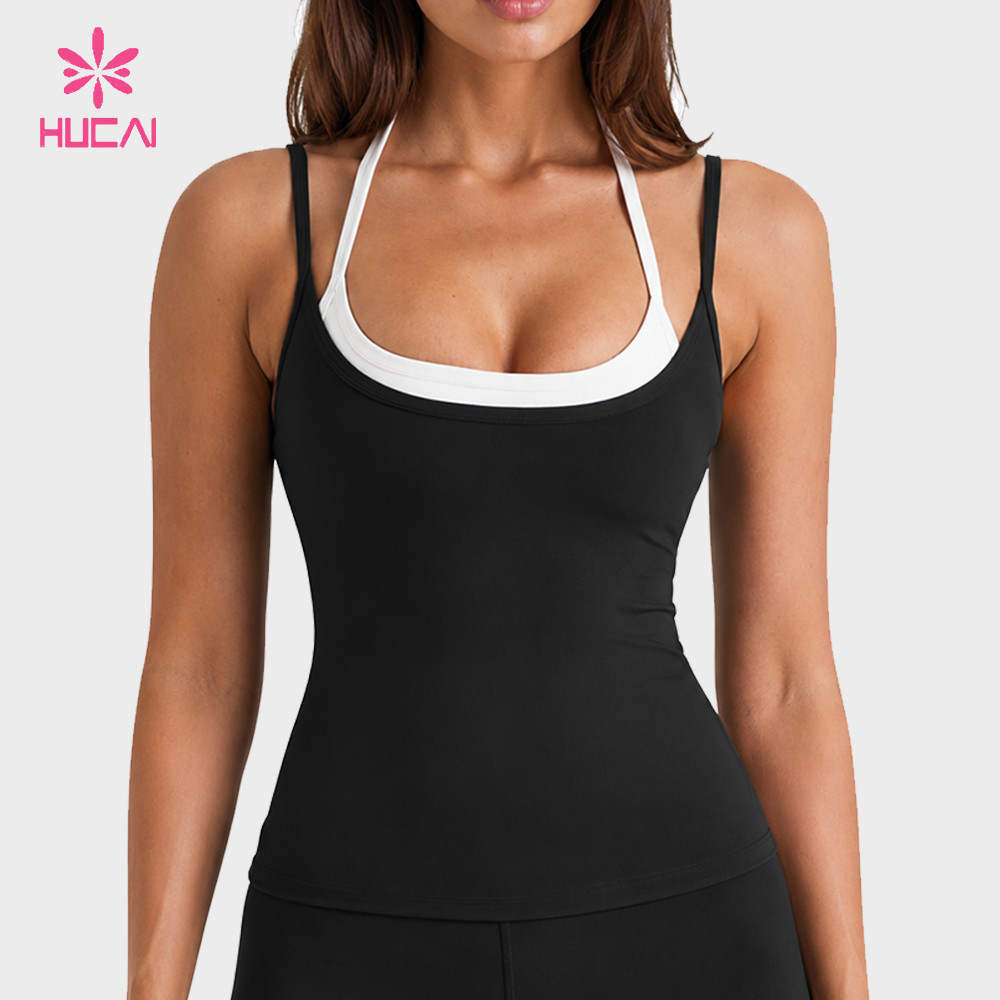
Tank silhouettes with integrated support keep expanding across UK and US training and studio collections. Some styles are longline two-in-one bras designed to be worn as tops; others are cropped tanks with a built-in shelf bra or a sewn-in underband; a growing number sit between both, marketed as bra-top hybrids. For a brand developing private label activewear, the retail story sounds simple. The manufacturing story is not: support, inner cup or lining, underband tension, armhole depth, neckline coverage, body length, layering ease and how easily the garment goes on and off all interact inside one product.
When those decisions are left open, brands often discover the issue only at the sample stage, when the outer fit looks right but the inner structure pulls the neckline, opens the armhole or makes the top difficult to wear. HUCAI Sportswear, a women's activewear and sportswear manufacturer in Dongguan, China, reviews built-in bra tanks and bra-top hybrids as integrated support systems, not as a tank with a bra added after the silhouette is finished. This article explains what to define before the first sample, so the project brief, fabric review and sample acceptance criteria match from the start.
Quick Answer
A built-in bra tank or bra-top hybrid should be developed as one integrated support system. Before sampling, the brand and manufacturer need to define the product role, the support target, the inner and outer fabric pairing, the underband and lining structure, and the neckline, armhole and body-length relationship, then agree how the first sample will be judged through movement and wash review. Support level depends on construction and project requirements, and should be confirmed through samples rather than assumed from the silhouette.
Table of Contents
- Who This Article Is For
- Start From the Product Role, Not the Silhouette
- Support Architecture: One System, Not One Layer
- Inner and Outer Fabric Pairing
- Neckline, Armhole and Body Length Decisions
- Sample Fitting and Movement Review
- When a Separate Bra and Tank Is the Better Route
- Decision Check
- Manufacturer Insight
- FAQ
- Final Takeaway
Who This Article Is For
- Primary reader: Growing activewear brands planning a built-in bra tank, bra-top hybrid or two-in-one top for the first time.
- Secondary reader: Private label buyers and product developers evaluating whether hybrid tops fit their capsule and which supplier questions to ask.
- Product stage: Concept and brief development, before fabric sourcing and pattern sampling are finalized.
- Problem being solved: Turning a visible retail direction into construction, fabric, fit and sample-acceptance decisions that survive production.
- Who may not need this article: Brands with an approved, sampled built-in bra tank style who already have confirmed specs and are reordering the same product.
What you gain from this article: a pre-sampling review framework that covers product role, support architecture, inner and outer fabric behavior, neckline and armhole risk areas, sample fitting checks, and the point at which a separate bra and tank becomes the more practical route.
Start From the Product Role, Not the Silhouette
The first question is not whether the top should have a shelf bra or a sewn-in bra. It is what job the garment plays in the customer's wardrobe and in the brand's collection. A studio top worn for low-impact classes has different requirements from a commuter-friendly top worn all day, and both differ from a longline bra marketed as a top for training sessions. When the product role is unclear, every later decision, from fabric weight to underband tension, becomes a guess.
Define the role before discussing construction details:
- Activity direction: which movement and intensity level the style should be developed for, to be confirmed during sampling rather than assumed from appearance.
- Coverage and length: cropped, waist-length or longline, and how much bust coverage the brand wants the style to provide.
- Layering position: worn alone, under an open layer, or over other tops, which changes seam placement and fabric hand feel.
- Support target: a development direction such as light or medium support, defined by the construction review, not by a marketing label alone.
Three construction routes are commonly compared at this stage. The table below separates them by structure and development weight:
| Construction route | Typical structure | Development focus |
|---|---|---|
| Built-in bra tank | Tank silhouette with an integrated support layer, underband and optional cups or lining | Inner and outer tension balance, neckline stability, wear and doff ease |
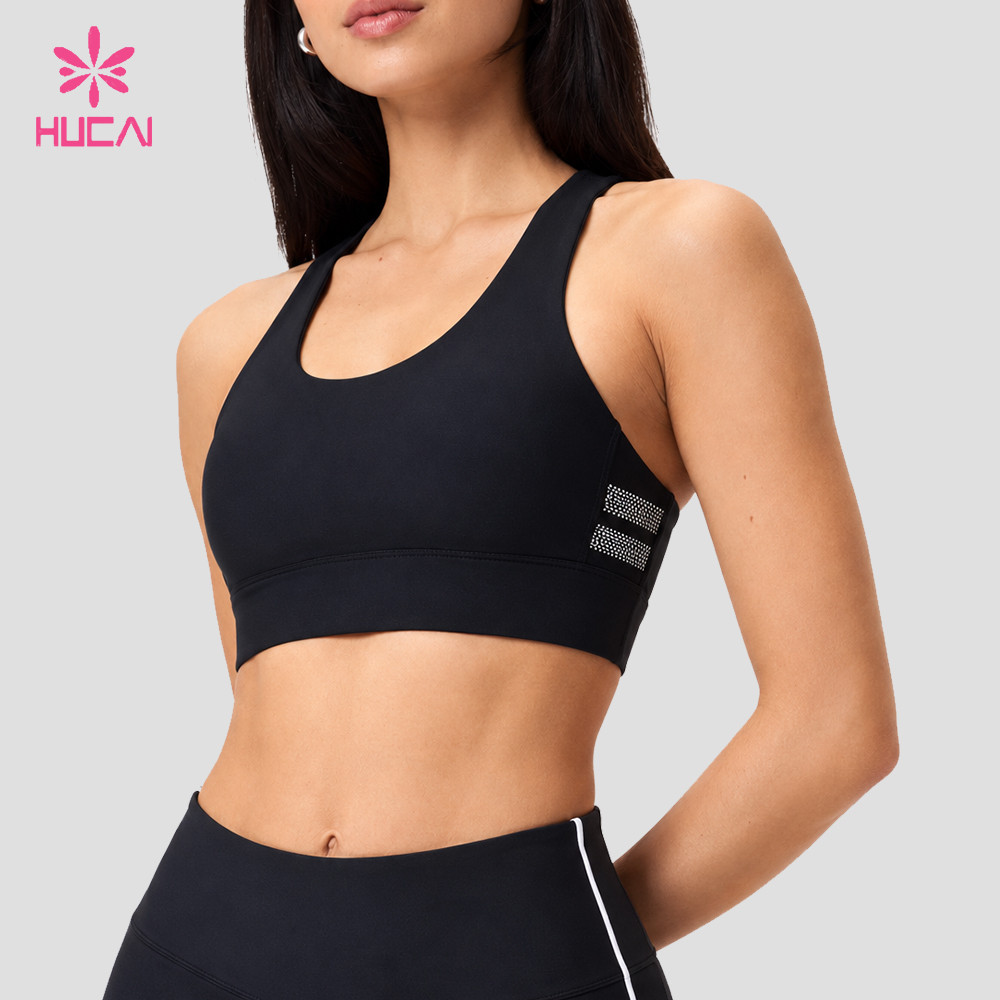
| Bra-top hybrid / two-in-one | Longline bra or cropped top where the bra is the garment | Underband stability, fabric recovery, hem and edge control |
| Shelf-bra tank | Lighter inner band with minimal shaping | Coverage, band pressure and activity fit limits |
Each route can be reviewed with a different set of sample questions. Brands that know which route they intend can give the supplier a sharper brief and avoid comparing unrelated constructions during development.
Support Architecture: One System, Not One Layer
Support in a built-in bra tank comes from the way several elements work together: the underband or lower band, the side panel tension, the inner layer or lining, the strap and shoulder direction, and the neckline edge. Changing one element changes the behavior of the others. A firmer underband, for example, changes how the neckline sits; a narrower strap changes how much the shoulder edge carries.
For a hybrid top, treat these as one system. Define the support target first, then review which structure can deliver it for the intended activity. "Medium support" is a useful development direction only when the brand and the manufacturer agree on what will be checked in the sample: band stability under movement, coverage through the bust, and the balance between support and comfort. Support level should always be written as dependent on construction and project requirements rather than promised from the sketch.
Two details deserve early attention because they drive most sample revisions:
- Underband and inner band behavior: whether the band stays in place during movement without digging, and how much of the band tension transfers to the outer layer.
- Inner cup, pad or lining direction: whether the style needs a removable pad, a fixed cup or a lined front, and how that layer is finished so it does not shift or show through the outer fabric.
Brands working from a defined specification can route these decisions through OEM review with a tech pack and measurements, while brands starting from reference images usually benefit from sports bra development guidance before the pattern is cut.
Inner and Outer Fabric Pairing
The inner and outer layers of a built-in bra tank do not have to be the same fabric, and often should not be. The outer layer carries the silhouette, surface feel and opacity; the inner layer sits against the skin and must recover consistently under stretch. When one fabric is used for both, the compromise usually appears in one of these areas.
Key review points for fabric pairing:
- Recovery balance: the inner layer should return to shape at a similar or controlled rate to the outer layer, otherwise the garment can buckle at the underband or neckline after movement.
- Hand feel against skin: inner fabrics should be confirmed for softness and moisture behavior during wear review, not judged only from a fabric swatch.
- Opacity and coverage: light outer knits may need a lining layer or a tighter knit structure to reach the coverage the brand wants.
- Surface and sheen: visible inner seams or pads through the outer layer should be reviewed in the actual color and weight of the chosen fabric.
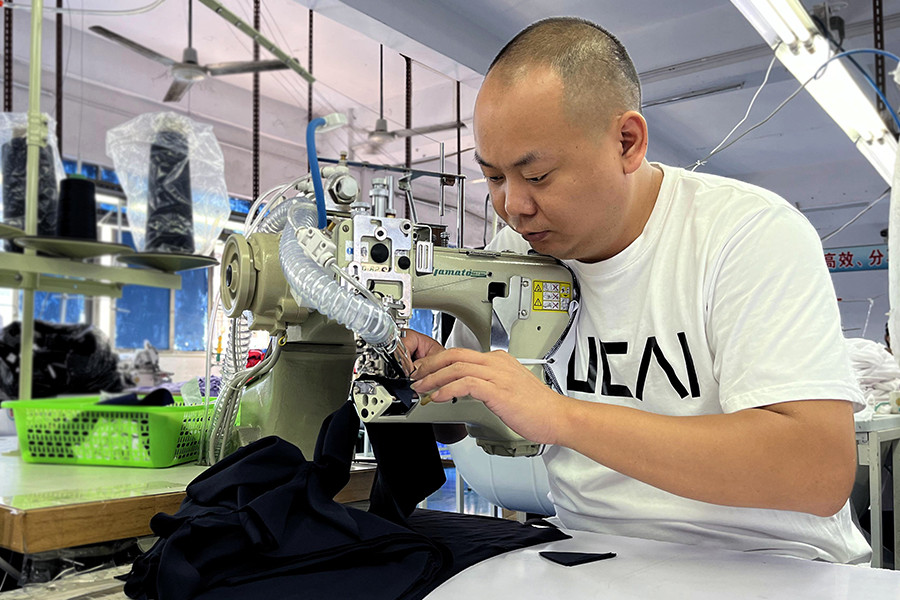
This is also the stage to confirm trims: elastic width and placement, binding, and any logo or label position that crosses a seam. Fabric selection review at HUCAI Sportswear normally covers stretch, recovery, opacity and hand-feel direction before the first sample is cut, so the pairing is tested rather than assumed.
Neckline, Armhole and Body Length Decisions
The outer silhouette and the inner support layer pull against each other at three points: the neckline, the armhole and the hem. This is where a hybrid top usually fails in sampling, not because the pattern is wrong on paper, but because the tension between layers was never reviewed as a pair.
Review each area with the support system in mind:
- Neckline: higher necklines need enough fabric recovery and correct band tension to avoid collapse or a gaping edge; lower necklines move more of the holding job to the side panels and straps.
- Armhole: armhole depth and edge finish decide whether the inner band stays hidden, whether the edge rolls, and whether the wearer has full range of motion for the intended activity.
- Body length and hem: cropped lengths must still cover the underband without riding up; longline versions add hem stability requirements that short tops do not have.
- Back direction: racerback, cross-back or cut-out details change tension paths, so they should be reviewed together with the band, not styled separately.
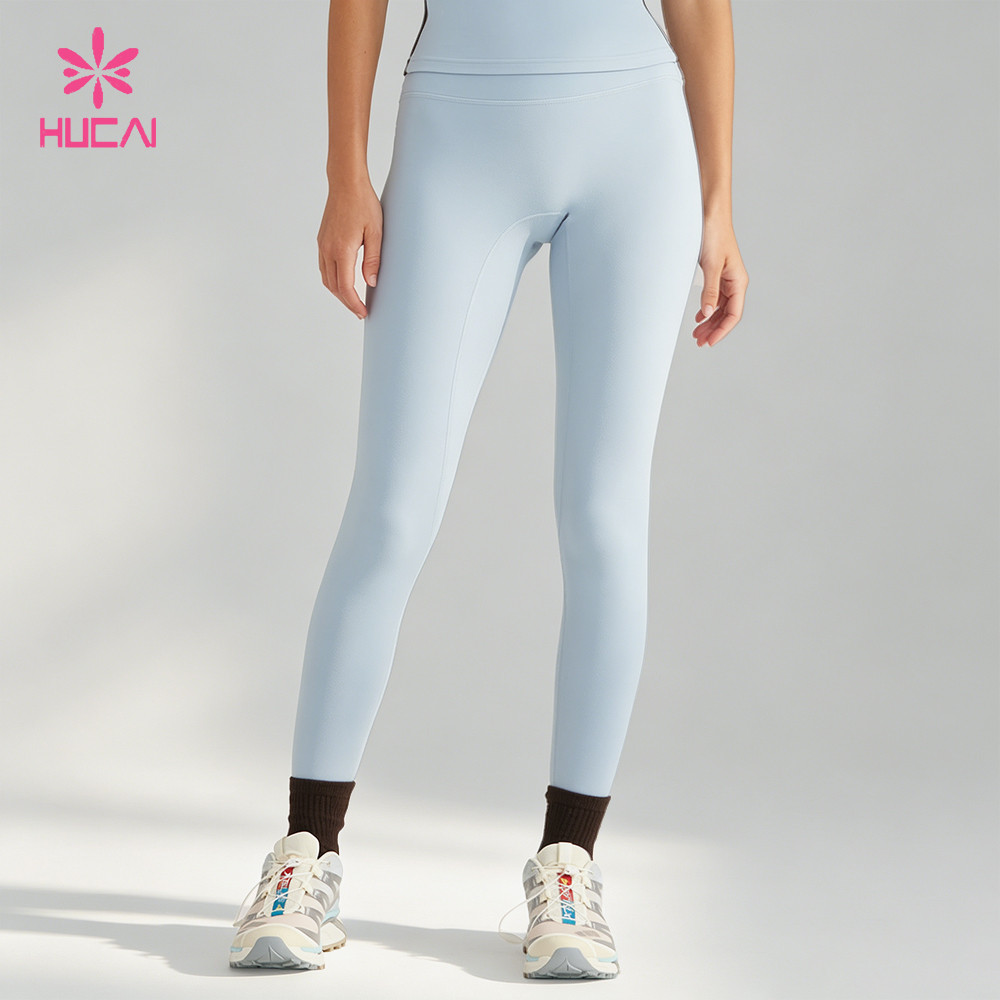
When brands plan a capsule around custom tank top shapes and matching bottoms, these proportional decisions should be confirmed in the same development round, so the top and the set stay consistent.
Sample Fitting and Movement Review
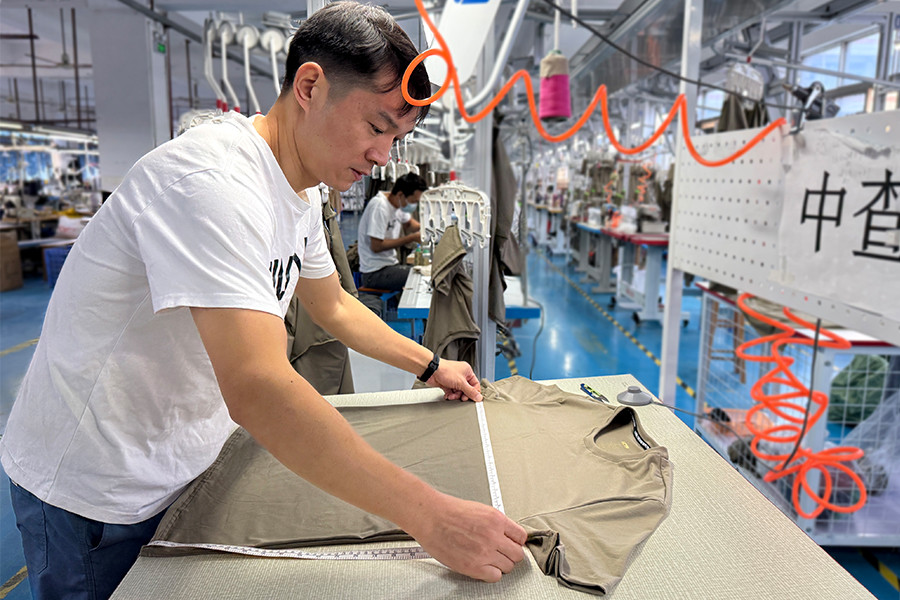
A built-in bra tank can look correct on a mannequin and still fail in wear. The first sample should therefore be reviewed in three layers: fit on the body, movement behavior, and wash and care behavior. Each answers a different question, and each can cause a separate revision round if skipped.
A practical first-sample review covers:
- Static fit: band position, neckline edge, armhole coverage and body length against the measurement sheet.
- Movement fit: overhead reach, stretching, bending and the specific movements of the target activity, checking for ride-up, gaping, band displacement and pressure points.
- Wear and doff: how easily the style goes on and off, which is a common hidden issue in hybrids with firm inner bands.
- Wash review: recovery after washing, edge curl, pad or lining movement, and color or surface change in the actual garment construction.
The sample team should record what changed between the intended brief and the actual garment, and separate fit corrections from construction corrections. Brands with an established size chart and spec can review these points through the sample policy and pre-production confirmation steps before bulk planning.
When a Separate Bra and Tank Is the Better Route
Hybrid construction is not always the right answer. For some product roles, a separate sports bra and tank remains the more practical development route, even when the brand likes the look of a built-in style.
Consider the separate route when:
- The support target is higher than a shelf or light built-in structure can be confirmed to deliver for the intended activity.
- The brand wants customers to mix bra and top sizes, which a fixed combination cannot offer.
- The brand needs one tank style to work across several bra silhouettes in the collection.
- Construction complexity, sample revision risk or bulk consistency control would grow faster than the retail benefit of a one-piece style.
The decision is a trade-off, and the right answer depends on the brand's positioning, activity mix and size strategy. This is a normal discussion during ODM development, where product direction, fabric and sample priorities are reviewed before bulk planning.
Decision Check: Is Your Built-In Bra Tank Direction Ready for Sampling?
Before requesting samples, confirm the following:
- Product role: target activity, coverage and length direction are defined and written into the brief.
- Support target: the required support direction and the structure planned to deliver it are agreed as development requirements.
- Fabric direction: inner and outer fabric options are shortlisted for recovery, hand feel, opacity and surface review.
- Silhouette points: neckline, armhole, body length and back style are confirmed against the inner support layer.
- Sample criteria: static, movement, wear and wash review points are agreed with the supplier before the first sample is cut.
If three or more criteria are confirmed, the direction is ready for a structured sample request. If fewer than three are resolved, additional development planning will reduce sample revision cycles and control cost. When the brief is incomplete, sharing reference images plus these five points lets a manufacturer give a more useful development response than a quotation request alone.
Ready to develop a built-in bra tank or bra-top hybrid? Share your reference images, product role, support target and sample priorities, and HUCAI Sportswear will review the construction direction before sampling. Start with an ODM development discussion, or send a confirmed tech pack and measurements for OEM review.
Manufacturer Insight
A common early-stage issue in bra-top hybrids is not that the outer silhouette looks wrong, but that the inner support layer and the outer layer were developed at different times. The outer fit may look correct in the sample photo, yet the inner underband or lining tension distorts the neckline, opens the armhole, or makes the garment difficult to put on and take off. In many reference-led projects, the first sample looks acceptable on a mannequin and the problem only appears when a real person moves. That is why movement fitting and wear review should be part of the first sample round, not the third. Define the inner tension and the outer ease together, review them in motion, and the revision count usually drops.
FAQ
What support level can a built-in bra tank provide?
The support level depends on the construction, fabrics, underband and lining, and the intended activity, so it should be defined as a development target and confirmed through samples. Built-in bra tanks are most commonly developed toward light or medium support directions; higher support requirements normally need a more structured inner system or a separate sports bra.
Is a shelf bra the same as a sports bra?
No. A shelf bra is a lighter inner band that gives light coverage and minimal shaping, while a sports bra is built around band, cup or lining, strap and fabric decisions for a defined support target. For studio or low-impact roles a shelf construction may be suitable; for higher movement intensities the review should confirm whether the structure meets the requirement.
Should the inner bra use the same fabric as the tank?
Not necessarily. The inner layer should be chosen for recovery, hand feel against the skin and moisture behavior, while the outer layer carries the silhouette, surface and opacity. Using one fabric for both is possible, but the recovery and opacity compromise should be reviewed in the sample rather than assumed.
Are removable pads necessary in a built-in bra tank?
Removable pads are an option, not a default. Whether they are needed depends on the coverage target, the styling, the retail position and the brand's preference for laundry simplicity. If pads are included, the opening, pad shape and wash behavior should be confirmed before sampling.
What causes neckline distortion in bra-top hybrids?
Neckline distortion usually comes from tension imbalance between the inner support layer and the outer fabric, an underband that pulls the front edge, or outer fabric with insufficient recovery for the neckline height. It is normally identified during movement fitting and corrected by adjusting band tension, fabric pairing or edge finish.
How should the first sample be evaluated?
Evaluate the first sample in three stages: static fit against the measurement sheet, movement and wear review on a real person, and a wash review after the first wear cycle. Record what changed from the brief, and separate fit corrections from construction corrections before the second round.
Should we send a tech pack or reference images for a built-in bra tank?
Send whichever you have. A tech pack with measurements, construction details and fabric requirements can move directly into OEM review; reference images plus a product role, support target and sample priorities are enough to start ODM development. The more complete the brief, the more specific the first sample will be.
What is the MOQ for private label built-in bra tank development?
The current public MOQ starts from 100 pcs per style, while final color, size, fabric, trim and customization planning depends on the confirmed project. Sample development usually takes about 10-15 days depending on style, fabric, trim and revision requirements, and bulk production often takes about 25-30 days after pre-production details and approvals are confirmed.
Final Takeaway
A built-in bra tank or bra-top hybrid is a construction decision, not just a styling choice. The brands that move fastest from concept to a usable sample are the ones that define the product role, the support target, the inner and outer fabric pairing and the neckline, armhole and body-length relationship before the first pattern is cut. When those points are clear, the sample round focuses on refinement rather than discovery, and the route to bulk production stays predictable. If your brief is still forming, the mid-article route above, sharing references and sample priorities for ODM review, is the practical next step.
About HUCAI Sportswear
- Founded in 1998, HUCAI Sportswear specializes in women's activewear and sportswear manufacturing from Dongguan, China.
- OEM and ODM development support for sports bras, tops, leggings, shorts and matching sets, including built-in bra tank and hybrid top projects.
- Integrated development and manufacturing workflow with fabric and trim review, sample development and sample-to-bulk consistency control.
- AQL 2.5-based inspection forms part of the quality workflow before shipment.
Current certification information can be reviewed during supplier evaluation based on the project and documentation requirements.