
Fabric Recovery After Long Wear: Why Initial Stretch Tests Are Not Enough for Activewear Sampling
Most activewear fabric approvals rest on a single number. A swatch is stretched once, released, and read against a recovery figure on a datasheet. That reading is useful, but it describes one cycle, one direction, and a few seconds of load. Long wear is a different event. A legging waistband holds tension for hours. A sports bra underband is loaded continuously through a session, then loaded again the next day. A gusset seam is stretched, compressed, washed, and dried in a repeating loop.
This is where fabric recovery testing in activewear sampling usually breaks down: the material passes and the garment still fails. The failure surfaces later as a waistband that relaxes, a seat panel that thins out, a knee that bags, or a band that stops holding after two washes. In sample reviews at HUCAI Sportswear, recovery questions most often arrive after fit is approved and shortly before bulk planning — the most expensive point to answer them.
This guide covers what to validate during sampling, which checks a single stretch test cannot replace, and how to write recovery acceptance criteria that both a brand team and a factory can act on.
Quick Answer
A single stretch test measures how a fabric behaves once. It does not measure how a garment recovers after repeated load and washing. Sampling should add three checks: repeated-stretch recovery at the zones that stay under tension, post-wash dimensional change at defined measurement points, and a garment-level wear review that records where the product relaxes first. Recovery should be specified per direction, per zone, and against a project-defined acceptance limit before sampling starts, not after the first fit session.
Table of Contents
- Who This Article Is For
- What a Single Stretch Test Actually Measures
- Long Wear Is a Fatigue Problem, Not a Stretch Problem
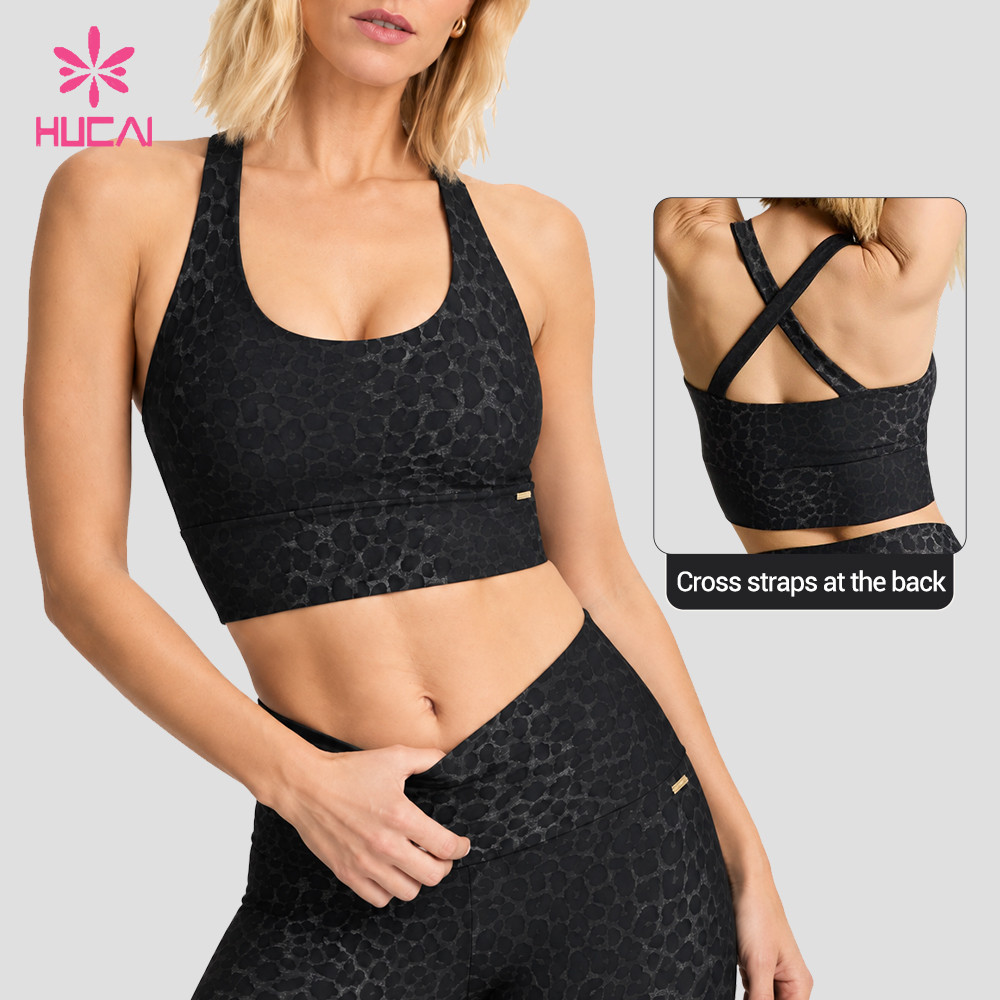
- Three Recovery Checks Worth Adding to Sampling
- Where Recovery Fails First in Women's Product
- How to Write Recovery Requirements a Factory Can Test
- OEM and ODM: Who Owns the Recovery Decision
- Decision Check
- Founder's Technical Insight: Jean Yuan
- FAQ
- Final Takeaway
Who This Article Is For
- Primary reader: growing women's activewear brands building or revising a leggings, sports bra, or matching set program.
- Secondary reader: established brands adding recovery criteria to an existing tech pack or supplier brief.
- Development stage: fabric direction selected, first or second sample round in progress, bulk commitment not yet placed.
- Problem being solved: the fabric reads acceptably on a stretch test, but the sample shows roll-down, bagging, or growth after wear and washing.
- Who may not need this article: buyers still at concept stage with no fabric direction, no target category, and no sample brief yet.
What you gain from this article: a working definition of recovery that separates fabric behavior from garment behavior, three sampling checks that expose fatigue before bulk, and a specification structure that lets a factory test the same thing you approved.
What a Single Stretch Test Actually Measures
A conventional stretch reading answers a narrow question: how far does this material extend under a defined load, and how much of that extension comes back after release. It is a material property. It is measured on a swatch, under controlled conditions, in a single cycle, at a short dwell time.
Four limits follow from that setup, and each one matters for a garment that will be worn for two hours.
- One cycle. A swatch that recovers well on the first extension may recover less on the twentieth. Recovery is not a constant; it degrades with repeated loading.
- One direction. Knitted activewear fabrics rarely behave the same along length and width. A single figure usually hides the weaker direction.
- Short dwell. A test that holds load for seconds does not describe what happens when a waistband holds load for an hour.
- Material, not garment. A fabric can read well and still fail when it is strained by a pattern, pulled by an elastic, or interrupted by a seam.
Public product language from established retail programs reflects this. Benchmark brands increasingly describe fit retention and shape recovery per zone — waistband, underband, seat, thigh — rather than as a single fabric claim. That shift is a market signal worth translating into development terms: recovery is being treated as a garment-level property, not a mill certificate. The fabric selection decisions behind it are covered in the fabric selection guide.
The practical consequence is simple. A datasheet figure is a screening tool, not an approval. Approval needs evidence from the garment, under conditions closer to wear.
Long Wear Is a Fatigue Problem, Not a Stretch Problem
During a training session, most of a garment is not stretched to its limit. A small number of zones sit under sustained, moderate tension: the waistband, the underband, the strap anchors, the gusset, the seat panel, and the knee. Those zones accumulate load rather than peak load.
Sustained load produces a different failure mode from high extension. The material creeps — it continues to extend slowly while the load is held — and the fraction that returns after release drops. Heat and moisture from the body accelerate the process. By the end of a session, the zone has been loaded for far longer than any single-cycle test represents.
This is why a sports bra can pass an underband stretch check and still lose grip at the ribcage after several weeks. The cup and the shell are not the weak point. The band is, because it is the part that never gets to relax. The construction variables that determine whether a band holds are covered in the sports bra development reference.
Community wear reports across fitness forums describe the same pattern from the consumer side: garments that feel firm on the first wear and progressively softer at the band, the waist, or the knee. Those reports are anecdotal, but they are consistent with the mechanism, and they point to where a development team should concentrate its checks.
Three Recovery Checks Worth Adding to Sampling
A single stretch reading can stay in the approval file. It just needs company. Three additional checks cover what it cannot.
| Check | What it answers | What a single stretch test misses |
|---|---|---|
| Repeated-stretch recovery | Does the zone still return after many load cycles? | Degradation across cycles |
| Post-wash dimensional change | Does the garment stay the same size after laundering? | Shrinkage and relaxation from heat and moisture |
| Garment-level wear review | Where does this specific product relax first? | Pattern strain, seam interaction, elastic behavior |
The first check is a fatigue test rather than a strength test. A defined zone is cycled repeatedly between two marked points, and the return is measured after a settling interval. The number of cycles and the acceptance limit are project decisions, not universal constants. What matters is that the count and the limit are written down before the test runs, so the result cannot be reinterpreted after the fact.
The second check is a dimensional check, not a hand-feel check. Define the measurement points, define the wash and dry cycle, and measure before and after at the same points with the same method. A two-layer waistband, a bonded edge, and a lined gusset each need their own points because each changes at a different rate.
The third check is the one brands most often skip. Put the sample on a body, run the intended movement pattern, and record where it relaxes — with a photo taken at the same angle before and after. A written note that says "waistband felt loose" is not usable. A marked measurement that moved by a recorded amount is.
How these checks slot into the sample round is described in the sample development policy. HUCAI Sportswear reviews the three together rather than in sequence, because a repeated-stretch result and a post-wash result often disagree, and that disagreement is the useful information.
Where Recovery Fails First in Women's Product
Recovery failure is not random. It concentrates in the same places across categories, and knowing the order saves sample rounds.
Leggings: the waistband relaxes before the leg does
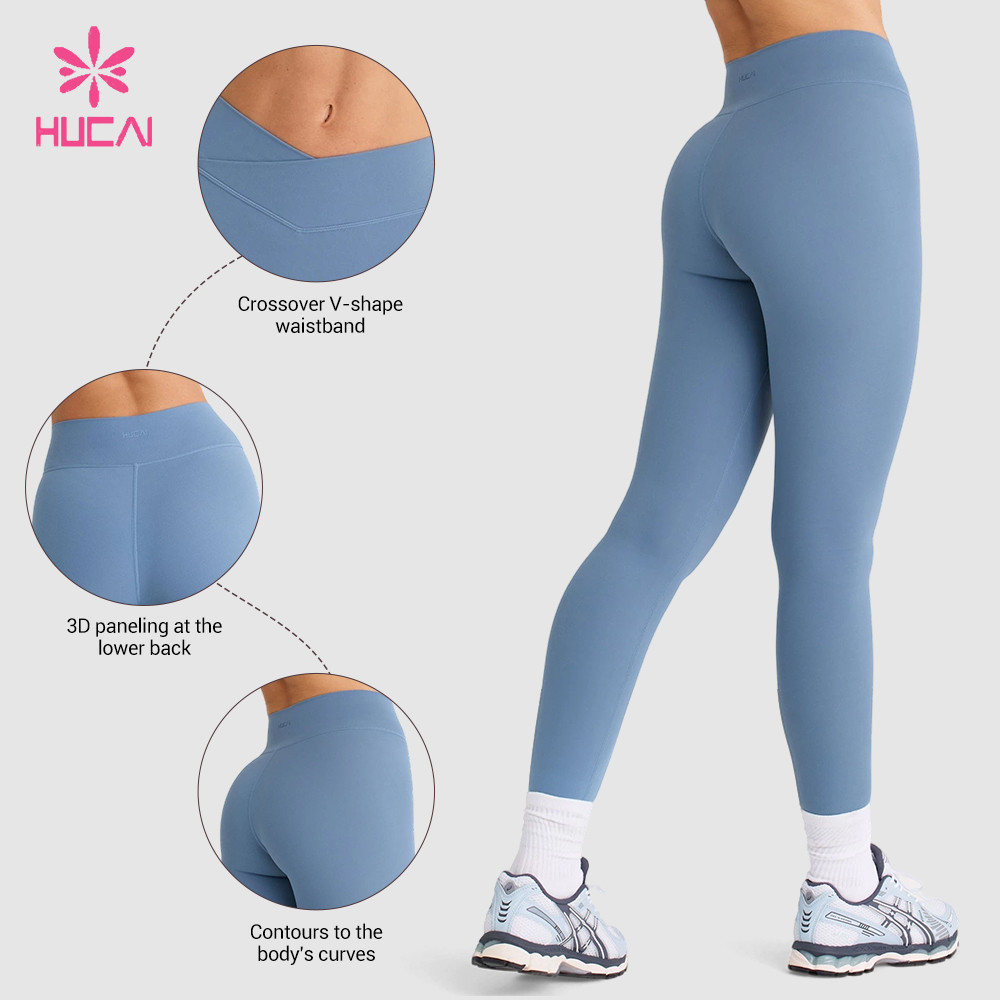
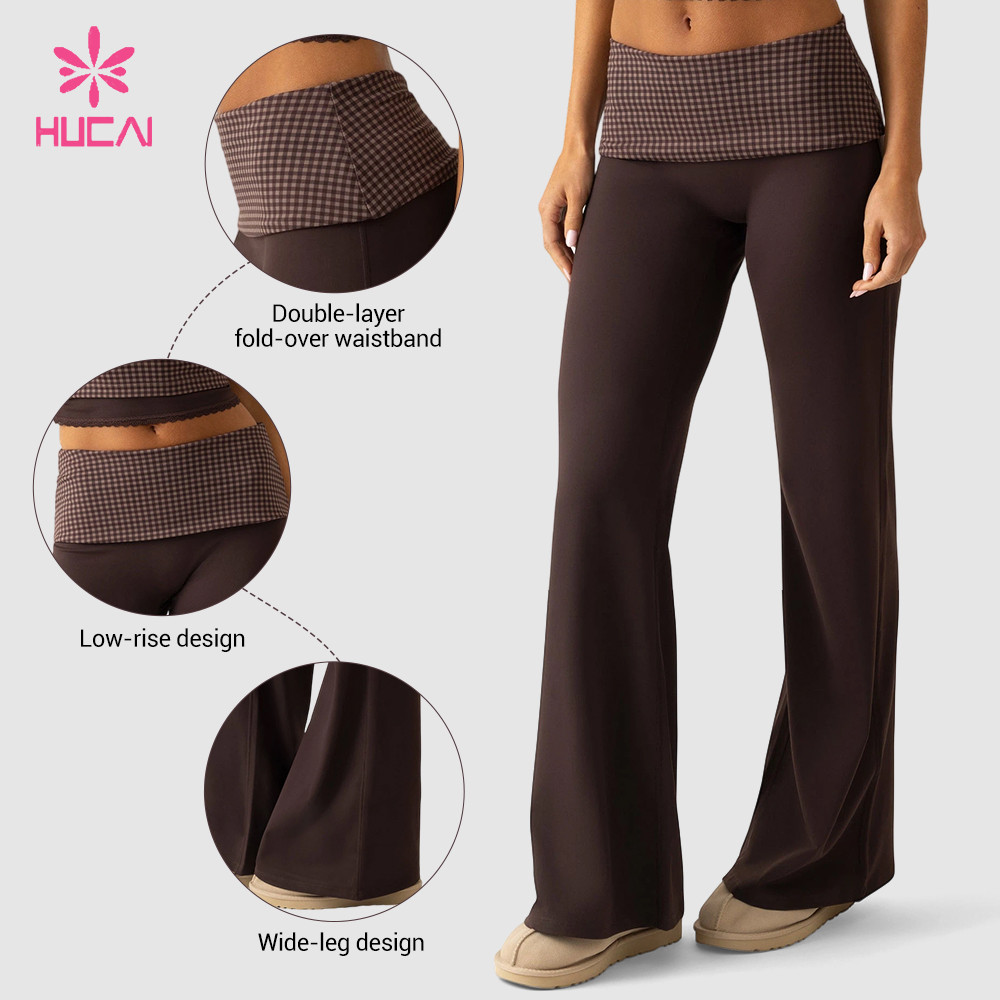
The waistband carries the highest sustained tension in the garment and usually combines two materials with different recovery behavior — an elastic component and a shell fabric. When the shell grows slightly and the elastic returns, the band loses contact with the body and starts to roll or slide. Judging the leg fabric alone will not predict this. The leggings development reference sets out the band structures that behave differently under this condition.
Sports bras: the underband, then the strap anchors
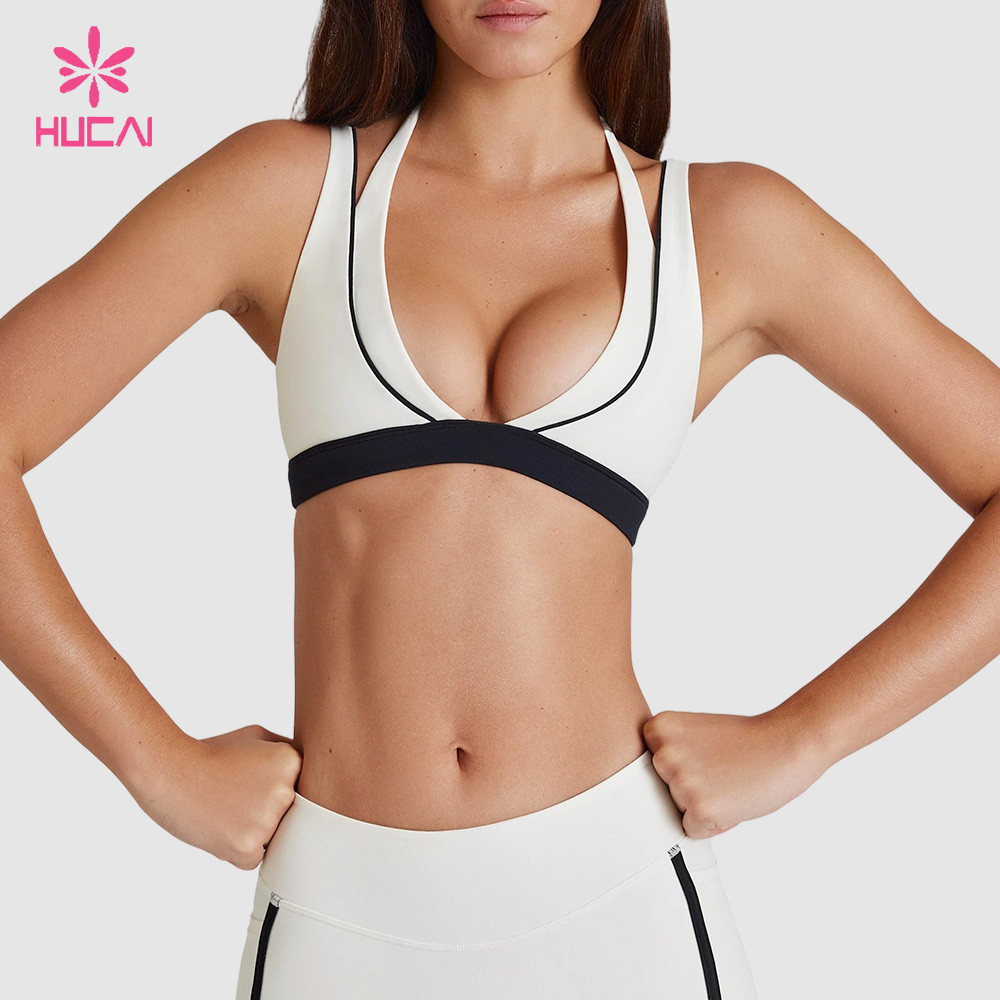
An underband that relaxes loses support direction before the cup shows any change. Strap anchors fail second, because the load at the attachment point is concentrated on a small area of fabric and a short seam.
Gussets and seat panels: the seams age faster than the fabric
A gusset is loaded, compressed, and washed at a higher frequency than the rest of the garment. Seam construction and the elasticity of the thread matter as much as the shell. A panel that measures correctly when flat can distort when the seam is under tension.
Knees and cuffs: bagging is a recovery symptom
Bagging at the knee is usually read as a fit problem. It is more often a recovery problem: the zone extended under movement and did not return, so the pattern no longer matches the body.
How to Write Recovery Requirements a Factory Can Test
A requirement that says "good recovery" cannot be tested. A requirement that names the zone, the direction, the load, the cycle count, the settling time, and the measurement method can be. The specification template HUCAI Sportswear reviews with buyers keeps the following fields in one place, because a missing field is usually the reason two sample rounds cannot be compared:
- Zone: the specific garment area under review, not the whole style.
- Direction: length and width tested and reported separately.
- Load description: how the zone is extended, and between which marks.
- Cycle count and dwell: how many repetitions, and how long each load is held.
- Settling interval: how long after release the return is measured.
- Measurement method: the same operator, the same flat surface, the same instrument.
- Wash and dry cycle: the exact cycle used before the post-wash measurement.
- Acceptance limit per zone: a project-defined threshold, agreed before the test.
The acceptance limit is the part teams negotiate hardest, and it should not be borrowed from another product. A high-compression training tight and a soft studio legging do not share a target. What they can share is the discipline of stating the target before the sample is cut, and recording the result against it. The measurement sequence used during development is described in the leggings development process.
Two habits make the difference in practice. First, measure the same zone before and after, not a different zone that happens to be easier to reach. Second, keep the raw readings. A single pass or fail tells you the outcome; the readings tell you how close the product was to the limit and whether a small change to the band or the shell would be enough.
OEM and ODM: Who Owns the Recovery Decision
The recovery specification has to live somewhere. Where it lives depends on how complete the brief is.
In an OEM project, the brand owns the specification. The tech pack states the zones, the direction, the cycle count, and the acceptance limit, and the factory's role is to test against it and report the readings. This works when the brand already knows how the product should behave. It fails when the tech pack describes measurements and construction but leaves recovery undefined, because the factory then has no basis for a judgement and will default to a general fabric reading. The review points for this path are set out in the OEM development service.
In an ODM project, the recovery target is usually established during development rather than supplied. Reference images communicate shape, not behavior, so the first sample round becomes the point where the target is agreed — which zones matter, what the product is expected to do after a session, and which tradeoff between softness and retention the brand is willing to accept. That conversation needs to happen before the fabric is locked. The ODM service path describes how that clarification is structured.
Either way, the decision has a cost attached. Raising a recovery target can push a fabric selection toward a higher elastic content or a heavier construction, which changes hand feel, opacity, and price together. Deciding that tradeoff at sample stage is a development cost. Deciding it after bulk is a return cost.
Decision Check: Is This Product Ready for a Recovery Review?
Before requesting the next sample round, confirm the following:
- Zones named: the specific areas under review are listed — waistband, underband, gusset, seat, knee — not the whole garment.
- Direction split: length and width recovery are reported separately rather than as one number.
- Cycle and dwell defined: the repeated-load test has a stated count and hold time, agreed before it runs.
- Wash cycle fixed: the laundering cycle used before post-wash measurement is written into the brief.
- Acceptance limit set: a project-specific threshold exists per zone, and the raw readings are retained.
If four or five of these are in place, the sample round can produce a decision rather than an opinion. If fewer than three are resolved, the next round is likely to repeat the same conversation, and the recovery question will still be open when bulk planning starts.
Where to Take This Next
If your brief already defines zones, directions, and an acceptance limit, the useful next step is a specification review before the sample is cut: send the measurement points, the fabric direction, the construction details, and the recovery target for the zones that matter. If the target is still being negotiated, start from the reference images, the intended activity, and the tradeoff you are willing to accept between softness and retention, and clarify the recovery criteria for reference-led development before sampling begins. Both routes are more productive than approving a fabric on a single reading and discovering the gap in the wear test.
Founder's Technical Insight: Jean Yuan's Development Note
When brands bring us a legging or a bra for sampling, the recovery problem we see most often is not in the shell fabric. It is in the mismatch between two components that were each approved on their own.
A waistband is usually an elastic structure joined to a shell fabric. Both may pass a single stretch reading. But they do not return at the same rate. The shell grows a little and comes back slowly; the elastic returns quickly and pulls the band tighter than the pattern intended. On the body, that difference reads as roll-down at the front and a compressed feeling at the side. Teams then adjust the pattern, when the pattern was describing the intent correctly — the materials were simply not matched.
The same logic applies to a bra underband. The band is the component under constant load, and its recovery behavior after repeated extension decides whether the support direction survives the first month. A cup that fits on day one tells you nothing about that.
What we watch in the sample room is a sequence, not a single figure. Mark the gauge length on the zone. Hold the load for a defined interval. Release. Measure again after a settling period — not immediately, because the immediate reading flatters the material. Repeat the same sequence on the same zone after the wash cycle. Record the readings side by side. When the shell and the elastic are measured this way, the mismatch becomes visible before bulk, and the fix is usually a material pairing decision rather than a pattern change.
Before approving bulk yardage or cutting the next sample round, ask your development team to confirm four things: which zones were tested, whether length and width were reported separately, how long the load was held, and what the readings were after washing. If any of those four cannot be answered from the file, the recovery approval is not yet evidence — it is an assumption.
At HUCAI Sportswear, we run this sequence during sample development so the discussion happens while a material change is still inexpensive, and we keep the readings alongside the approved sample so the bulk reference includes behavior and not only measurements.
FAQ
Why is a single stretch test not enough for activewear sampling?
Because it describes one cycle under one condition, while the garment is loaded repeatedly for hours. A single reading cannot show how recovery degrades across cycles, how the zone behaves after washing, or how the shell and the elastic interact when joined. Sampling needs repeated-load and post-wash checks in addition to the fabric reading.
What does recovery mean in fabric terms?
Recovery is the proportion of an extension that returns after the load is released. It is usually reported with the extension that produced it, because the same material recovers differently at different extensions. A recovery figure without its test conditions is not a usable specification.
How many stretch cycles should we review before bulk production?
The count is a project decision, not a universal standard. What matters is that the count is chosen deliberately, written into the brief before the test runs, and applied consistently across samples so results can be compared. A count that changes between rounds produces readings that cannot be compared.
Does washing change recovery behavior?
It can, and the change is often larger than the dry-state difference between two candidate fabrics. Heat and moisture relax tension in elastic components and can shift the dimensions of a two-layer band or a bonded edge. That is why post-wash measurement at defined points belongs in the same specification as the dry-state test.
Why does a waistband fail before the leg fabric?
Because it carries sustained tension and usually combines two materials with different recovery rates. When the shell and the elastic return at different speeds, the band loses contact and starts to roll, even if both components passed their own readings. The failure is a pairing problem more often than a pattern problem.
Should recovery be specified per direction?
Yes. Knitted activewear fabrics commonly behave differently along length and width, and the weaker direction is the one that will show up in wear. Reporting a single combined figure hides which direction is limiting the product, and it removes the information needed to choose between two fabric options.
Can recovery requirements be developed from reference images?
Only partly. Reference images communicate shape, proportion, and construction intent. They do not communicate how the product should behave after a session, which is a stated target. For reference-led projects the recovery target is normally agreed during the first development review rather than supplied with the images.
What should we send to start a recovery review?
Send the zones you want tested, the fabric direction, the construction details, the intended activity, and any existing readings. If a sample already exists, include the measurement points you used. The current public MOQ starts from 200 pcs per style, sample development usually takes about 10-15 days depending on style, fabric, trim, and confirmed details, and bulk production often takes about 25-30 days after pre-production approvals are confirmed.
Final Takeaway
A stretch test tells you what a material does once. Long wear asks what a garment does the hundredth time, after washing, with a seam under tension and an elastic pulling against a shell. Those are different questions, and only the second one predicts whether the product keeps its fit through a season.
The practical shift is to move recovery from a fabric certificate to a garment specification: name the zones, split the directions, fix the cycle and the wash method, set the acceptance limit before the sample is cut, and keep the readings. That structure turns a subjective wear comment into a development decision, and it gives a factory something testable to work against.
At HUCAI Sportswear, recovery is reviewed during sample development alongside fit and construction, so the material pairing is settled while a change is still inexpensive rather than after bulk yardage is committed.
About HUCAI Sportswear
- Founded in 1998, specializing in women's activewear and sportswear manufacturing
- OEM and ODM development support for sports bras, leggings, shorts, tops, and matching sets
- Structured sample development with fabric, trim, pattern, CAD, and sample support
- Sample-to-bulk consistency control and AQL 2.5-based inspection within the quality workflow
Current certification information can be reviewed during supplier evaluation based on the project and documentation requirements. Recycled or certified material options can be reviewed based on project requirements and available documentation.