
How to Build a Women’s Leggings Line for Everyday Movement and Light Training
Building a women’s leggings line is not the same as collecting a few popular silhouettes and putting them under one category. For brands working with a custom leggings manufacturer, planning a private label range, or deciding between OEM and ODM development, the real question comes earlier: what role should each leggings direction play inside the line? At hucai sportswear, line planning usually becomes much clearer once the team separates everyday-movement leggings from light-training leggings before sample work begins.
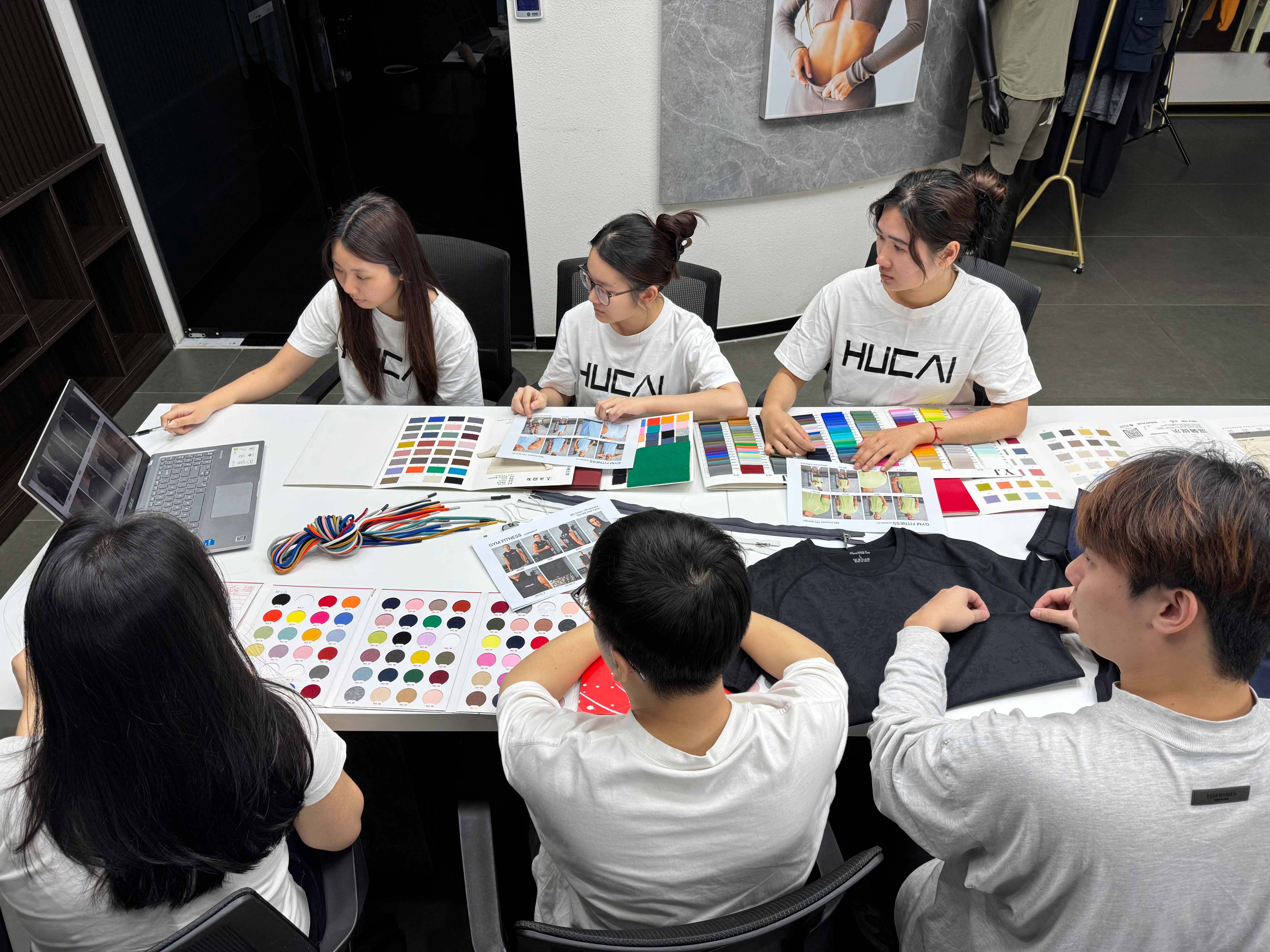 A style built for all-day movement, lower-friction comfort, and easier wearability should not be developed in the same way as a style expected to feel more stable in light training. Once the role changes, fabric direction, waistband behavior, opacity expectations, and sample priorities change with it.
Quick Answer
The strongest women’s leggings lines are usually built by defining product roles before sample work begins. Brands should first decide which leggings are meant for everyday movement, which are meant for light training, and which styles are only visual extensions. That makes fabric choice, waistband logic, fit review, and bulk execution much easier to control.
Table of Contents
- Who This Article Is For
- What Brands Usually Need at This Stage
- Why a Leggings Line Needs Role Clarity Before Style Expansion
- Everyday Movement vs Light Training: What Really Changes
- What Usually Forms a More Coherent First Leggings Line
- What Brands Should Confirm Before Sampling
- When to Start Through OEM and When ODM Is More Practical
- How Better Product Roles Improve Sample-to-Bulk Consistency
- Manufacturer Insight
- FAQ
- Final Takeaway
Who This Article Is For
This article is mainly for growing activewear brands that already know they want to build a leggings line, but have not yet fully defined how many role-based directions that first line should include.
It is also useful for established brands that want to refine fabric direction, waistband consistency, and sampling efficiency inside an existing leggings category. It is less useful for buyers who only want a fast price before clarifying product role and line structure.
Clearer line planning
So each leggings direction serves a real purpose instead of overlapping with the others.
Fewer avoidable revisions
Especially around waistband behavior, fabric handfeel, opacity expectations, and fit balance.
A stronger path to bulk
Because clearer approved roles are easier to repeat than vague sample outcomes.
Why a Leggings Line Needs Role Clarity Before Style Expansion
One common mistake in leggings line planning is to treat every new style as if it naturally adds more value. A brand adds a flare version, a no-front-seam version, a cross-waist version, a pocket version, and perhaps a sculpting version — but the line still feels unclear because the underlying roles were never defined.
A stronger leggings line usually starts with fewer directions, not more. The question is not “How many styles can we launch?” The better question is “What different wear roles does the first line actually need?”
That is exactly why a dedicated leggings development page matters more than a simple product gallery. Product pages show options. Development thinking shows what should come first.
Everyday Movement vs Light Training: What Really Changes
Everyday-movement leggings and light-training leggings may look similar in flat sketches, but they should not be developed with the same assumptions.
Everyday movement leggings usually need:
- Smoother comfort and easier wearability
- Fabric choices that feel softer and lower-friction in daily use
- Waistband logic that feels stable without becoming too restrictive
- A product feel that works beyond formal workout use
Light-training leggings usually need:
- More deliberate support and recovery expectations
- Waistband decisions that prioritize performance stability more clearly
- Sharper opacity and movement expectations during review
- A stronger connection between fit feel and active use
That does not mean one category must feel soft and the other must feel highly compressive. It means the project should know which logic leads. Once brands try to ask one style to solve too many different roles, sample comments often start conflicting with one another.
- Fabric logic changes: handfeel, recovery, and wearing stability should follow product role.
- Waistband behavior changes: support balance and comfort expectations are not identical across use scenarios.
- Opacity expectations change: confidence in wear should be clarified early, especially if the line spans multiple use situations.
- Review priorities change: one category may be judged more on ease, while another is judged more on hold and stability.
- Sample revision priorities change: the product role decides what matters most during adjustment.
What Usually Forms a More Coherent First Leggings Line
For many growing brands, the strongest first leggings line is not large. It is commercially clear. In most cases, that means starting with a small number of role-based directions rather than too many visual variations.
- An everyday core leggings direction that feels versatile, wearable, and easy to merchandise.
- A light-training direction that introduces a more active performance logic without becoming too technical too early.
- One extension silhouette such as flare, pocket, or no-front-seam, but only if it clearly adds a new role to the line.
This kind of structure keeps the line easier to sample, easier to explain to buyers, and easier to extend into a broader range later. It also makes it easier to connect leggings with adjacent categories such as bras, tops, or a broader matching-set direction.
What Brands Should Confirm Before Sampling
Before sampling starts, the goal is not to solve every small design detail. The goal is to make sure the first development round is testing the right product roles.
- Role definition: which leggings are for everyday movement, and which are for light training.
- Fabric priority: smoother comfort, stronger support, or a balanced middle ground.
- Waistband expectation: softer hold, stronger stability, higher rise, cleaner front, or a specific body feel.
- Opacity expectation: how much coverage confidence the category is expected to deliver.
- Extension logic: whether flare, pocket, or visual details are true role extensions or only style additions.
- Sample objective: are you testing comfort, support, fit line, opacity, or overall category logic?
If the direction is still taking shape, it usually helps to review the available sample development options first. Brands often move faster once sample objectives are clearer before MOQ and price discussions become the center of the conversation.
When to Start Through OEM and When ODM Is More Practical
Not every leggings line should begin the same way. The better path depends on how clearly the line structure, product roles, and category priorities have already been defined.
You are closer to an OEM path if...
- You already know which leggings roles your line should contain.
- You have tech packs, measurements, or established references.
- You mainly need execution, sample confirmation, and bulk follow-through.
- You are refining a line structure that already exists.
ODM is more practical if...
- You have references but not yet a settled line structure.
- You are still deciding how many leggings roles the first launch needs.
- You need help translating visual inspiration into a workable product plan.
- You want stronger development guidance before locking the first range.
Need help turning your leggings line into a clearer development plan?
If your team has reference styles but still needs clearer role planning, fabric direction, or sample logic, start by defining the line structure before expanding the SKU count.
View the leggings development page | Start your project discussion
How Better Product Roles Improve Sample-to-Bulk Consistency
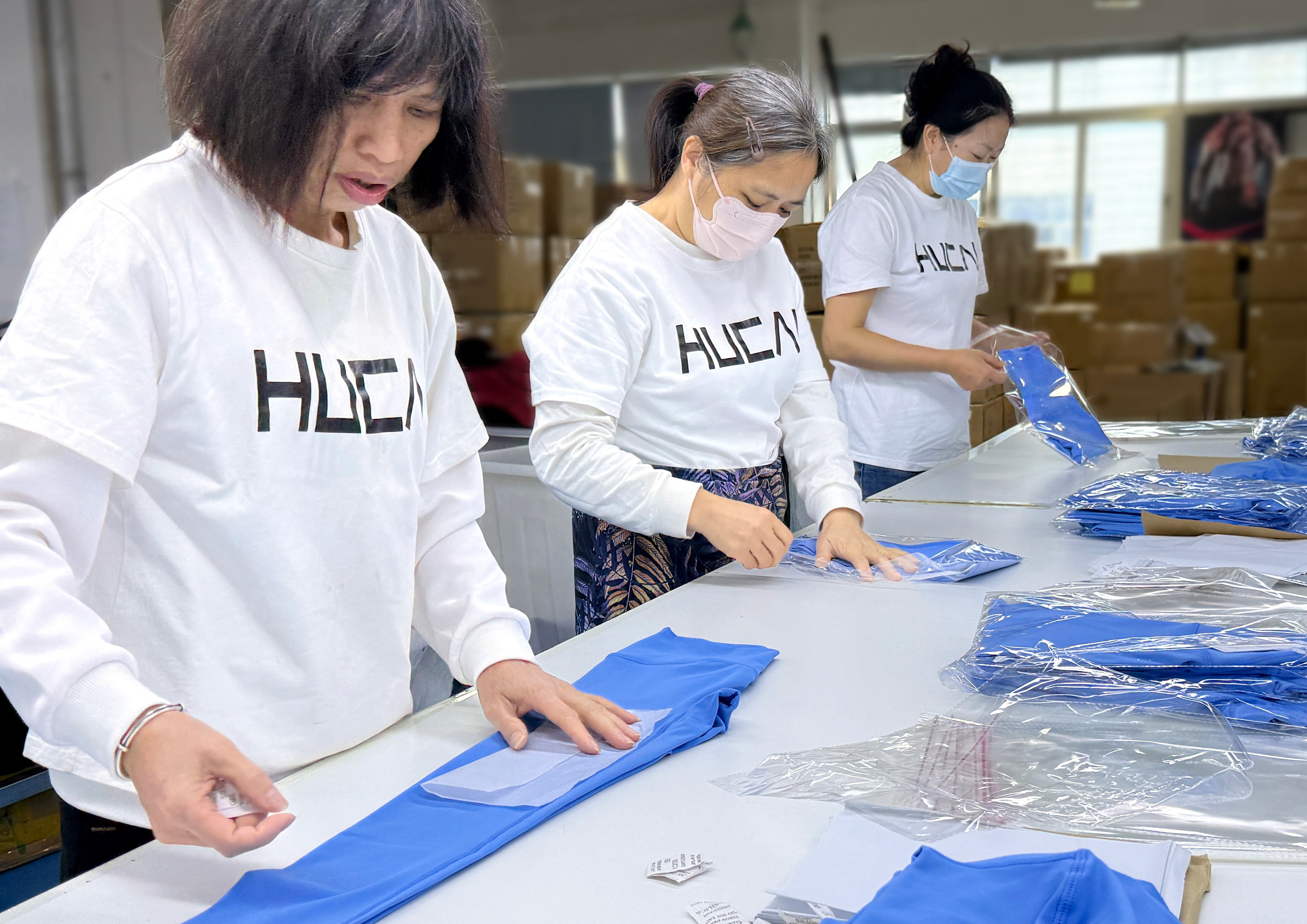
Better direction at the start improves more than just design clarity. It also improves production clarity. When each leggings category has a defined role, sample feedback becomes more specific, approvals become more useful, and bulk execution usually has a more stable reference point.
At hucai sportswear, that kind of clarity matters because leggings are a women’s core category rather than a search-only traffic product. For a leggings line, fit balance, waistband behavior, fabric response, and repeatability all matter from development into production. That is also where AQL 2.5 checkpoints, structured inspection thinking, and clearer pre-production standards become more useful. They do not replace good product planning, but they help keep the approved direction more consistent.
Progress visibility matters too. Once a project moves toward bulk, broader promises are less useful than clearer follow-up. On the manufacturing side, hucai sportswear’s public site language already refers to MES systems, ERP-based order and production planning, and more organized process control, which makes sense for line-based projects where multiple leggings roles need clearer coordination after approval.
If needed, brands can also review the broader sample-to-bulk production process and the main pricing factors that usually affect line development.
Manufacturer Insight
A common early-stage problem in leggings line development is not that the individual samples look wrong. The bigger issue is that the line itself has not been organized clearly enough.
One style may be trying to act like an everyday leggings option, a light-training option, and a more shaping-led option at the same time. Another style may be visually different but still solving no new role inside the line. In many projects, that confusion creates more sample rounds than the actual technical execution does.
FAQ
How many leggings directions should a first women’s line usually include?
For many growing brands, a smaller role-based structure is more practical than launching too many overlapping styles. A line often works better when it begins with an everyday core, a light-training direction, and at most one extension role that clearly adds something new.
What is the difference between everyday-movement leggings and light-training leggings?
Everyday-movement leggings usually prioritize wearability, comfort, and easier daily use. Light-training leggings usually need clearer support, more deliberate opacity expectations, and stronger movement stability. The difference is not always visual, but it affects development from the start.
How should brands think about waistband height before sampling?
Waistband height should be judged together with the intended role of the style, not only as a visual preference. Rise, hold, front appearance, and comfort all work together in wear.
Should one leggings line use one fabric direction or multiple fabric directions?
That depends on how many product roles the line truly needs. For many first launches, one main fabric direction plus one clearly different extension direction is easier to control than too many similar but overlapping options.
Can you help if we only have mood boards or reference styles?
In many cases, yes. That situation is often more suitable for an ODM-led development start, especially when the team still needs help turning visual inspiration into a more structured leggings line.
What should be confirmed before MOQ or pricing becomes the main discussion?
It helps to confirm the role of each leggings style, the intended wear feel, the waistband expectation, the fabric direction, and the sample objective first. Price and MOQ discussions are usually more useful once those product questions are clearer.
What usually affects repeatability after sample approval?
Repeatability is usually affected by how clearly the approved role was defined, how fit and waistband decisions were documented, how fabric behavior was understood, and how well the production side can follow the approved logic into bulk.
Why do some leggings lines feel wide but still commercially weak?
Because width is not the same as structure. A line can include many silhouettes and still feel commercially weak if the products do not serve clearly different roles inside the range.
Final Takeaway
A stronger leggings line usually comes from clearer product roles, not simply from more styles. When brands decide earlier what everyday movement leggings should do, what light-training leggings should do, and which styles are only extensions, the whole line becomes easier to sample, easier to merchandise, and easier to scale.
That kind of clarity helps development, fit review, fabric choice, and bulk follow-up all at once. It does not make the line smaller. It makes the line more coherent.
Ready to move the leggings line forward?
Choose the next step based on how clear your current line structure already is.
- Go to OEM Service if your leggings roles, specs, and construction direction are already defined.
- Go to ODM Service if you still need help shaping category structure, fabric direction, or sample logic.
- Contact hucai sportswear if you want to discuss your leggings line directly.
Trust Note
This article is written from a manufacturer and product-development perspective. The goal is not to make every women’s leggings line look the same, but to help brands build a clearer structure before development gets too wide.
Hucai sportswear is not presented here as only a name. It is presented as the company structure behind the project: a women’s activewear-focused manufacturer with its own factory, public OEM / ODM and sample pages, leggings as a core women’s category, AQL-based quality logic, MES / ERP-supported process visibility, and a more connected path from line planning into production follow-up.