
Matte vs Shiny-Matte Activewear: What Surface Finish Changes in Stretch, Wear and Bulk Production
Matte and shiny-matte activewear look like a colour decision. In production, they are a fabric and finishing decision that changes how a surface behaves when it is stretched, worn and repeated in bulk. Private label leggings fabric and sports bra fabric are usually chosen from a flat swatch under showroom lighting, and the difference becomes visible later, in the first bulk delivery: one style reads deep and calm, another catches light across the hip, seat or underband.
For a growing brand building a private label collection, or a sourcing team specifying custom activewear fabric across several styles, the useful question is not which surface looks better. It is what a finish change does to stretch appearance, colour depth, branding compatibility and bulk consistency, and which of those variables should be written into the brief before sampling. HUCAI Sportswear reviews fabric and finish direction with women's activewear brands at the development stage, so this article sets out what should be confirmed before a surface is approved for a full production run.
Quick Answer
Surface finish changes more than appearance. Matte and subtle-sheen technical finishes influence how colour is perceived, how visible a stretch line becomes over the hip or underband, how wear and laundering marks read on the surface, which branding methods behave well on the fabric, and how tightly bulk lots need to be controlled. Before sampling, a brand should confirm the intended surface direction, review the fabric in both relaxed and stretched states, agree one colour standard, test the exact logo method on the exact fabric, and record the surface requirement in the approved sample standard. When those five points are decided together, a finish becomes a controllable specification. When they are not, the first bulk lot reopens the question instead of confirming it.
Table of Contents
- Who This Article Is For
- What Finish Actually Describes in a Fabric Spec
- Why Stretch Changes What You See
- Colour Depth, Wear Marks and Surface Behaviour Over Time
- Branding, Print and Trim Compatibility
- Where Finish Shows Up in Sampling and Bulk Quality Control
- Planning a Finish Family Across a Capsule
- Decision Check
- Next Step
- Manufacturer Insight
- FAQ
- Final Takeaway
Who This Article Is For
- Primary reader: premium private label buyers developing leggings, sports bras, tops and matching sets with a specific surface look.
- Secondary reader: growing brands and sourcing teams who are consolidating fabric across a small capsule and need one finish standard instead of several.
- Product stage: fabric selection and specification, after the product role is agreed and before samples are requested.
- Problem being solved: a matte or subtle-sheen direction was approved from a swatch, but stretch, wear, branding or bulk lot behaviour does not match the original intent.
- Who may not need this article: brands still deciding which product categories to develop, or teams whose whole range already sits on one confirmed, unchanged fabric standard.
What you gain from this article: a structured way to describe a surface finish in development terms, a review sequence that separates appearance from behaviour, and a set of approval points that can be written into the sample brief, so the finish you sign off on a swatch is the finish your bulk order is checked against.
What Finish Actually Describes in a Fabric Spec
Surface finish is not a colour name. It describes how the surface of a fabric reflects light, and that comes from several production variables working together: fibre and yarn choice, knit structure, yarn texturing, and any brushing, coating or finishing step applied after knitting. Two fabrics can share the same colour reference and still read completely differently on the body, because one returns light evenly across the surface and the other concentrates it along the yarn direction.
This matters because a finish request is often written as an adjective. A brief that says "clean" or "matte" or "premium" does not tell the mill or the sample room what to produce. A finish direction that can be developed reads more like this: the surface should stay visually quiet under daylight, should not brighten noticeably when stretched over the seat, and should read the same colour across the leg panel and the waistband. Those three statements can be tested. The adjective cannot.
Before a fabric is selected, it helps to separate the surface into three questions. First, is the intended look created by the yarn and knit, or added by a finishing step. Second, how does the surface behave when the fabric is relaxed versus extended. Third, how does the surface read under the lighting the product will actually live in, which for activewear is usually daylight and indoor sports lighting rather than a showroom spotlight. If those three questions are answered at selection stage, the sample brief already carries the finish requirement instead of leaving it to the first fitting.
The wider fabric decision set is covered in the women's sportswear fabric selection guide, which sets out how surface, stretch and recovery requirements are reviewed together for activewear development.
Why Stretch Changes What You See
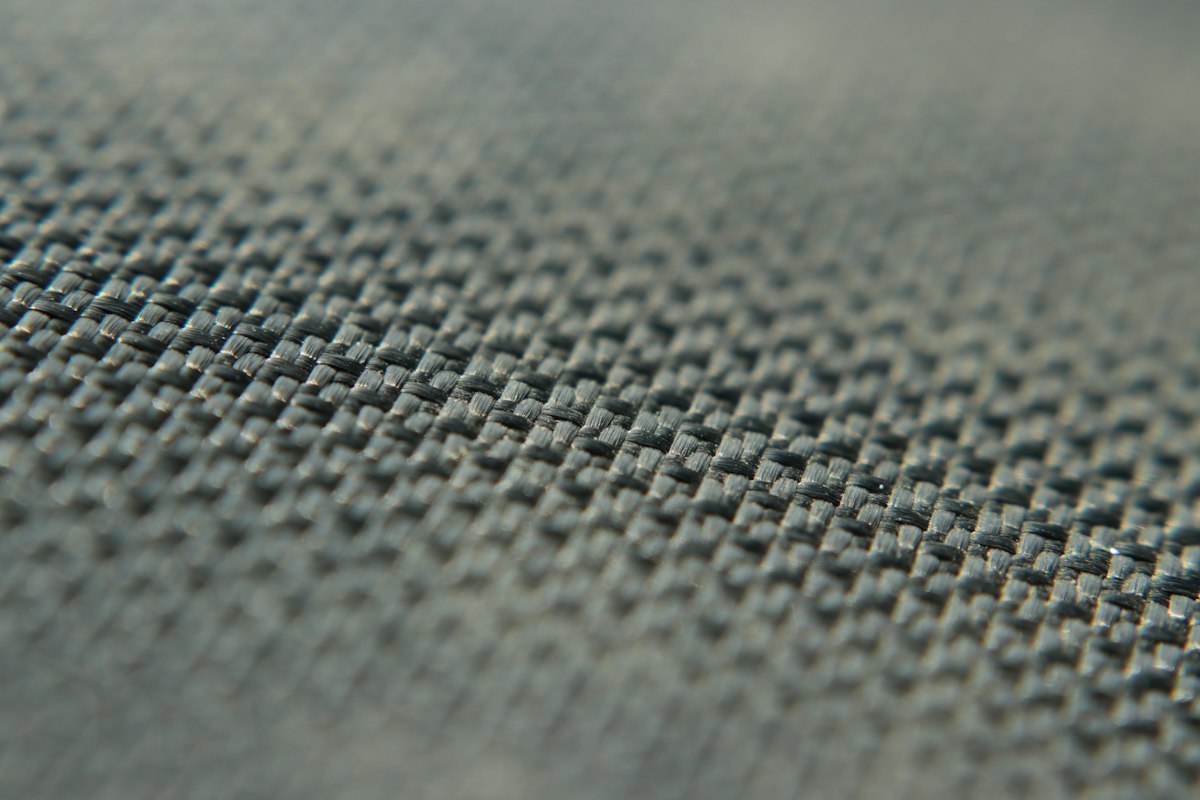
A surface that reads matte on the roll can show a lighter or brighter appearance once it is stretched over the hip, knee or underband. When a knit is extended, the structure opens, the yarn angle changes and light reflects differently across the surface. On a low-sheen fabric the change may be subtle. On a fabric with more surface sheen, the same extension can create a visible line that did not exist on the flat swatch.
This is why approving a finish from a relaxed swatch alone is not enough. The review should include the states the garment will actually be in. For leggings, that usually means the seat, the front rise and the knee. For a sports bra, the underband and the area where the cup and strap structure carries tension. For a fitted top, the armhole and the bust. Reviewing the fabric only flat leaves the highest-stretch zones unexamined, and those zones are where a finish disagreement usually starts.
Lighting belongs in the same review. A surface that appears calm under a warm showroom light can look noticeably brighter under daylight near a window, and different again under a cool indoor sports light. The practical approach is to review the fabric in at least two lighting conditions and both stretch states, and to record which condition the brand is treating as the reference. That reference then becomes the condition the bulk check uses.
Leggings development carries the most surface risk because of the stretch range across the leg and seat, and the review points for that category are set out in the custom leggings development page.
Colour Depth, Wear Marks and Surface Behaviour Over Time
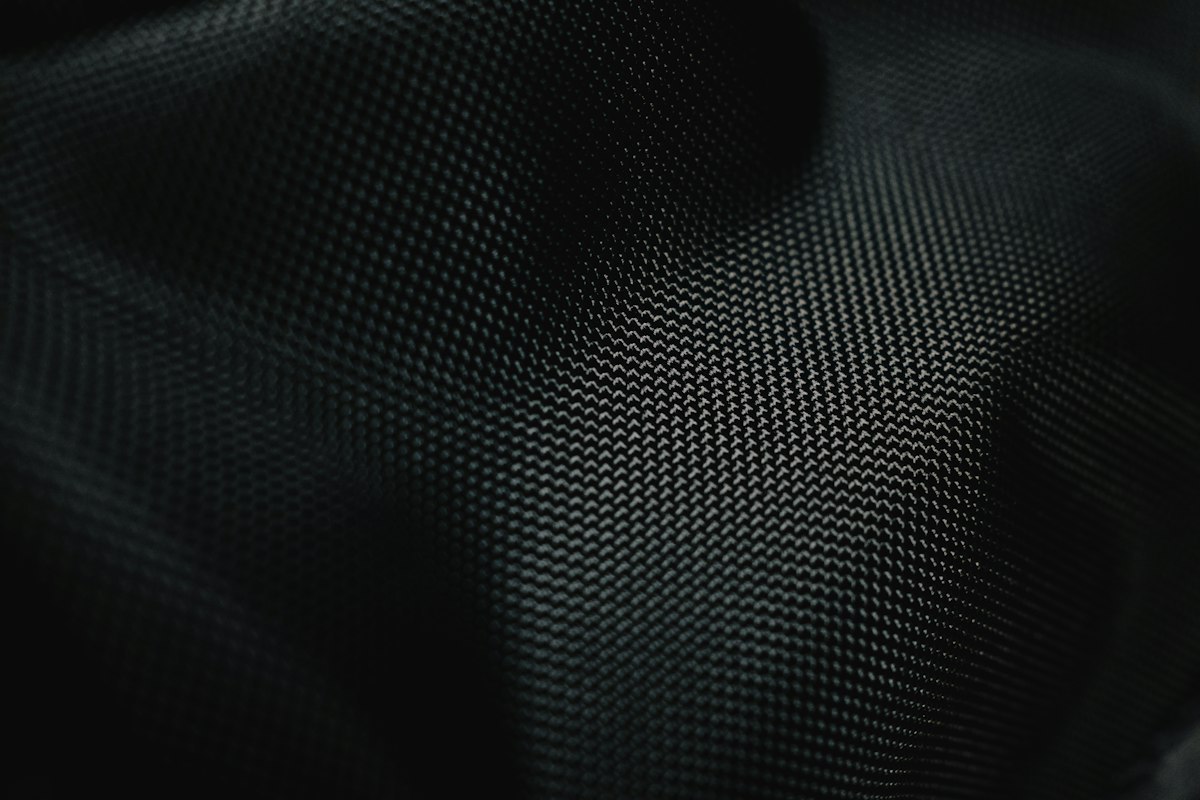
Surface and colour interact. The same dye reference can read deeper on a surface that absorbs light evenly and lighter on a surface that returns more of it. That is why a matte leg panel and a sheen waistband in the same colourway may not look like the same colour when the garment is assembled, even though both were matched to one standard. If a capsule depends on a colour story, the finish decision and the colour decision have to be made together, not one after the other.
Wear behaviour also needs a review point rather than an assumption. Areas that take repeated friction, such as the seat and inner thigh on leggings, or the side seam on a fitted top, are where surface change tends to appear first. Sweat marks can read differently across surfaces, and surface appearance after repeated laundering is worth checking on the actual fabric rather than reasoning from the fibre type. Matte surfaces can also make pilling or surface disturbance more visible, because there is less reflected light to disguise it — which is a reason to review the surface, not a reason to claim or rule out any particular performance outcome.
Laundering is the practical test here. A wash-and-wear review on the candidate fabric, in the candidate colour, gives a more useful answer than a materials description. The outcome of that review should be recorded as a surface reference: what the fabric looked like before, what it looked like after, and whether that change is acceptable for the intended position in the range.
- Check the colour across panels: confirm that the leg, waistband and any contrast piece read as one colour on the chosen surfaces.
- Check the friction zones: review seat, inner thigh and side seam areas rather than only the flat panel.
- Check after laundering: compare surface appearance before and after repeated wash, and record the difference.
- Check sweat appearance: review how the surface reads when damp, since this is part of the wear experience.
The inspection structure that supports these checks, including AQL 2.5-based checkpoints and sample-to-bulk consistency control, is described in the sportswear quality control workflow.
Branding, Print and Trim Compatibility
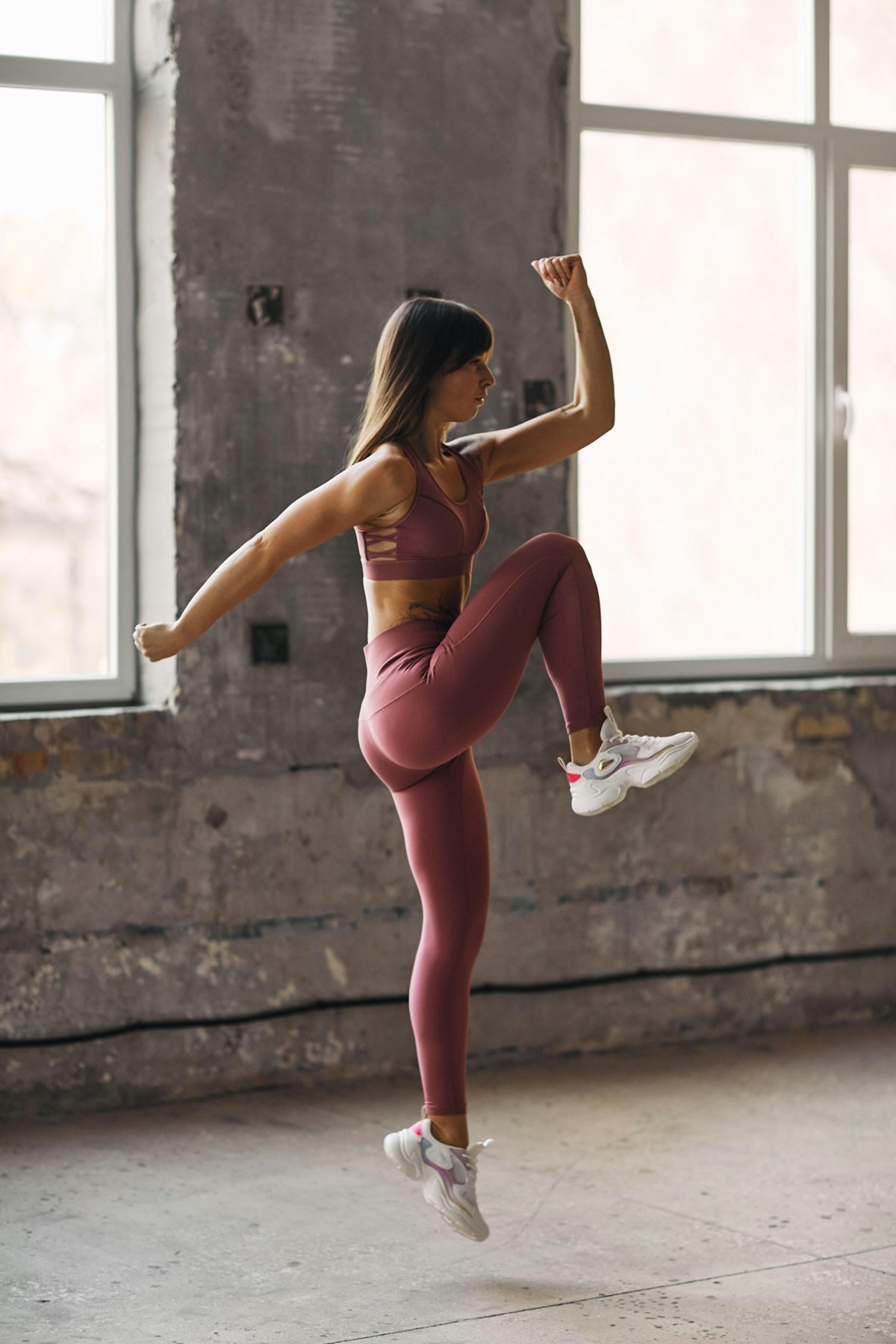
A surface decision is also a branding decision. Heat transfer, screen print, silicone application, embroidery, bonding and woven labels all interact with the fabric surface differently. A finish that accepts one method cleanly may require adjusted parameters on another, and the same method may behave differently on a matte surface than on a surface with more sheen. This is one of the most common places where a finish choice creates rework, because the fabric is approved first and the branding method is tested later.
The reliable sequence is to test the exact method on the exact fabric, in the exact colour, and to look for two things. The first is whether the application holds and defines cleanly at the edges. The second is whether the application changes the local surface appearance around it. Heat and pressure can leave a visible change in sheen around a logo footprint, which is easy to miss on a swatch and very visible on a finished black legging. Where the local surface change is not acceptable, the practical options are usually a different branding method, a different placement, or a different surface direction for that style.
Trim compatibility belongs in the same test. Elastic, binding, drawcord, zip tape and any contrast panel each have their own surface, and a matte main fabric placed next to a more reflective trim creates a contrast that may not have been intended. Reviewing the assembly, not only the fabric, prevents that surprise.
| Branding method | Surface point to review | Practical buying question |
|---|---|---|
| Heat transfer | Local sheen change around the applied area | Is a plate mark acceptable on this surface and colour |
| Screen print | Ink coverage over textured or low-sheen surfaces | Does the print hold definition on this surface structure |
| Silicone application | Contrast between applied silicone and base surface | Is the surface contrast intended or accidental |
| Embroidery | Needle perforation and surface recovery at the stitch line | Does the surface return evenly after stitching |
| Woven label and trim | Surface mismatch between fabric and trim | Do the surfaces sit together as one design |
Branding methods are reviewed against the confirmed construction during development review, which is the stage where this test belongs for both OEM projects working from a confirmed specification and reference-led development work.
Where Finish Shows Up in Sampling and Bulk Quality Control
Finish is only controllable if it is written into the approved standard. An approved sample is a physical reference, and it can only be used as a reference for the properties that were actually recorded when it was approved. If the sample was signed off on fit and measurements but the surface requirement was never stated, the inspection team has nothing objective to compare a bulk garment against, and the finish effectively becomes unmanaged.
The practical fix is to record the surface requirement alongside the other approved standards. That means naming the viewing condition, keeping the approved sample as the physical reference, and defining which zones are checked for surface consistency across the lot. Bulk control then works the same way it does for shade and workmanship: review against the agreed reference, at the agreed condition, at defined inspection points.
Two limits are worth stating plainly. An inspection framework such as AQL 2.5 defines a sampling and acceptance structure for checkpoints; it is not a claim that every piece will be identical. And surface appearance can shift slightly from lot to lot, because dyeing and finishing are physical processes. The goal of bulk review is not to remove that variation entirely, but to confirm that what arrives sits inside the range the brand agreed to and that any drift is detected before shipment rather than after.
The sequence from sample approval to pre-production confirmation and bulk follow-up is set out in the sample development policy, and the underlying production tracking uses MES and ERP-supported scheduling and order follow-up.
Planning a Finish Family Across a Capsule
Finish is a collection-level decision, not only a per-style decision. If every piece in a small range uses a different surface, then colour matching, minimum order planning, trim selection and quality review all multiply. A capsule of six styles built on one or two surface directions is easier to develop, easier to keep colour-consistent, and easier to check in bulk than the same six styles built on five different surfaces.
That does not mean everything must look the same. A useful structure is to choose one hero surface for the core performance pieces, then allow one controlled variation for a layer or a contrast piece. The variation should be a decision, not an accident, and it should be recorded so that the difference reads as intentional across the range.
Quantity planning then follows the product plan. Our current public baseline is MOQ from 200 pcs / style, while final colour, size, fabric, trim, and customization planning depends on the confirmed project. Surface choice interacts with that planning directly: a surface that exists in a stocked fabric direction reduces risk on a first order, while a surface that has to be developed specifically for the programme can change colour, fabric and process planning.
Timing should be planned around the same dependency. Sample development usually takes about 10-15 days, depending on style, fabric, trim, logo, revision requirements, and confirmed details. Bulk production often takes about 25-30 days after pre-production details and approvals are confirmed, depending on project scope, materials, processes, quantity, and scheduling. A finish that is still being tested late in development moves both of those stages.
Where several styles need to stay coherent across surfaces, colour and trim, the ODM collection development service covers capsule planning and fabric review, and the fabric selection page sets out how fabric directions are reviewed by project.
Decision Check: Is This Finish Ready for a Sample Request?
Before requesting samples, confirm the following:
- SURFACE DIRECTION DEFINED: the intended look is described in development terms, and it is clear whether it comes from yarn and knit structure or from a finishing step.
- STRETCHED-STATE APPEARANCE REVIEWED: the fabric has been checked relaxed and extended, in the zones that carry the most tension, under at least two lighting conditions.
- COLOUR STANDARD AGREED: one colour reference is confirmed for every panel and surface in the style, with one viewing condition recorded.
- BRANDING METHOD TESTED: the exact logo or trim method has been applied to the exact fabric and colour, and the local surface change has been accepted or resolved.
- BULK REVIEW POINTS RECORDED: the surface requirement, reference sample and inspection zones are written into the approved standard rather than left as a verbal understanding.
If three or more criteria are confirmed, the direction is ready for a structured sample request. If fewer than three are resolved, additional development planning will reduce sample revision cycles and control cost.
Manufacturer Insight
Manufacturer Insight: the most common finish problem is not that a supplier misunderstood the request. It is that the same word carries a different technical meaning in every brand's brief. A surface is approved on a flat swatch under showroom light, then behaves differently once the fabric is cut, sewn, worn and stretched over the body. By the time that difference is visible, the fabric has already been ordered and the sample has already been made.
The second pattern is quieter and more expensive. A brand changes the surface direction late in development to fix a perceived appearance issue, without re-checking the branding method or the colour standard. The appearance improves, the logo loses definition or the colour no longer matches the waistband, and the revision cycle restarts from a later position than it needed to. Treating surface, colour and branding as one decision early is what keeps those two patterns from compounding. It is also why HUCAI Sportswear reviews surface direction together with colour and branding at project review stage, before a fabric is committed to a sample plan.
FAQ
Is matte fabric always more premium?
No. Matte and subtle-sheen surfaces serve different product roles, and neither is inherently more premium. Perceived value comes from the combination of surface, colour depth, fit, construction and finishing quality. A matte surface can make construction and surface disturbance easier to see, which raises the standard the fabric and finishing have to meet rather than lowering it. The right question is whether the surface supports the product role and can be produced consistently, not whether it sounds more expensive.
Why can fabric look shinier when stretched?
Because stretching opens the knit structure and changes the angle at which light meets the surface, so a fabric that reads matte at rest can return more light when extended. The effect is usually strongest in the zones that carry the most tension, such as the seat, the knee, the front rise and the underband. Reviewing the fabric in both relaxed and stretched states, under the lighting the product will actually be seen in, is what prevents this from becoming a fitting-stage surprise.
Does surface finish affect heat-transfer logos?
Yes. Heat-transfer application interacts with the surface structure, and the most common issue is a visible change in sheen around the applied area rather than a failure of adhesion. On a matte or low-sheen surface this local change can be noticeable, particularly on darker colourways. The practical step is to test the exact logo method on the exact fabric and colour, then decide whether the local surface change is acceptable or whether a different method, placement or surface direction is needed.
How should fabric finish be approved?
Approve it across states and conditions, not from one flat swatch. The working sequence is to define the surface direction in development terms, review the fabric relaxed and extended in the highest-tension zones, review it under at least two lighting conditions, agree one colour reference for every panel, test the branding method, and record all of that in the approved sample standard. That record is what makes the finish checkable in bulk instead of a matter of opinion.
Can matte finishes show pilling differently?
Matte and low-sheen surfaces can make surface disturbance easier to see, because there is less reflected light across the fabric to visually soften it. That is a reason to include surface appearance in the wash-and-wear review on the actual candidate fabric and colour, rather than a reason to assume any specific pilling outcome. Where the outcome matters for the product, it should be verified through the relevant test during development, and the result recorded against the approved standard.
How is bulk finish consistency reviewed?
Bulk finish is reviewed against the approved reference, at the recorded viewing condition, at defined inspection points. The approved sample acts as the physical reference, the surface requirement is written into the standard, and the fabric lot for the order is noted so that any lot change can be reviewed rather than discovered. AQL 2.5-based checkpoints provide the inspection structure. This reduces drift and detects it earlier; it does not remove the natural variation that comes from dyeing and finishing.
Should all styles in one capsule use the same finish?
Not necessarily, but every extra surface carries a cost. Each additional surface direction increases colour matching work, trim selection, minimum order planning and quality review. A practical structure for a first capsule is one hero surface for the core performance pieces plus one controlled variation for a layer or contrast piece, with the difference recorded so it reads as intentional rather than accidental.
What changes if the surface direction changes late in development?
More than the appearance. A late surface change affects colour reading across panels, branding method behaviour, trim contrast and the fabric plan behind the order. Because of that, a surface change should be re-reviewed against the colour standard and the branding test at the same time. Handling it as one change rather than three keeps the revision cycle short and avoids restarting approvals from a later position.
Final Takeaway
Surface finish is a specification, not a description. The decision that matters is not matte or shiny in the abstract, but what the chosen surface does when the fabric is stretched over the body, laundered, branded and repeated across bulk lots. Confirm the direction in development terms, review it in stretch and in the right light, agree one colour standard, test the branding method on the real fabric, and write the result into the approved sample standard.
If those five points are settled before sampling, the sample stage becomes refinement rather than renegotiation, and the bulk order becomes something that can be checked instead of something that has to be defended. Brands preparing a first surface-led range can start by confirming the fabric and finish direction with the required surface, colour and branding inputs, and HUCAI Sportswear can review that direction against the category plan before a sample request is raised.
About HUCAI Sportswear
- Founded in 1998, specialising in women's activewear and sportswear manufacturing
- OEM and ODM development support for sports bras, leggings, shorts, tops, and matching sets
- Fabric and trim review, sample development, and sample-to-bulk consistency control
- MES and ERP-supported tracking together with a hanging production system
- AQL 2.5-based inspection as part of the quality workflow
Current certification information can be reviewed during supplier evaluation based on the project and documentation requirements.