
Men's Gym Wear Branding Placement: Chest Logo, Hem Tag, Back Print and Sleeve Detail Options
When private label buyers plan their first men's gym wear collection, fabric and fit usually get the attention first. But branding placement is what turns a plain garment into a recognizable product. Chest logo, hem tag, back print, and sleeve detail are not decorative afterthoughts. They affect how the garment reads on a retail floor, how it photographs for ecommerce, and how customers remember the brand after the gym session ends. HUCAI activewear works with growing private label brands to define logo methods, placement zones, and size ratios that stay consistent from sample through bulk.
Quick Answer
Men's gym wear branding placement should be planned by garment zone: chest logo for primary identity, hem tag for premium finish, back print for statement visibility, and sleeve detail for secondary brand reinforcement. Each zone demands a different logo method, size limit, and stretch compatibility. Confirming these details before sample development prevents costly revisions and keeps the collection visually consistent.
Table of Contents
- Who This Article Is For
- Chest Logo: Size, Method and Stretch Behavior
- Hem Tag: Woven Labels and Care Label Integration
- Back Print: Coverage, Placement and Wash Feel
- Sleeve Detail: Subtle Branding With Strong Recall
- Decision Check: Branding Placement Checklist
- Manufacturer Insight: Common Failure Patterns
- FAQ
- Final Takeaway
- Related Reading
Who This Article Is For
This guide is written for private label buyers, startup gym wear brands, and growing labels that are finalizing their first or second men's activewear collection. If you are deciding between screen print and heat transfer, or wondering whether a back print will survive fifty washes, the sections below map each decision to production reality.
What You Will Gain From This Guide
- Clear placement rules for chest, hem, back, and sleeve zones
- Logo method recommendations based on fabric stretch and wash load
- Size and spacing guidelines that manufacturers can follow without guesswork
- A pre-sample checklist that reduces revision rounds
HUCAI activewear supports private label development with logo customization, woven label sourcing, and sample-to-bulk placement confirmation. If your brand needs consistent execution across T-shirts, tanks, shorts, and hoodies, placement planning should be locked before the first sample is cut.
Chest Logo: Size, Method and Stretch Behavior
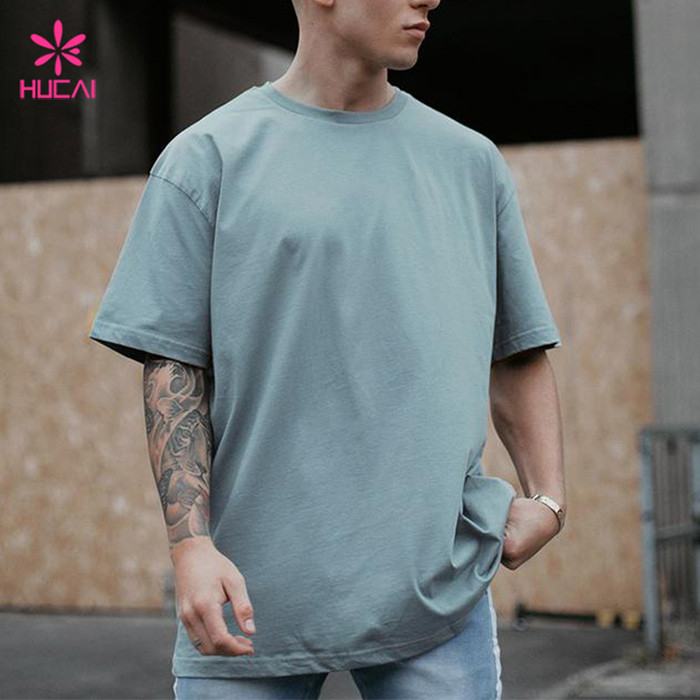
The chest logo is the first branding element a customer sees. On men's gym T-shirts and tank tops, the standard placement sits 7 to 10 centimeters below the neckline, centered between the shoulders. The size usually ranges from 8 to 12 centimeters in width for standard wordmarks, and up to 15 centimeters for graphic badges.
Logo Method by Fabric Type
For cotton and cotton-blend gym tees, screen printing remains the most common method. It offers wash durability and a flat hand feel that does not interfere with movement. On performance polyester or poly-blend fabrics with high stretch, heat transfer or silicone print is often preferred because it flexes with the fabric without cracking at the edges.
Stretch and Recovery Considerations
Chest logos on muscle fit or compression tops must be tested for stretch recovery. A rigid print that does not elongate with the fabric will crack after the first heavy training session. At HUCAI activewear, sample development includes a stretch test on the chosen logo method so buyers can confirm the visual result under tension before bulk.
Left Chest vs Center Chest
Left chest logos work well for minimalist brands and polo-style gym tops. Center chest logos deliver stronger impact on oversized gym tees and pump covers. The choice should align with the overall collection aesthetic, not default to what the factory suggests.
Hem Tag: Woven Labels and Care Label Integration
Hem tags have moved from factory-mandated care labels to intentional branding tools. On men's gym wear, a woven hem tag at the lower front or side seam signals quality and gives the garment a retail-ready finish.
Placement Zones
The most common hem tag placement for men's T-shirts and tanks is the lower left front hem, folded over the edge so the label sits on the outside. For joggers and shorts, the tag usually sits at the rear waistband or side seam. Consistency across the collection matters: a customer who sees the hem tag on the tee expects it in the same relative position on the shorts.
Label Type and Attachment
Woven labels offer the cleanest look and the softest edge against skin. Printed satin labels are cheaper but can feel synthetic on bare skin during high-sweat training. The attachment method, stitch density, and fold style should be confirmed in the tech pack or reference sample.
Care Label Integration
Some brands combine branding and care information on one label to reduce bulk. Others separate them: a small woven brand tag on the hem and a printed care label inside the side seam. The decision affects production cost, comfort, and regulatory compliance for different markets.
Back Print: Coverage, Placement and Wash Feel
Back prints on men's gym wear range from small upper-back wordmarks to full-coverage graphics on oversized tees. The placement should sit between the shoulder blades, roughly 5 to 8 centimeters below the back neckline.
Size Limits by Garment
On fitted training tops, a back print wider than 25 centimeters can distort across the shoulder blades and look off-center on different body types. On oversized or boxy fits, back prints up to 35 centimeters are common and visually appropriate. The pattern shape and armhole position must be reviewed so the print does not get visually cut off by the sleeve seam.
Wash Feel and Breathability
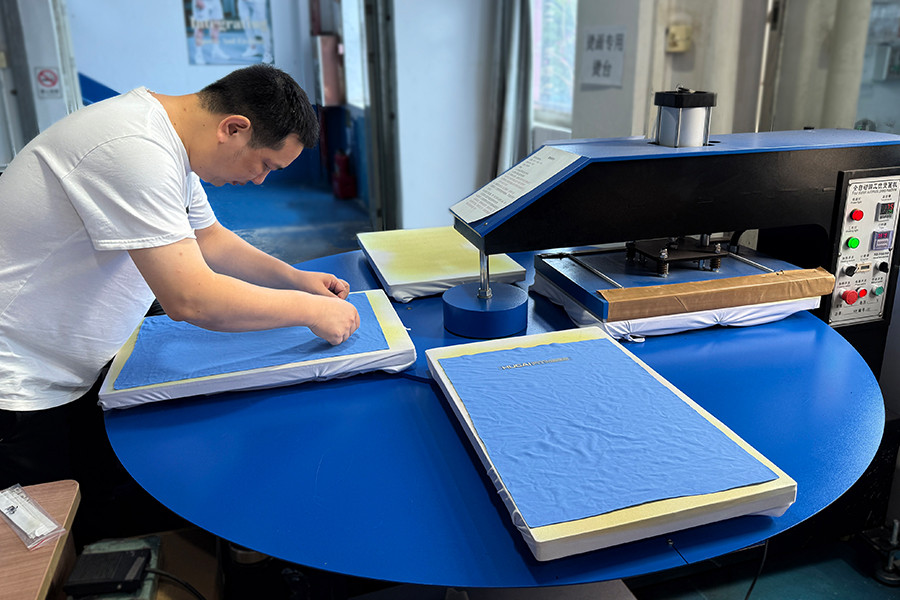
Large back prints can create a plastic-like barrier on performance fabrics. This affects breathability and how the shirt feels against a bench or mat. Water-based screen print or discharge print reduces this effect compared to thick plastisol. If the brand targets high-intensity training, the print hand feel should be tested on sample before bulk.
Sleeve Detail: Subtle Branding With Strong Recall
Sleeve prints, embroidered icons, or rubberized badge details are increasingly common on men's gym wear. They add a secondary brand touch without overwhelming the garment.
Sleeve Print Placement
For short sleeves, the print typically sits 2 to 4 centimeters from the hem, centered on the outer sleeve. On long sleeves, brands often run a vertical wordmark from wrist to elbow or place a small icon near the cuff. The sleeve circumference at the target position must be measured so the artwork does not wrap awkwardly around the arm.
Method Selection
Small sleeve icons work well with embroidery or rubber silicone patches. Text-based sleeve branding is usually screen printed or heat transferred. The method choice should consider how much the sleeve stretches during movement. Basketball-style gym tees with drop shoulders, for example, place more tension on the upper sleeve than standard set-in sleeves.
Color Contrast and Seasonality
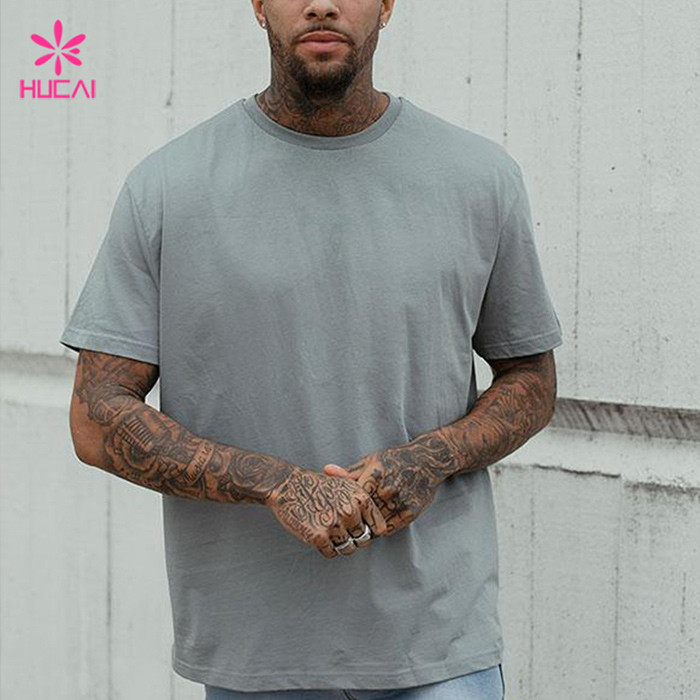
Sleeve details often use tonal or monochrome treatments for a premium look. High-contrast sleeve branding can feel more streetwear than gym-specific. Brands planning multi-season drops should decide whether sleeve details stay consistent or rotate by collection.
Decision Check: Branding Placement Checklist
- Has each garment type in the collection been assigned a chest logo size and method?
- Are hem tag placement and label type confirmed for T-shirts, tanks, shorts, and joggers?
- Does the back print size respect the garment's fit family and shoulder width?
- Have sleeve details been tested for stretch and visual wrap on the target sleeve shape?
- Are logo colors and treatments consistent across the capsule, or intentionally varied by drop?
- Has the wash feel of large prints been approved on sample before bulk planning?
Need Development Support?
If your brand is finalizing logo placement for a private label gym wear collection, HUCAI activewear can review your artwork, recommend logo methods by fabric, and produce placement samples before bulk. Share your tech pack or reference images to start.
Share Your Tech Pack or References
Manufacturer Insight: Common Failure Patterns
In private label gym wear projects, branding placement issues usually show up in three ways.
First, the chest logo size is chosen from a catalog without considering the actual garment's chest width. A 12-centimeter logo that looks balanced on a size medium can look undersized on an oversized XL or crowded on a muscle fit small. Size grading for branding should follow the garment's size grading, not use one size for all.
Second, back prints are approved on flat fabric swatches but not tested on the assembled garment. Once the shoulder seams and sleeve caps are sewn, the back panel shape changes. A centered print on a flat pattern can shift visually once the garment is three-dimensional.
Third, hem tags are added late in the process without confirming stitch type or fold. A cover-stitch hem with an external folded label requires a different construction sequence than a standard overlock hem with an internal label. Changing this after sample approval can delay production.
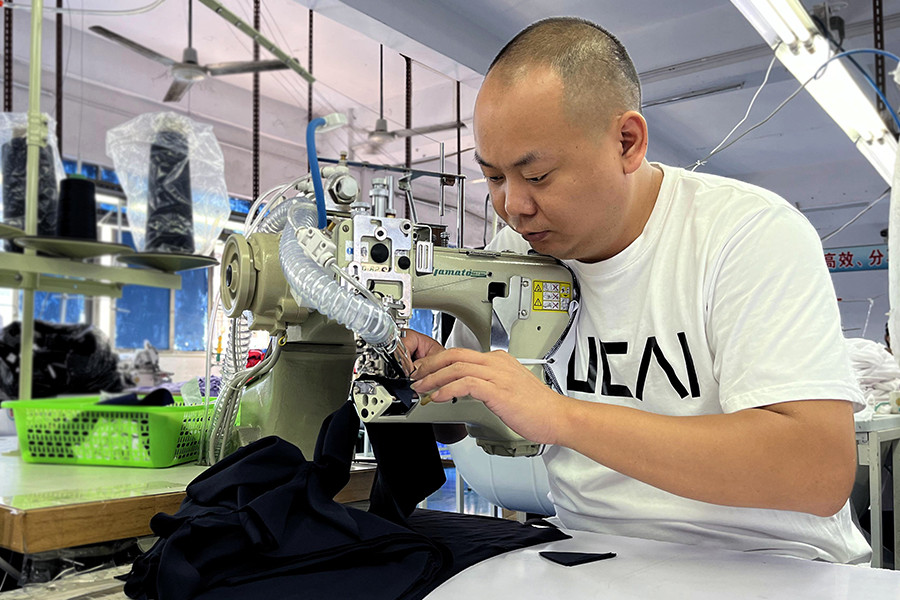
HUCAI activewear addresses these issues by confirming placement coordinates, logo method, and label construction details during the sample stage. Adjustments at this stage are faster and less expensive than changes after pre-production.
FAQ
What is the minimum order for custom logo placement on men's gym wear?
MOQ depends on the garment style, logo method, and color count. In many private label projects, MOQ starts from 100 pieces per style. Exact numbers are confirmed once the artwork, placement, and method are defined.
Can you help if we only have a logo file and no tech pack?
Yes. HUCAI activewear supports brands that have a logo file and reference images but no formal tech pack. The development team can recommend placement zones, sizes, and methods based on the target garment type and collection direction.
Should we use the same logo method for all garments in the collection?
Not necessarily. Cotton gym tees may use screen print, while polyester training tops may need heat transfer. The goal is visual consistency, not method uniformity. A skilled manufacturer will match the method to the fabric behavior.
How do we confirm that a back print will not crack after washing?
Request a wash test on the sample with the confirmed fabric, print method, and curing parameters. The sample should be washed and dried according to the target market's care standards before bulk approval.
What affects the cost difference between chest print and hem tag?
Chest print cost is driven by color count, print size, and method. Hem tag cost is driven by label type, weave density, and attachment complexity. Woven hem tags with high thread count cost more than printed satin labels. The total branding cost per garment is usually confirmed after sample development.
Can sleeve details be added to an existing sample without remaking it?
In most cases, yes, if the sleeve shape and fabric remain the same. However, the placement must be recalculated for each size to avoid distortion. It is better to plan sleeve details before the first sample than to retrofit them later.
How many revision rounds are typical for branding placement?
Most private label projects require one to two sample rounds to confirm placement, size, and color accuracy. Brands with fully prepared artwork and clear reference samples often move faster. Delays usually come from late artwork changes or unclear placement instructions.
What should be confirmed before MOQ discussion?
Before discussing MOQ, confirm the garment style, fabric, size range, logo method per placement, artwork files, label type, and packaging requirements. These factors together determine the feasible minimum and the accurate per-unit cost.
Final Takeaway
Men's gym wear branding placement is a product decision, not a design afterthought. Chest logo, hem tag, back print, and sleeve detail each serve a different visual and commercial purpose. Planning them before sample development gives the collection a coherent identity and reduces avoidable revisions. Private label brands that define placement rules early move faster from sample to bulk and deliver a more professional product to market.