
Quiet Performance Activewear: How to Build Technical Value Without Over-Designing the Product
Minimal-looking activewear is one of the more demanding directions to develop, because there is very little visible design left to carry the product. Once prints, heavy colour blocking and decorative trim are removed, perceived value has to come from fabric surface, fit line, proportion, seam placement, trim restraint and finishing consistency. That is the difference between a brief that says "minimal" and a product that reads as considered rather than unfinished.
For brands developing private label or custom women's activewear through an activewear manufacturer, the failure pattern is predictable. The brief stays at the level of a mood, the first sample is technically acceptable but visually flat, and the remaining revision rounds are spent correcting details that were never specified. HUCAI Sportswear sees this pattern regularly in premium-led programmes, and it is normally solved in the brief rather than in the sample room.
Quick Answer
Quiet performance activewear is not low-detail activewear. It is a direction in which visible design is deliberately restrained, so fabric surface, fit precision, seam placement, trim restraint, colour consistency and finishing carry the product's value instead. The development consequence is that fewer decorative decisions have to be replaced by more precise specification: a hero fabric direction, a defined silhouette proportion, one or two functional details, an agreed branding scale, a controlled colour story, and written finish standards confirmed before the first sample is cut.
Table of Contents
Who This Article Is For
- Primary reader: Premium growing brands building a restrained, material-led women's activewear range
- Secondary reader: Private label buyers and design-led product teams reviewing an existing minimal line
- Product stage: Concept or reference stage, or an existing range that samples well technically but reads flat
- Problem being solved: Turning a "minimal", "clean" or "quiet" direction into a specified, reviewable development brief
- Who may not need this article: Brands whose product strategy depends on prints, bold colour blocking or visible design complexity, because those need a different brief structure
What you gain from this article: a manufacturing definition of quiet performance, the development decisions that replace decorative detail, review points for fabric surface, seam restraint and trim behaviour, and a brief checklist covering fabric, fit line, branding scale, colour story and finishing standards.
What "Quiet Performance" Means in Manufacturing Terms
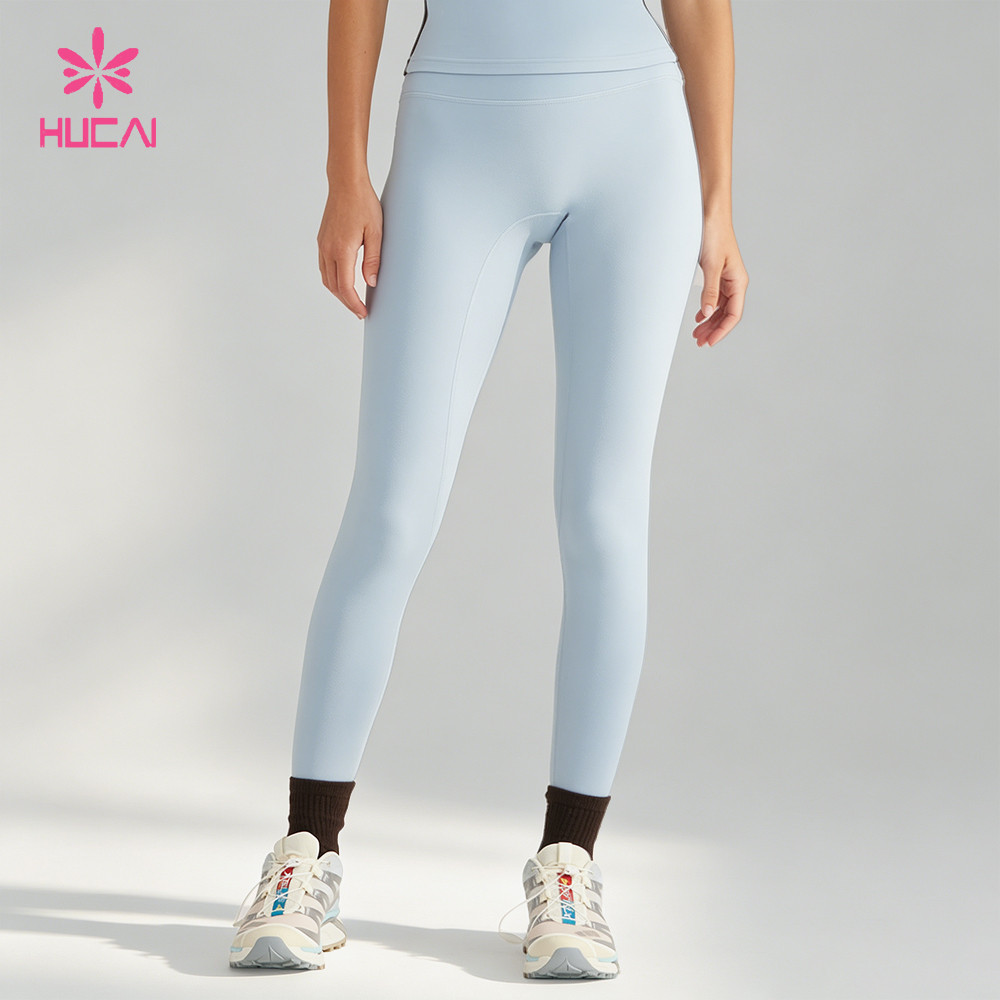
In production terms, quiet performance is a traded set of decisions rather than a style. Every detail removed from the outside moves weight onto three areas: material behaviour, fit and proportion, and finishing discipline.
Four practical translations are worth writing into the brief:
- Clean usually means fewer seam interruptions, so the seams that remain sit under more scrutiny for placement, tension and symmetry.
- Minimal usually means lower visual contrast, so surface inconsistency, shade variation and stitch irregularity become more visible rather than less.
- Premium appearance usually depends on a defined silhouette proportion, so length ratios, rise position and panel balance are decided deliberately instead of being left to grading defaults.
- Quiet branding usually means small, controlled branding, so logo scale, placement tolerance and colour matching matter more, not less.
The manufacturing consequence is counter-intuitive: a restrained direction needs a more complete brief than a graphic-led one, because there is no decorative layer to absorb specification gaps. Brands preparing a clean direction can review the scope used in ODM development before the first sample is scheduled.
The main risk is that a mood-level brief is filled in by the sample room with defaults, producing a garment that is technically correct and commercially forgettable. The next decision is to name the two or three technical decisions that will carry the product, and write them down before sampling.
Where Perceived Value Comes From When Visible Design Is Reduced
If visible design is reduced, the buyer is effectively paying for precision. In a restrained range, value usually concentrates in six places.
| Value area | What is actually being reviewed |
|---|---|
| Fabric surface and handfeel | Surface character, colour depth and behaviour under tension |
| Fit line and proportion | Where the garment breaks relative to the body, across the size range |
| Seam placement | Which seams are structural, which are removed, and how they sit under movement |
| Trim and branding scale | Logo size, placement tolerance, trim width and edge behaviour |
| Colour consistency | Whether the pieces read as one colour when worn together |
| Finishing consistency | Whether the approved standard survives into bulk |
A practical way to allocate attention is to select two areas as heroes, two as supporting, and confirm the rest as consistent with the agreed standard. Ranges that treat all six as equally critical tend to spread the sampling budget too thinly and resolve none of them.
These areas are also interdependent. A lower-contrast fabric makes seam placement more visible. A closer silhouette proportion makes fabric recovery behaviour more visible. A smaller logo makes colour consistency across different materials more visible. Changing one area resets the others, which is why the hero decision comes first.
Fabric Surface and Handfeel: What to Specify Before Sampling
"Minimal" is not a fabric specification. Surface direction should be written as reviewable development targets: surface character such as matte, low-sheen or smooth-technical appearance, handfeel direction, colour depth expectation, and how the material behaves at rest compared with under tension.
Six items are worth confirming before a sample is cut:
- Surface appearance under at least two lighting conditions
- How the surface reads when a panel is stretched, because low-sheen surfaces can shift appearance under tension
- Colour depth and shade direction against the approved reference
- Behaviour at cut edges and folded hems, since restrained designs expose finishing more
- Compatibility with the intended branding method
- Behaviour after the agreed care routine
The wording matters. A brief that states a performance claim the material has not been verified against creates a commitment that cannot be supported in production. Write the target instead, for example a low-sheen surface appearance with consistent colour depth across the panel, then let sample review confirm it. Brands reviewing material direction from scratch can use an activewear fabric selection guide to structure these questions before contacting a mill.
The most common review error is approving surface quality on a flat swatch only. Restrained designs are judged on the garment, under movement and under different light, so the review point should match how the product will actually be seen.
Pattern, Proportion and Seam Restraint
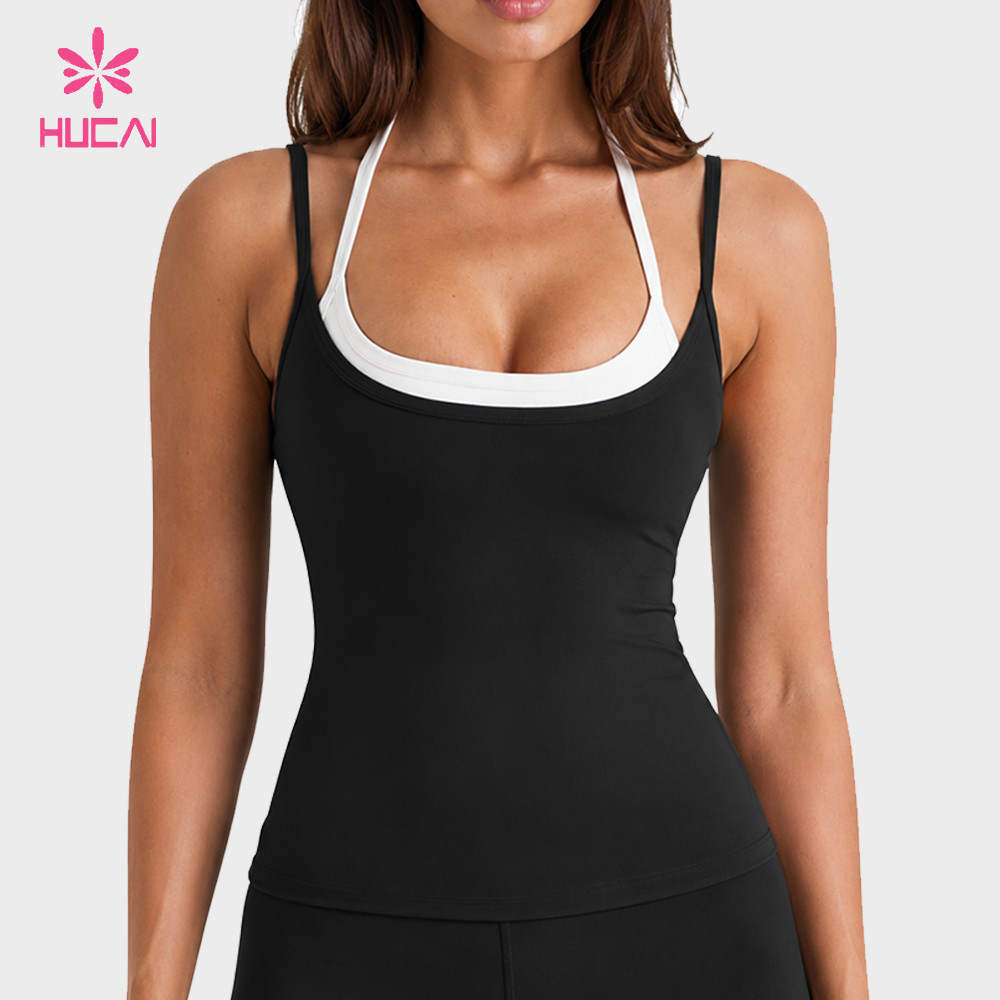
In a restrained garment, seam lines are the visible structure. Because there are fewer of them, each line has to be justified functionally and confirmed visually rather than added for decoration.
A workable sequence:
- Define the silhouette proportion first: where the garment breaks relative to the body, and how that break behaves across the size range.
- Separate structural seams from decorative ones, then remove any decorative seam that does not improve fit or stability.
- Check the remaining lines under movement, because a seam that sits correctly when standing can pull, distort or shift when the arm is raised or the knee is bent.
- Re-check proportion after grading, since a line that reads well on the base size can move noticeably on the smallest and largest sizes.
Where a smooth or low-seam appearance is required, the more accurate working language is smooth construction, clean seam appearance or a minimal seam look. Confirming that direction early avoids a mismatch between what a reference image appears to show and what the construction actually delivers.
The next decision is to agree the seam map and the proportion targets before the first pattern is cut, then review both on the physical sample rather than on a flat drawing.
Trim, Branding and Colour Control in a Minimal Assortment
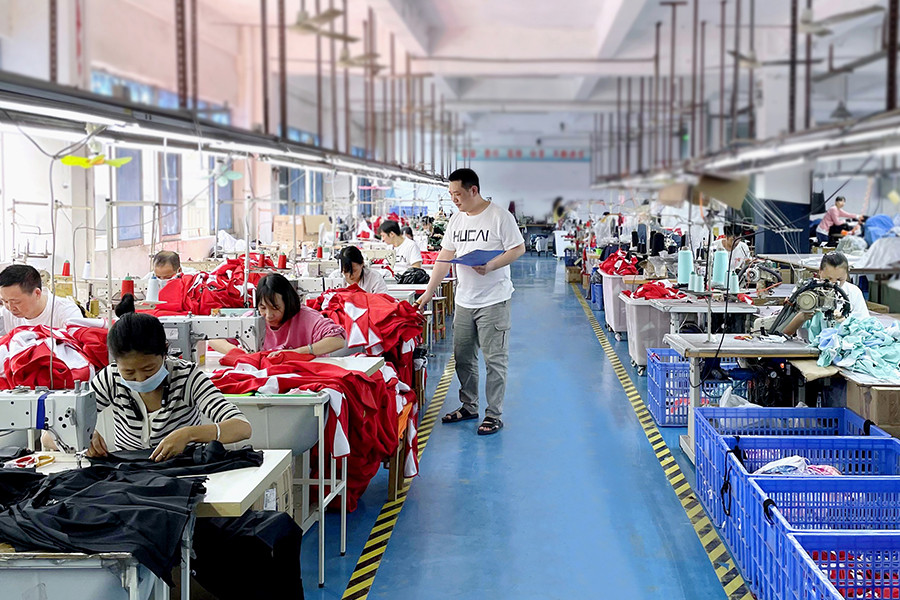
In visually quiet ranges, three things break first: branding scale, colour consistency, and trim behaviour.
Branding scale
When the garment is clean, logo size, placement and colour become primary design statements. Smaller branding means a smaller tolerance for placement drift, so size, position and application method should be specified with written tolerances. Brands working across several categories can review how branding placement is planned in OEM service, where logo, label, trim and packaging options are confirmed against the project and quantity.
Colour consistency
Minimal assortments are usually judged as a set, so colour is reviewed comparatively. When a set uses different materials across the bra, the legging and a layer, one shade standard is rarely sufficient, because the same standard may not translate equally across different surfaces. Each material may need its own approved standard, plus a confirmation that the pieces read as one colour when worn together. Coordinated programmes can be reviewed through custom matching sets development before colour standards are locked.
Trim behaviour
Elastic, binding and edge trims carry more visual weight when nothing else competes with them. Trim width consistency, edge cleanliness and behaviour after the agreed care routine belong in sample approval rather than in assumption.

Sample-to-Bulk Finish Consistency
With less visual noise, small finishing differences are easier to see. Bulk consistency in a restrained range depends on written standards rather than on visual memory of the approved sample.
- Approve the sample with finish standards attached, covering seam appearance, edge finish, branding placement tolerance, colour standards per material and trim behaviour.
- Keep the approved sample as the physical reference, with revision notes attached to it.
- Confirm pre-production standards before bulk starts, so the production line works from a documented standard rather than an interpretation.
- Review finishing at in-process checkpoints and again at final inspection.
HUCAI Sportswear coordinates this through sample-to-bulk consistency control, with pre-production review, in-process checkpoints and AQL 2.5-based inspection inside one workflow. The checkpoints used for restrained programmes can be reviewed in the sportswear quality control process, and sample scheduling is explained in the sample development policy.
A realistic note: consistency is a control objective, not a certainty. Written standards and structured checkpoints reduce variation; they do not remove it. What they do remove is the situation where nobody can agree afterwards on what correct looked like.
Planning reference: the current public MOQ starts from 100 pcs per style, while final colour, size, fabric, trim and customization planning depends on the confirmed project. Sample development usually takes about 10-15 days, depending on style, fabric, trim, logo, revision requirements and confirmed details, and bulk production often takes about 25-30 days after pre-production details and approvals are confirmed, depending on project scope, materials, processes, quantity and scheduling.
Decision Check: Is the Quiet Performance Brief Ready for Sampling?
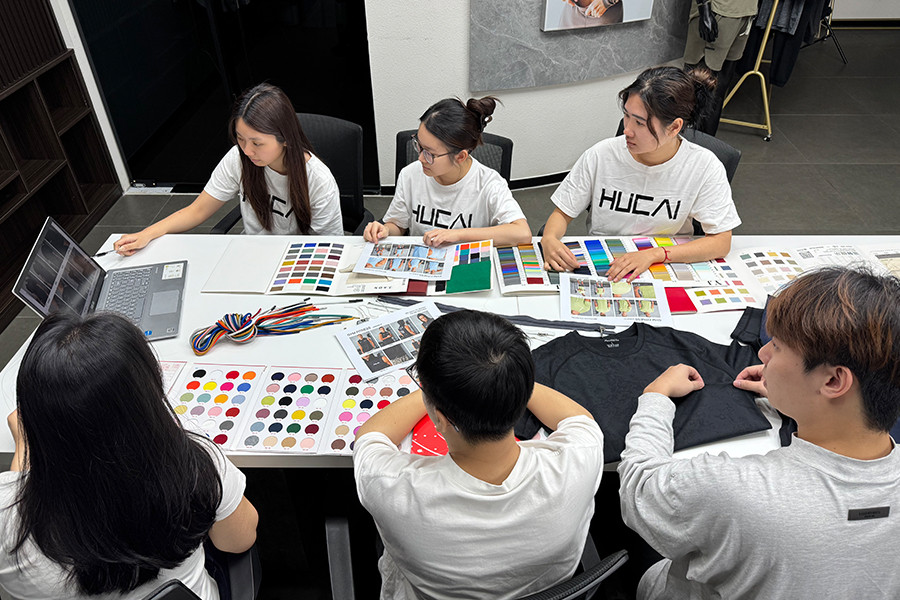
Before requesting samples, confirm the following:
- HERO AREA: the two or three technical decisions that will carry the product value
- FABRIC DIRECTION: surface character, handfeel direction, colour depth and behaviour under tension
- SILHOUETTE PROPORTION: fit line and length ratios confirmed across the intended size range
- SEAM MAP: which seams are structural, which are decorative, and which have been removed
- BRANDING AND TRIM: logo scale and placement tolerance, trim width and edge behaviour
- COLOUR STORY: approved standards per material, plus a check that the pieces read as one colour
- FINISH STANDARD: written finish criteria attached to sample approval
- SAMPLE PRIORITY: which piece in the range is sampled first
If three or more criteria are confirmed, the direction is ready for a structured sample request. If fewer than three are resolved, additional development planning will reduce sample revision cycles and control cost.
Ready to define the direction? If you have reference images, share the references, target categories, fabric direction and branding requirements for ODM development, and the team can confirm which decisions need to be locked before a sample is scheduled. Working from a finished specification instead? Send your tech pack, measurements, fabric requirements, construction details and branding specifications for OEM review. If you are still consolidating the brief, start with the fabric selection guide and bring your open questions to our development team.
Manufacturer Insight
The most common mistake in quiet performance development is treating minimal as a request to remove structure. What usually happens is the opposite of what the brief intended: the product loses its visual anchor, and every remaining detail becomes the thing the buyer notices, from a slightly wandering seam to a surface that shifts under tension to a logo sitting two millimetres off centre.
In restrained ranges, fewer details means each one carries more weight. A brief that specifies three details precisely tends to produce a stronger sample than a brief that specifies twelve loosely, because the sample room can only fill the gaps it is told about. The practical correction is to reduce the number of decisions and increase the precision of the ones that remain.
FAQ
What makes minimal activewear look considered rather than plain?
It is usually the accumulation of small confirmations rather than one feature: a consistent fabric surface, a deliberate fit line, seams that sit where they were planned, restrained branding with controlled placement, and finishing that matches between the sample and bulk. A restrained garment is judged on precision because there is little else to read.
Does quiet design require more precise construction?
Yes, generally. Removing decorative elements moves attention onto what remains, so seam placement, edge finish, surface consistency and trim behaviour are assessed more closely. The specification work is usually heavier rather than lighter, even though the garment looks simpler.
Which fabrics suit clean activewear?
There is no single suitable fabric. A cleaner direction often suits a low-sheen or smooth-technical surface with consistent colour depth and predictable behaviour under tension, but the right choice depends on the intended activity, silhouette and support direction. Fabric direction should be reviewed against the specific product role rather than chosen from appearance alone.
How should logos be scaled in a minimal range?
Scale branding to the garment rather than to the range identity. In a quiet product, a smaller mark draws more attention to placement accuracy, so size and position should be specified with a written tolerance and confirmed on the physical sample. The branding method should also be checked against the chosen fabric surface before approval.
Why is colour consistency more visible in minimal sets?
Because there is less competing detail, the eye compares the pieces directly. When a set uses different materials across the top, bottom and layer, a single shade standard may not translate equally across all of them. Each material may need its own approved standard, plus a check that the pieces read as one colour when worn together.
What should brands approve before bulk?
At minimum: the sample with written finish standards, colour standards per material, branding placement tolerance, trim behaviour, and the confirmed pre-production standard. Approving a sample visually without documented criteria is a common reason a restrained look drifts between sample and bulk.
Can a restrained range share one fabric family across pieces?
Often that is the more practical starting point, because it simplifies colour approval and consistency review. Whether one family is suitable across a bra, a legging and a layer depends on the support, stretch and recovery direction each piece requires. If those requirements differ significantly, separate materials with separate approved colour standards are usually the safer route.
How many fabric families should a minimal collection use?
There is no fixed number, but consolidation is usually easier to control than variety in a restrained range. Every additional fabric family adds its own colour standard, surface review and behaviour check, which increases the number of approval points without necessarily improving the product. Many brands start with fewer families and add only where a piece genuinely needs a different behaviour.
Final Takeaway
Quiet performance is a specification exercise, not a design reduction. When visible design is restrained, the value sits in fabric surface, fit line, seam restraint, branding scale, colour consistency and finishing, and each of those has to be written down before sampling rather than discovered in the sample room.
The practical next step is to choose the two or three decisions that will carry the product, convert them into testable review points, and attach them to the sample approval sheet before the first sample is scheduled.
About HUCAI Sportswear
- Founded in 1998, specializing in women's activewear and sportswear manufacturing
- OEM and ODM development support for sports bras, leggings, shorts, tops and matching sets
- Structured sample development and sample-to-bulk consistency control
- AQL 2.5-based inspection as part of the quality workflow
Current certification information can be reviewed during supplier evaluation based on the project and documentation requirements.