
Sandwashed, Brushed or Smooth? How Surface Finishing Changes the Handfeel and Positioning of Women's Activewear
Two black leggings can sit on the same table, use the same knit, carry the same colour reference, and still feel like different products in the hand. The difference is usually the surface: whether the face has been washed, brushed or left flat. Buyers notice it before they read a specification, and customers notice it again in the fitting room, under shop lighting, and after the first wash.
For private label activewear programmes, that first impression is a specification question. Surface finishing changes sheen, friction, colour depth and how much a garment reveals about its own seams, and it changes what has to be re-tested before bulk. HUCAI Sportswear reviews surface direction in the same development conversation as knit, colour and construction, because a finish added after sampling often sends the style back for another round.
Quick Answer
Surface finishing changes handfeel, sheen and perceived weight more than it changes the base knit. Sandwashed surfaces read dry, matte and slightly worn-in; brushed surfaces feel warmer and softer but carry pilling and matting risk; smooth surfaces look clean and technical but expose stitch and contour detail. Choose the direction from positioning and activity, then lock the finish before sampling, because colour approval, shrinkage, seam behaviour and care performance all move with it.
Table of Contents
- Who This Article Is For
- What Surface Finishing Actually Changes
- Sandwashed: Dry, Matte and Deliberately Uneven
- Brushed: Warmer Hand, Higher Surface Risk
- Smooth: Clean, Technical, Unforgiving
- How the Finish Changes the Rest of the Specification
- Cost, MOQ and Sampling Logic
- Decision Check
- Founder's Technical Insight (Jean Yuan)
- FAQ
- Final Takeaway
Who This Article Is For
- Primary reader: product developers and founders at growing women's activewear brands building a first or second finished-fabric capsule.
- Secondary reader: established brands adding a surface variant to an existing, already-approved block.
- Product stage: fabric selection and brief writing, before the first sample is cut.
- Problem being solved: the same knit can carry several finishes, but positioning, cost and development risk change while the spec sheet usually does not.
- Who may not need this article: teams that already hold an approved finish recipe, a colour standard measured on the finished face, and a care label agreed with the mill.
What you gain from this article: a finish-selection framework you can write into a spec sheet — the questions to put to the mill, the properties to re-check at sampling, and the risks that belong to the finish rather than to the knit.
What Surface Finishing Actually Changes
Finishing is the last set of processes a fabric sees before it is cut. It sits on top of the knit. It does not change the stitch architecture or the elastane network underneath, but it changes almost everything a buyer perceives in the first ten seconds.
Four effects matter most in women's activewear. Light reflection decides whether a black reads matte or wet. Surface friction decides whether the fabric feels dry or slick against skin. Fibre architecture decides whether the face looks flat or softly haloed. Colour depth decides whether the same lab dip reads deep or dusty.
None of these is a performance claim. A matte face does not add compression, and a brushed face does not add warmth by itself; it changes how the garment is read and how it behaves in care. That distinction matters when a brand writes positioning copy, because finishing sells perception while construction sells function.
The practical consequence is that the finish has to be chosen with the category, not after it. A training capsule that sells on technical cues usually wants a flat, low-hairiness face. A studio and travel range that sells on softness usually wants a dry, muted face. Selecting the knit first and the finish last is one of the most common reasons a fabric that passed the lab feels wrong in the sample room. It is also why activewear fabric selection and finish review belong in the same decision, not two separate ones.
Sandwashed: Dry, Matte and Deliberately Uneven
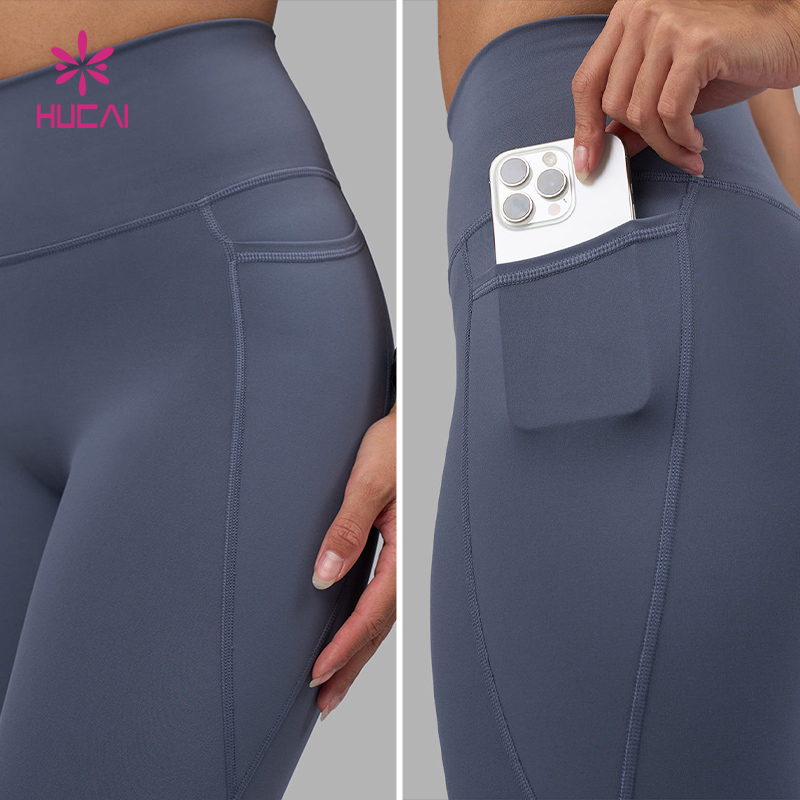
Sandwashing is a mechanical wet treatment. The fabric is worked against itself, or against a medium, in a wash drum so that surface fibres are lifted and softened and the face loses its sheen. The result is a dry, slightly powdery hand and a matte surface that scatters light instead of reflecting it.
Visually, the same colour reads differently. A black moves toward charcoal in daylight, a deep olive becomes dustier, and a bright colour loses some of its edge. In benchmark ranges across studio and lifestyle collections, this dull surface is used deliberately: it signals a worn-in, softer product rather than a technical one. The trade-off is that the finish also softens visual structure, so seam lines and panel breaks become less crisp than on a flat face.
The risks are specific and repeatable. Sandwashing adds mechanical action and shrinkage on top of dyeing, so rolls from different dye lots can finish to slightly different shade and texture. A garment cut from more than one roll can show a panel-to-panel break at the side seam after washing. Handling and abrasion marks show more on a matte face than on a smooth one, and a lifted surface can open at seam edges, which makes a normally acceptable seam grin visible.
For the brief, four things should be locked early: dye lot consolidation so one style runs from as few lots as possible, a wash trial on the actual roll set rather than a lab swatch, colour approval taken after finishing rather than on greige, and a shrinkage allowance agreed before patterns are graded. Sandwashed programmes also need care instructions that match the finish; a surface sold as soft loses that quality quickly if the care label pushes customers toward high heat.
Where the direction struggles: high-contrast prints, because the wash moves the base tone; heat-transfer logos, because adhesion on a lifted, softer surface needs its own trial; and any style whose value depends on sharp, graphic seam lines.
Brushed: Warmer Hand, Higher Surface Risk
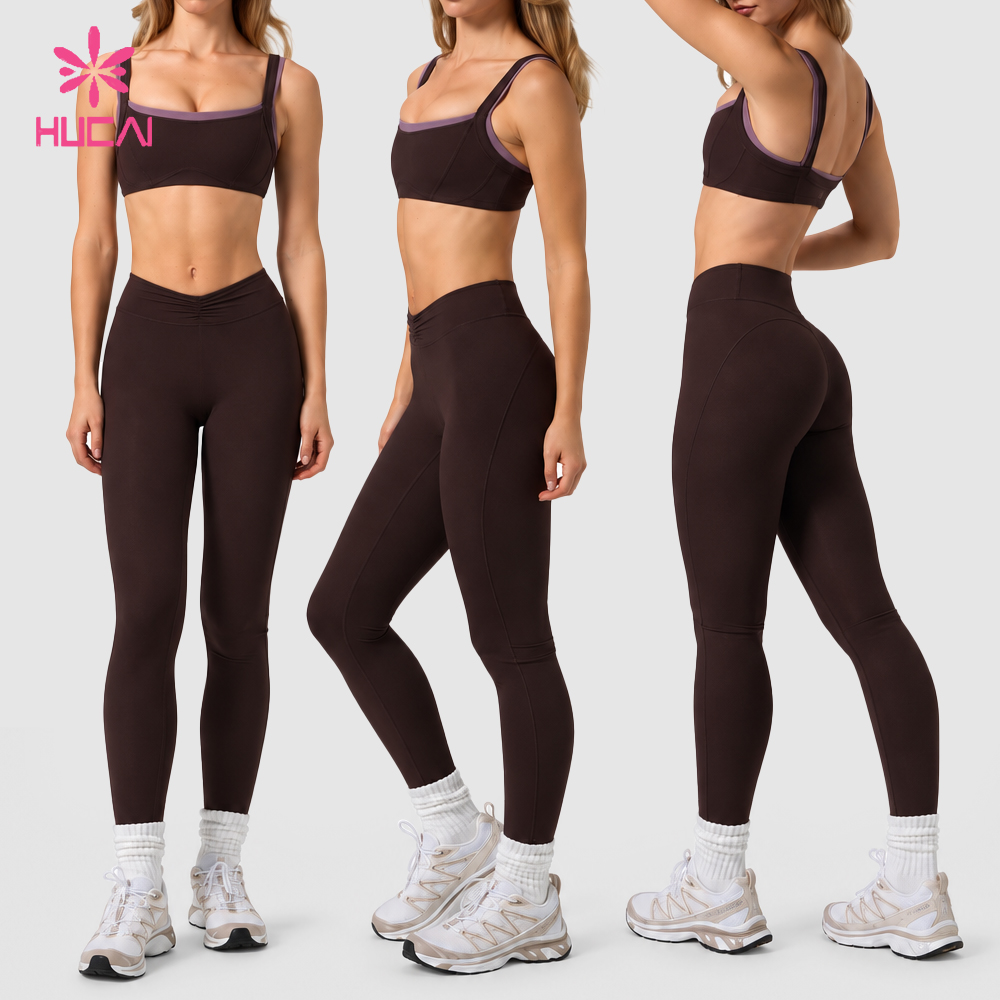
Brushing raises fibres from the fabric face with rotating wire or abrasive rollers, and a shearing pass then levels the nap so the surface is even. On circular knits and fleece-backed fabrics this produces the soft, warm hand most buyers associate with cold-weather base layers and recovery wear.
The perceptual gain is real. A brushed face feels warmer on contact, reflects less light and hides knit structure, so a lighter fabric can read more substantial than its weight suggests. That is useful for layering pieces, lounge and post-training ranges where comfort is the product story. It is much less useful for a style that has to look technical under studio lighting.
The costs sit in durability and process control. Raised fibres are available to tangle, so pilling and matting are finish risks rather than knitting faults; a brushed seat or thigh can flatten after repeated wear and leave a visible sheen patch. On dark colours, fibre shedding shows as pale dust in the cutting room and on the finished garment. A brushed face also interferes with print and heat-transfer application, because the adhesive bonds to fibre ends instead of to a flat surface.
In the brief, name the test method rather than the adjective. Pilling resistance is normally reviewed with a method such as ASTM D4970, dimensional change after laundering with AATCC 135, and colourfastness with the ISO 105 series. The standard matters less than agreeing which one applies, who signs off the result, and whether the result is read on the finished face or on the greige.
If a logo is planned, decide early whether brushing stops short of the logo zone, whether the logo moves to a flat panel, or whether a woven label replaces a transfer. Those three options have different costs, and the decision is much cheaper before sampling than after.
Smooth: Clean, Technical, Unforgiving
A smooth face is produced by keeping surface hairiness low and the knit even, then stabilising the fabric with heat and pressure rather than abrasion. Compact spinning, tighter yarn evenness and controlled calendering all contribute. The aim is a flat, uniform plane that reflects light consistently.
This is the default direction for training and studio ranges that want a clean, technical look. Sheen is higher, colour reads closer to the lab dip, and the surface accepts print, heat transfer and clean panel joins. It also reads as more supportive, because a flat face follows body contour instead of blurring it.
The same flatness is what makes it unforgiving. Needle lines, bar marks, seam pucker, stitch tension variation and press marks all become visible. A crease set at packing can read as a shade line. Snagging shows immediately. In quality terms, a smooth programme is less about hiding defects and more about preventing them, which shifts attention to yarn evenness, stitch density, seam type and finishing tension.
Use plain language for the construction. Where a panel layout simply looks clean, describe it as smooth construction or a minimal seam look. A product should only be described as seamless when the construction itself has been confirmed with the mill, because that word sets an expectation the finish cannot meet on its own.
How the Finish Changes the Rest of the Specification
A finish is rarely a single line on a spec sheet. Once the surface changes, four other decisions move with it.
- Colour approval. Approve the standard on finished fabric. A lab dip approved on greige can shift a full step after a wash or a brush, and the mill cannot be held to a standard that was never measured on the final surface.
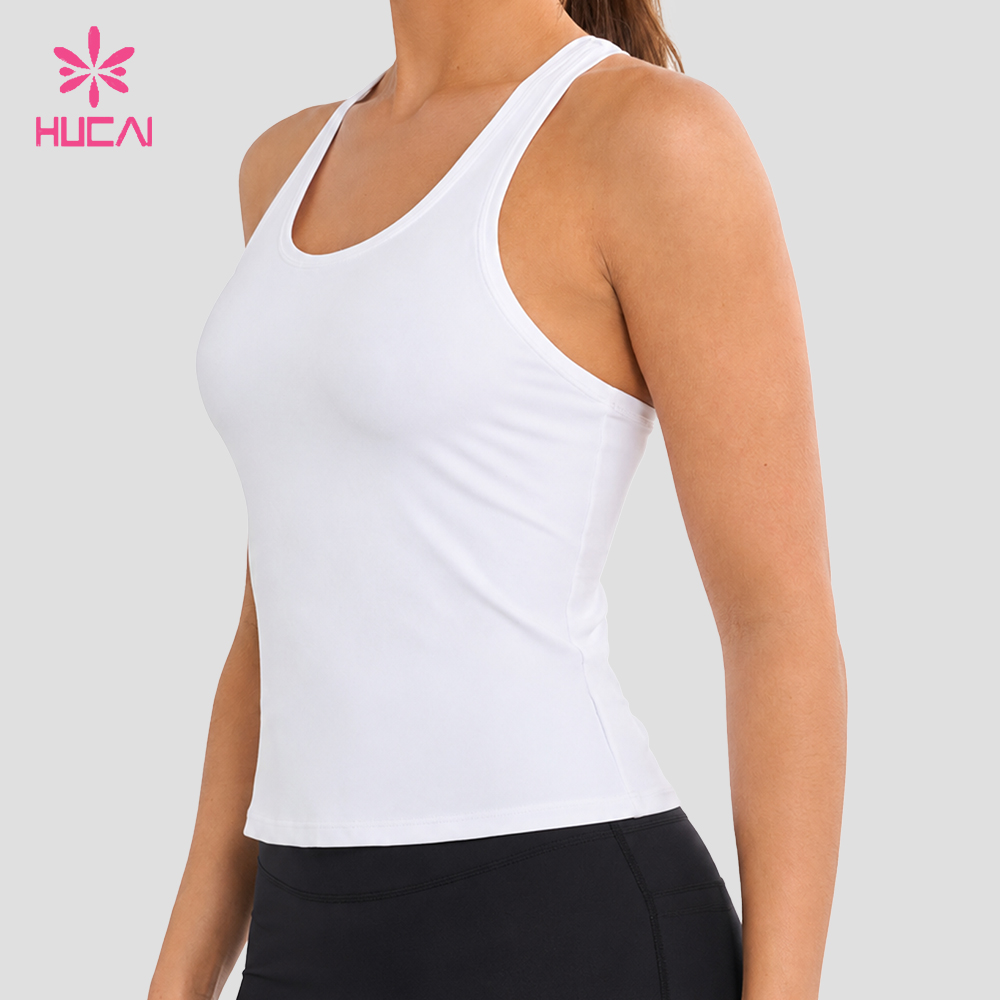
- Matching sets and panels. A bra and a legging finished in different batches will not match under daylight even when they match on paper. Consolidate lots, finish in one batch where volume allows, and review the set as a set rather than as two styles.
- Opacity and recovery. Surface treatment can change how the face scatters light and how the fabric grips, so re-check cover at stretch and recovery after repeated wear instead of relying on the base knit result.
- Logo, trim and care. Bonding, heat transfer, embossing and washing instructions all behave differently on a raised or softened face. Confirm the application method against the finished surface, not the greige.
This is where sample-room discipline pays for itself. In HUCAI Sportswear's sample review, the finish is checked on the garment rather than on a swatch card: the same panel is read under daylight and under shop lighting, seam edges are checked after a wash, and the care label is read against the finish rather than against the fibre. A finish that looks correct on a flat swatch can fail on a curved seam, and a custom sports bra programme shows that fastest, because the cup, strap and underband each distort the face differently.
Where a programme carries both a bra and a legging, treat the surface as one specification across the set. Two finishes that were approved separately rarely match when they are worn together, and the customer reads that mismatch as a quality problem rather than a finishing decision.
Cost, MOQ and Sampling Logic
Every finishing step adds handling, machine time and yield loss. Sandwashing and brushing both consume fabric: the first through shrinkage and rework, the second through the shearing pass and the material lost with it. Both also narrow the practical colour minimum, because a finish batch has to be large enough to run consistently from start to end.
That is why the public MOQ from 200 pcs / style is a starting point rather than the full answer. A finish-led programme also has to plan colour, lot consolidation and finishing capacity, and those variables can move the real minimum for a specific shade. The finish belongs in the quantity discussion, not in a later email.
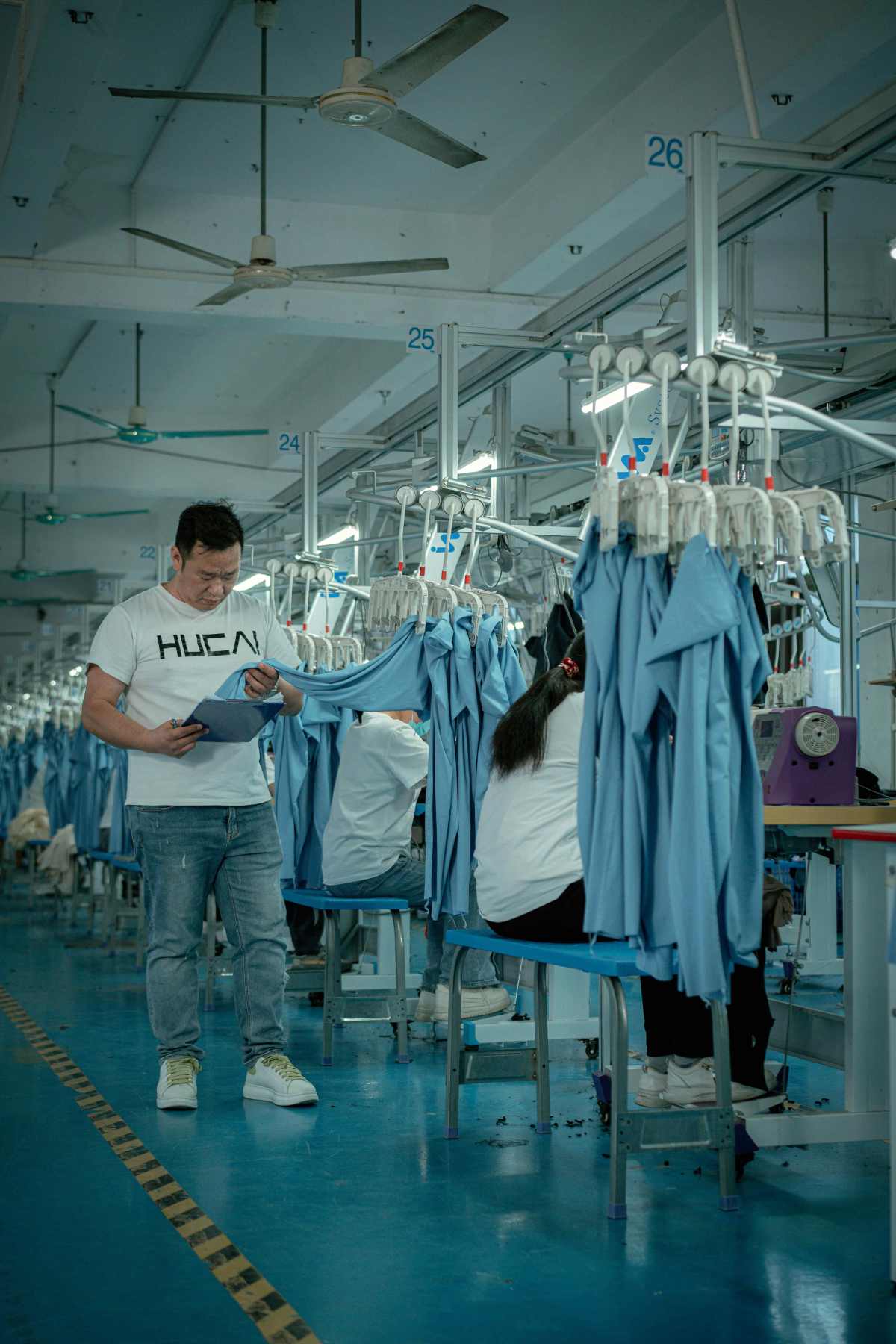
Sampling behaves the same way. Sample development usually takes about 10-15 days, but a new finish adds a wash or brush trial that has to be reviewed before the sew-by sample means anything. Bulk production often takes about 25-30 days after approvals, and finishing capacity sits inside that window rather than after it. HUCAI Sportswear schedules the finish trial and the bulk window together, so a late approval does not silently push the delivery plan.
The practical rule: if the finish carries the positioning, treat it as a core specification with its own trial and approval step. If it is a variant on an existing block, prove it on one style before the rest of the range follows, and confirm how the extra process affects sportswear price factors before committing to a colour count.
Decision Check: Is Your Finish Direction Ready for Sampling?
Before a sample is cut, confirm the following:
- Finish is named and measurable: the brief specifies the surface direction and the reference standard, not a phrase such as soft touch.
- Colour is approved on the finished face: the standard was measured after washing, brushing or calendering, not on greige.
- The recipe was trialled on the actual rolls: the wash or brush trial used the roll set assigned to the style, not a single lab swatch.
- Seams, logo and trims were checked against the surface: stitch type, bonding method and label placement were confirmed on the finished face.
- Care and test plan is agreed: pilling, dimensional change, colourfastness and laundering methods are named, with an owner for sign-off.
If three or more are confirmed, the direction is ready for a structured sample request. If fewer are resolved, one more development round is cheaper than a rejected bulk finish.
Starting from a reference rather than a specification? Share the reference image, target category, colour reference, care expectation and the surface you are trying to match. ODM development support can translate that into a testable finish brief, and the sample development process explains what is reviewed before a sew-by sample is approved.
Founder's Technical Insight: Jean Yuan's Development Note
When brands bring HUCAI Sportswear a sandwashed reference, the failure we see most often is not the wash itself. It is the panel.
A legging cut from three rolls that were washed in two batches will look correct on the cutting table and wrong on the customer. The dye is the same on paper. The mechanical action was not. One roll took more abrasion, lifted a little more nap and shrank a little differently. On a matte surface, that difference shows as a panel that reads lighter at the side seam, or a thigh panel that catches light at a different angle from the seat.
My check has not changed in years. Before bulk, take the actual roll set for the style, wash it as one batch, and cut a full garment from deliberately mismatched rolls — one panel from the first roll, one from the last. Wash that garment three times, then read it under daylight at arm's length, not under a lamp at close range. If the panel break is visible at arm's length, the lot plan is wrong, not the customer's eye.
We also mark fabric face and direction on every roll before cutting, because a brushed or sandwashed face has a direction that a flat knit does not. Panels cut against the nap read differently from panels cut with it, and the difference survives every wash. At HUCAI Sportswear, that marking step sits in the pre-production review rather than at the cutting table, so it stays a planning decision instead of becoming a correction. The same logic runs through our factory and production procedures, where face and direction are checked before the lay is spread.
FAQ
Does surface finishing change compression or support?
No, not in a way a buyer can rely on. Compression and support come from elastane content, stitch density, panel tension and construction, not from the surface. A matte or brushed face can make a garment feel softer and read less technical, but it should not be sold as a support change.
Should colour be approved before or after finishing?
Approve it after. A lab dip approved on greige can shift once the surface is washed, brushed or calendered, and a mill can only be held to a standard that was measured on the finished face.
Why does sandwashed black look different from smooth black?
Because the surface scatters light instead of reflecting it. The pigment is similar; the face is not. Sandwashing lifts a light nap and removes sheen, so the same black reads charcoal in daylight and softer under shop lighting.
Can an existing fabric be brushed without redeveloping the knit?
Sometimes, but it has to be tested on that specific knit. Brushing needs enough surface fibre to raise and a stable structure underneath. A dense, low-hairiness knit may produce a thin or uneven nap, and a loose knit may lose strength at the surface.
Can we apply a heat transfer logo on a brushed or sandwashed surface?
It can be done, but the application needs its own trial on the finished face. Adhesive bonds to fibre ends on a raised surface, so peel results vary. Many programmes move the logo to a flat panel or switch to a woven label instead.
What MOQ applies to a finished fabric programme?
The current public MOQ starts from 200 pcs per style. Colour, lot consolidation and finishing batch size can raise the practical minimum for a specific shade, so the finish should be part of the quantity discussion rather than a later addition.
How long does sampling take when a new finish is involved?
Sample development usually takes about 10-15 days, with an additional wash or brush trial to review before the sample is meaningful. That trial is what protects the bulk date rather than delaying it.
Is OEM or ODM the better route for a finish-led project?
It depends on what you already hold. With a confirmed knit, finish recipe and colour standard, OEM review can start from your specification. Starting from a reference image or a positioning brief, ODM support usually helps translate the surface into a testable spec first.
Final Takeaway
Sandwashed, brushed and smooth are not three levels of quality. They are three different product statements. Sandwashed sells a worn-in softness and asks for lot discipline. Brushed sells warmth and comfort and asks for pilling and care control. Smooth sells a clean, technical surface and asks for process precision, because it hides nothing.
The decision that protects a launch is not which finish looks better on a swatch card. It is whether the finish is written into the brief with a colour standard measured on the finished face, a lot plan, a wash or brush trial and an agreed test method. Put those in place and the finish becomes a positioning asset. Leave them out and it becomes a sample revision.
Ready to develop: send your tech pack, colour standard and finish reference for OEM development review. Need guidance first: share reference images and positioning for ODM support. Still evaluating: review the sample policy and the fabric selection guide before you write the brief.
About HUCAI Sportswear
- Founded in 1998, manufacturing women's activewear and sportswear from Humen, Dongguan, China
- OEM and ODM development support for sports bras, leggings, shorts, tops and matching sets
- Fabric, trim and finish review coordinated with pattern, CAD and sample development
- MES and ERP-supported tracking together with a hanging production system
- AQL 2.5-based inspection and sample-to-bulk consistency control
Current certification information can be reviewed during supplier evaluation based on the project and documentation requirements.