
Vented Performance Tops: How to Build Airflow Without Losing Fit Stability
Running and training tops with back vents, mesh zones, open structures and lightweight fabrics keep expanding across UK and Nordic performance collections. The retail message is simple: more airflow where the body heats up. The manufacturing question is more demanding. Vent placement, panel tension, seam reinforcement, fabric weight and wash durability all decide whether an airflow feature stays stable during a run or becomes a weak point in the garment.
HUCAI Sportswear, a women's activewear and sportswear manufacturer in Dongguan, China, treats ventilation in performance tops as a construction decision rather than a decorative detail. For a brand developing private label activewear, ignoring that distinction usually leads to the same sample-stage surprise: the top looks right on a hanger, then the back panel rolls during movement, the neckline distorts after washing, or the vent edges stretch out of shape. This article explains how to balance airflow with fit stability before the first sample is cut.
Quick Answer
Effective ventilation is a construction decision. Airflow features such as mesh panels, laser perforation, open-back structures and lightweight knit zones must be balanced with fabric stability, seam reinforcement and movement fit. Added as decoration, they tend to roll, stretch or distort during running and after washing. Before sampling, a brand should define the product role, the heat and sweat zones being targeted, the fabric behavior, the vent method and the movement and wash criteria that will be used to approve the sample.
Table of Contents
- Who This Article Is For
- Define the Product Role Before Placing Any Vent
- Ventilation Types and the Zones They Serve
- Fabric Stability and Weight Decisions
- Construction and Seam Reinforcement
- Sample Movement and Wash Review
- Bulk Consistency and Quality Checkpoints
- Decision Check
- Which Development Path Fits Your Project
- Manufacturer Insight
- FAQ
- Final Takeaway
Who This Article Is For
- Primary reader: running and training brands developing vented or lightweight performance tops
- Secondary reader: growing activewear brands adding a technical top layer to an existing collection
- Product stage: early development, from product brief and fabric direction through first sample review
- Problem being solved: adding airflow features without creating fit instability, edge distortion or bulk inconsistency
- Who may not need this article: brands sourcing simple knit tops with no venting, mesh or open-structure requirements
What you gain from this article: a structured way to define vent placement, fabric behavior, seam reinforcement and sample acceptance criteria, so the first sample tests the right questions instead of becoming an expensive experiment.
Define the Product Role Before Placing Any Vent
The first decision is not where to cut a hole. It is what the top must do. A top built for steady-pace running in cool weather needs different airflow logic from a top designed for high-output interval training or gym-to-street crossover use.
Before any pattern work, confirm the target activity, the expected temperature range, how the top will be layered and how long the wearer will be active. These answers set the airflow budget: how much open area the garment needs, where heat release matters most and how much structure the fabric must keep. The same vent placed in a short-distance racing top and a long-distance training top may need different sizing, positioning and reinforcement.
A clear product role also decides whether the top belongs in an OEM or ODM development path. A brand with a confirmed specification can move into OEM development with a tech pack; a brand starting from references and an activity description is usually better served by ODM development from a product direction.
Ventilation Types and the Zones They Serve
Heat and sweat do not spread evenly across the upper body. The upper back, underarm, side torso and nape area build heat faster than the chest in most running and training movements. Ventilation design should start from these zones, then select a method that fits the fabric and construction.
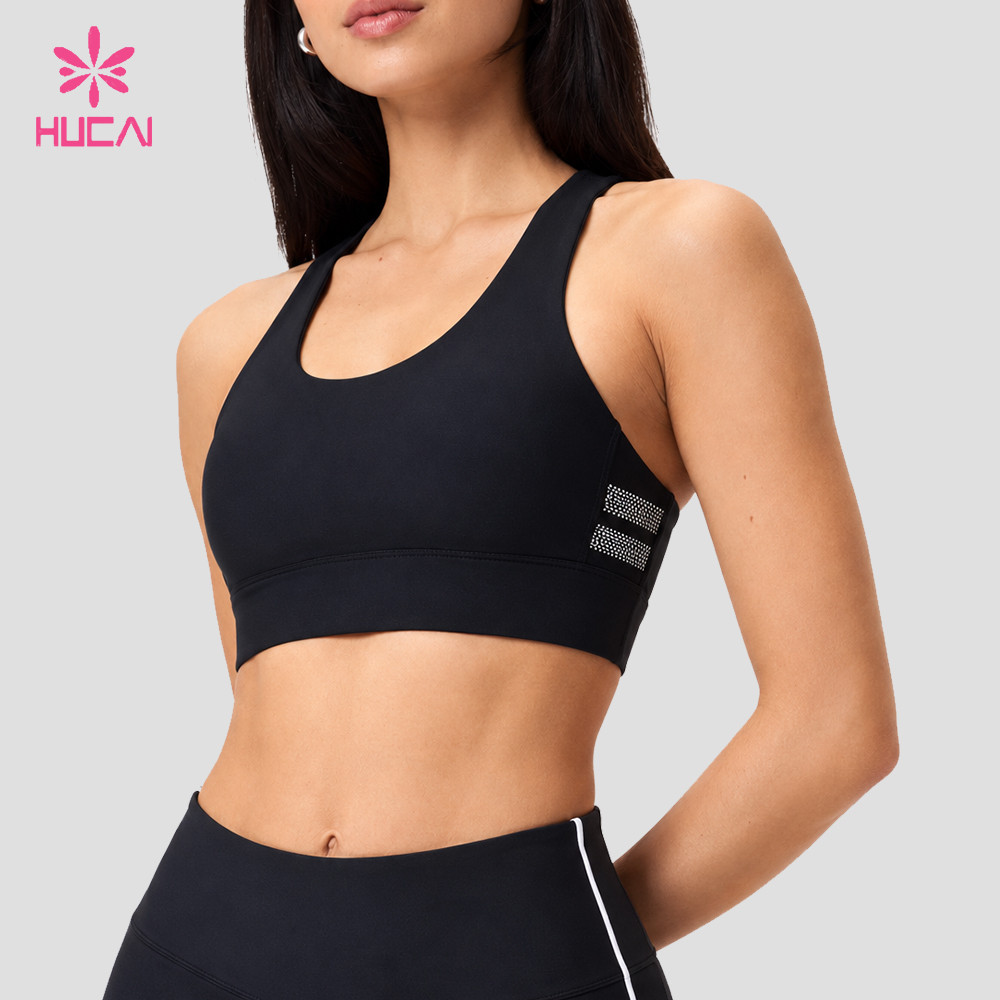
- Mesh panels: a separate open knit inserted into the main shell. Useful for large upper-back zones; the joining seam must be stable and the panel tension must match the shell or the fabric can pucker.
- Laser perforation: small openings cut directly into the fabric. Clean and lightweight, but only suitable when the fabric edge can hold its shape without fraying or curling.
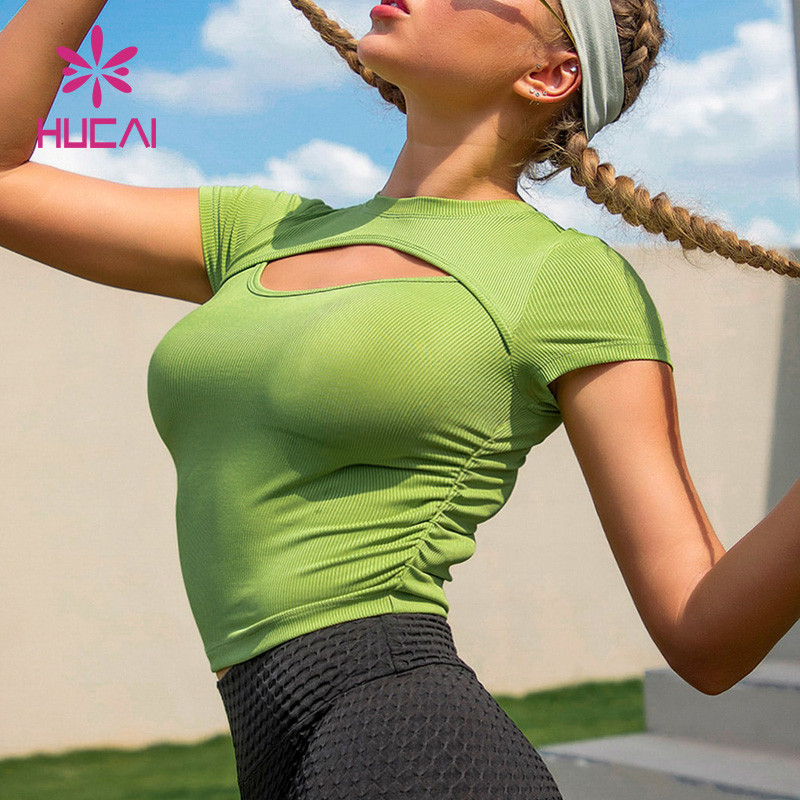
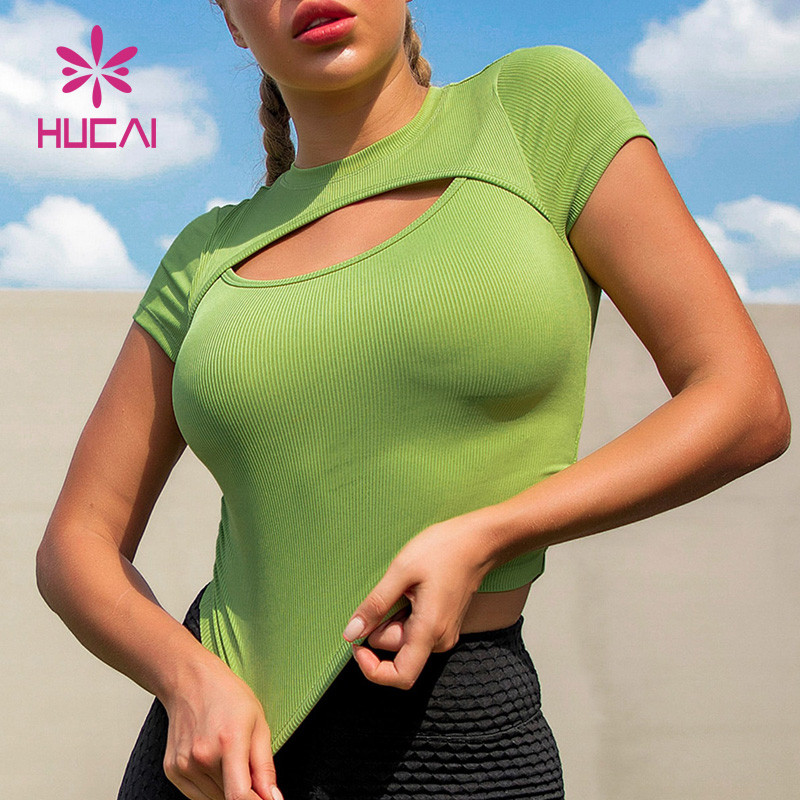
- Open-back or cut-away structures: large visual openings that reduce fabric area. They change the support structure of the garment, so shoulder straps, hems and openings need extra review.
- Lightweight knit zones: a lighter or more open knit placed in targeted areas. The transition between weights must be handled carefully in the pattern.
There is no single ventilation method that fits every program. The choice depends on the fabric, the garment structure and the movement requirement. A comparison against the full activewear fabric selection guide helps brands shortlist options before pattern work begins.
Fabric Stability and Weight Decisions
Lightweight fabric is the starting point for most vented tops, but lower weight is not the only variable. Stretch and recovery, surface hand feel, opacity, seam behavior and how the fabric behaves at cut edges all influence whether a vent stays clean after repeated movement and washing.
Fabric with weak recovery can stretch permanently around openings. A cut edge on a loosely knit surface can roll or fray. A coated or printed surface may not accept laser cutting cleanly. These behaviors are not visible on a fabric swatch at rest; they appear under tension and after washing.
For this reason, fabric review should happen before sampling, with stretch direction, recovery and edge behavior checked against the planned vent method. HUCAI Sportswear supports fabric review and selection for performance tops, including lightweight knits and mesh combinations, based on the confirmed project requirement.
Construction and Seam Reinforcement
Every opening in a garment is a potential stress point. A vent edge, a mesh panel joint or a perforated zone carries more tension than the surrounding fabric, especially during arm raises, torso rotation and stride movement.
Construction choices decide how that tension is managed: seam type, edge binding, stitch density and panel direction. A bound edge can stabilize an opening, but the binding fabric must stretch with the shell. A mesh panel needs a seam that controls the different recovery of the two materials. An open-back structure changes where the garment grips the body, so shoulder and underarm seams may need repositioning.
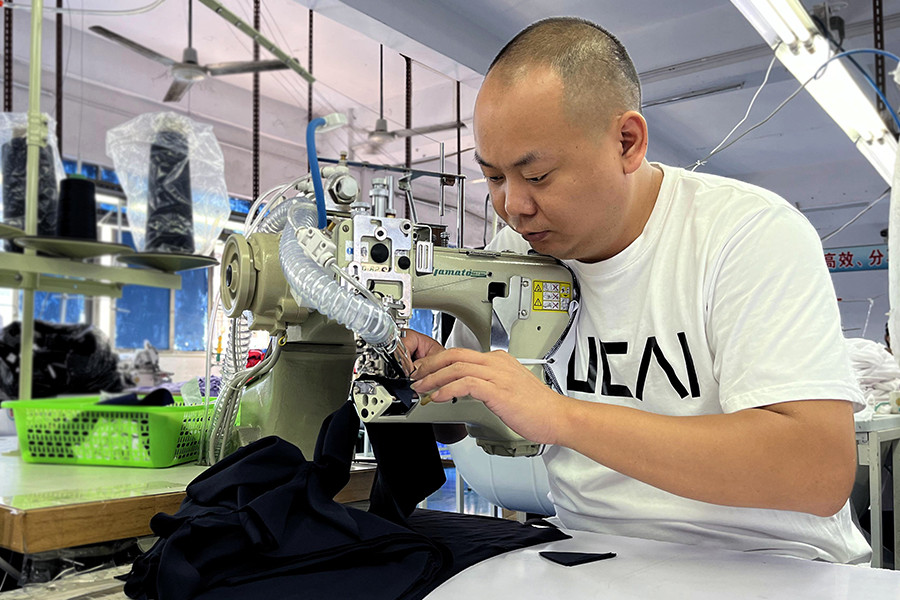
What looks like a small construction detail at the pattern stage often becomes the difference between a top that stays in place and one that gaps, rolls or distorts. These are the details a manufacturer reviews in OEM development with a confirmed tech pack, where measurements, seam structure and material behavior are defined before cutting.
Sample Movement and Wash Review
A vented top cannot be approved from flat measurements alone. The sample stage should include a movement review and a wash review, because the two expose different problems.
Movement review: the sample is worn through the target movements, such as arm raises, torso rotation, stride and pace changes. The reviewer checks whether the back panel lifts, the vent edges curl, the hem rides or the neckline gapes. What looks acceptable while standing can change completely in motion.
Wash review: the sample is washed under the planned care conditions, then checked for vent shape retention, edge fraying, seam distortion, color change and surface change. Airflow features are often at their most fragile after repeated washing, not at the first wear.
Sample development usually takes about 10-15 days depending on style, fabric, trim, logo, revision requirements and confirmed details. The sample development process at HUCAI Sportswear covers fit review, movement and wash checks, and structured revision planning before pre-production approval.
Bulk Consistency and Quality Checkpoints
Vent placement and fabric behavior must survive the move from sample to bulk. Panel alignment, opening size, seam tension and fabric shade can shift during production if the standards are not fixed before cutting.
The main bulk risks for vented tops are inconsistent vent dimensions between pieces, mismatched mesh or binding shades, seam puckering on lightweight fabric and variations in stretch recovery between production batches. Each of these should be covered by a clear pre-production review and in-process checks.
Bulk production often takes about 25-30 days after pre-production details and approvals are confirmed, depending on project scope, materials, processes, quantity and scheduling. The quality workflow at HUCAI Sportswear combines pre-production review, AQL 2.5-based checkpoints, in-process inspection, final inspection and sample-to-bulk consistency control; details are covered in the sportswear quality control process.
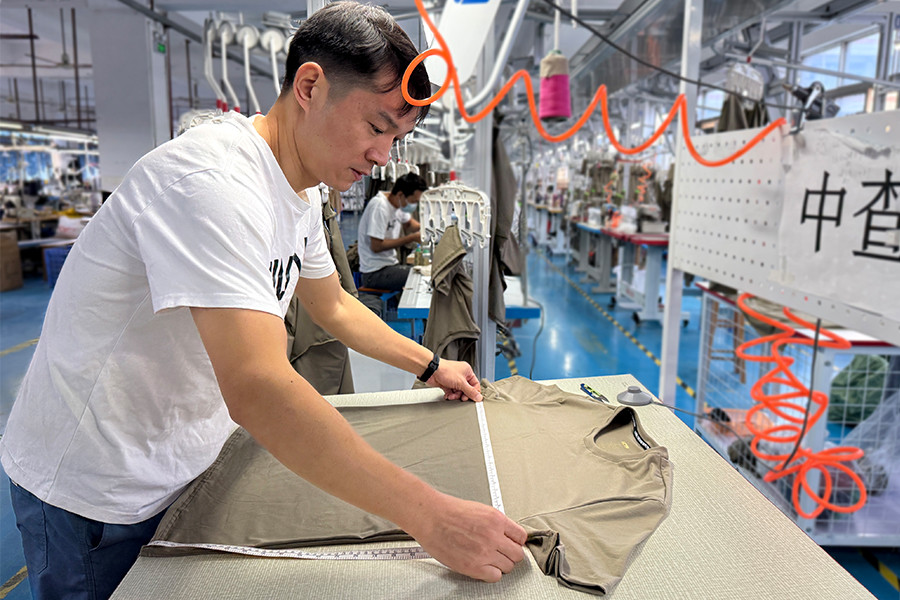
Decision Check: Is Your Vented Top Direction Ready for Sampling?
Before requesting samples, confirm the following:
- Product role: target activity, temperature range, layering intent and expected wear time are defined
- Heat and sweat zones: the zones the ventilation must serve are agreed, not chosen by looks alone
- Vent method: mesh, perforation, open structure or lightweight knit is selected with the fabric in mind
- Fabric behavior: stretch, recovery, edge behavior and wash response are reviewed against the vent plan
- Acceptance criteria: movement and wash checks for the first sample are written down before cutting
If three or more criteria are confirmed, the direction is ready for a structured sample request. If fewer than three are resolved, additional development planning will reduce sample revision cycles and control cost.
Which Development Path Fits Your Project
Brands with a confirmed specification, measurements and fabric requirements can send the package for OEM review before sampling. Brands starting from reference images, an activity description or an early concept can share references for ODM development and clarify fabric, vent placement, fit and sample priorities first. Both paths begin with the same preparation: define the run program, the airflow target and the acceptance criteria.
Manufacturer Insight
A common early-stage issue in vented top projects is that the sample is judged while the wearer is standing still. The vent placement looks clean, the silhouette looks correct and the sample is approved on flat appearance. The problems surface later: the back panel rolls during a stride, the vent edges curl after the first wash cycle or the lightweight neckline loses its shape.
The cause is usually the same. Ventilation was treated as a fabric detail instead of a construction system. Airflow changes the tension map of the garment, so fabric, pattern and seams must be adjusted together. When the airflow target and the acceptance criteria are defined before cutting, the first sample tests the right questions and revision cycles stay controlled.
FAQ
Where should ventilation be placed on a running top?
The upper back, underarm, side torso and nape are the zones that build heat fastest in most running movements. Placement should follow the target activity and the fabric direction; a vent positioned across a high-tension zone may distort during movement.
Is mesh always more breathable than laser perforation or open-back structures?
No. Airflow depends on open area, yarn structure, placement and garment construction, not on the method name alone. Mesh can add bulk at seams, perforation depends on fabric edge stability, and open structures remove supporting fabric. The right method is the one that fits the fabric and the movement requirement.
Can lightweight fabric keep its shape at the neck and hem?
It depends on stretch and recovery, surface behavior and seam construction. Lightweight fabric reduces bulk, but it also carries less structure, so necklines, hems and vent edges need review under tension and after washing. These points are confirmed during sample development.
Do vents affect how the top fits during movement?
Yes. Every opening changes the tension map of the garment. Vents near high-movement zones can cause panel lifting, edge rolling or hem ride-up if the fabric, panel direction and seams are not adjusted together.
What causes vent edges to roll or stretch after washing?
The usual causes are weak fabric recovery, unstable cut edges and seams that do not control the opening. Edge treatment, binding selection and wash review in the sample stage help confirm which combination holds its shape for the planned care conditions.
Can laser-cut openings be added to most performance fabrics?
Not all fabrics suit laser cutting. The finish, coating, knit structure and edge behavior must be compatible, otherwise the opening can fray, curl or change shape. A fabric test before pattern work is the safer route.
How long does a vented performance top sample usually take?
Sample development usually takes about 10-15 days, depending on style, fabric, trim, logo, revision requirements and confirmed details. A clear brief with defined vent placement and acceptance criteria helps keep the first sample cycle focused.
What is the MOQ for custom vented training tops?
The current public MOQ starts from 100 pcs per style. Final color, size, fabric, trim and customization planning depends on the confirmed project, so the MOQ is reviewed together with the full specification.
Final Takeaway
A vented performance top earns its place in a running or training line when airflow is engineered rather than added. The practical sequence is simple: define the product role, map the heat zones, choose a vent method that fits the fabric, reinforce the construction, and test movement and wash behavior in the sample stage.
Brands that prepare these points before sampling reduce revision cycles and move into bulk with clearer standards. The next step is to share your top project brief with HUCAI Sportswear, including the target activity, airflow direction and sample priorities, so the development review starts from confirmed requirements.
About HUCAI Sportswear
- Founded in 1998, specializing in women's activewear and sportswear manufacturing
- OEM and ODM development support for sports bras, leggings, shorts, tops, and matching sets
- Structured sample development, fabric and trim review, and sample-to-bulk consistency control
- AQL 2.5-based inspection as part of the quality workflow
Current certification information can be reviewed during supplier evaluation based on the project and documentation requirements.