
What Activewear Brands Should Know Before Launching a Tennis and Padel Apparel Line
Court sports are having a structural moment. Tennis participation numbers continue to climb across Nordic and Australian markets, and padel—once a niche Southern European pastime—is now the fastest-growing racket sport in multiple regions. For growing activewear brands, the temptation to add a tennis or padel apparel line is understandable: the category carries premium positioning, built-in performance requirements that justify higher price points, and a consumer base that refreshes its kit regularly. But jumping into court sports apparel without understanding the development variables that separate it from general activewear often leads to costly sample revisions, opacity failures under dynamic movement, and fit complaints that general training products rarely encounter.
At HUCAI Sportswear, we work with brands that are expanding from general activewear into court-specific categories. The question is not whether the market opportunity exists—it does. The question is whether your development brief accounts for the structural, fabric, and construction requirements that turn a general training top-and-skirt combination into a genuine tennis or padel apparel line that performs on court.
Quick Answer
Before launching a tennis and padel apparel line, growing brands should confirm four development layers: skirt-short system architecture (built-in shorts, ball pocket placement, and opacity under lateral movement), top construction (support level, strap stability, and back design for racket-sport range of motion), fabric direction (moisture management, abrasion resistance, and UV exposure considerations), and fit standards that differentiate court-specific movement from general training. Brands that define these layers before sampling reduce revision cycles and avoid the common pattern of discovering skirt opacity or strap stability issues only at the sample review stage.
Table of Contents
- Who This Article Is For
- Why Court Sports Apparel Is Not Just Training Apparel With a Skirt
- Skirt-Short System Architecture: Built-In Shorts, Ball Pockets, and Opacity Control
- Top Construction for Racket-Sport Movement: Support, Straps, and Back Design
- Fabric Direction for Court Performance: Moisture, Abrasion, and UV Exposure
- Fit Standards That Differentiate Court from General Training
- Padel vs Tennis: Where the Development Requirements Diverge
- Decision Check
- Manufacturer Insight
- FAQ
- Final Takeaway
Who This Article Is For
- Primary reader: Growing brands with an existing activewear or athleisure product line who are evaluating expansion into tennis and padel apparel
- Secondary reader: Private label buyers and brand owners who have received buyer interest in court sports product but lack internal court-apparel development experience
- Product stage: Pre-sampling product definition; brands that understand general activewear construction and are now defining court-specific product architecture
- Problem being solved: Avoiding the common pattern of developing court apparel using general training specifications, which typically surfaces skirt opacity, strap stability, ball-pocket placement, and fit-standard issues only during sample review
- Who may not need this article: Brands already operating a mature tennis-specific line with established court fit blocks and fabric libraries; startup brands still developing their first general activewear product; buyers sourcing only basic leisure skirts without performance requirements
What you gain from this article: A structured understanding of the four development layers that separate court sports apparel from general activewear, including skirt-short system architecture, top construction for racket-sport movement, court-specific fabric direction, and fit standards. You will also understand where tennis and padel requirements diverge, so you can decide whether to develop a shared court platform or two separate product architectures.
Why Court Sports Apparel Is Not Just Training Apparel With a Skirt
The most common mistake growing brands make when entering court sports is assuming that a general training top paired with a skirt overlay constitutes a tennis or padel line. The assumption is reasonable from a visual standpoint—a racerback tank and a skirt do look like court apparel—but it misses the structural requirements that define whether a product actually performs during a match.
Court sports create a specific combination of demands that general training products are rarely designed to handle. Lateral movement patterns in tennis and padel are more explosive and directional than the predominantly forward-backward movement of running or the mixed-plane movement of gym training. This affects how seams, panels, and waistbands need to be engineered. A skirt that works during a forward lunge in a training session may ride up, twist, or expose the inner short during the repeated lateral starts and stops of a baseline rally.
Beyond movement, court sports introduce requirements that are essentially absent from indoor training: prolonged sun exposure affecting fabric colorfastness and UV protection, repeated ball-storage actions that stress pocket construction, and visibility standards where a product's opacity is tested under direct sunlight and dynamic movement rather than in controlled gym lighting. A brand that develops its court line using general training specifications typically discovers these gaps at the sample review stage, when correcting them requires revisiting fabric choice, construction, and sometimes the entire skirt-short architecture.
The development framework that works for court apparel treats the category as having its own product architecture rather than as a variation of training. This means defining skirt-short system requirements before selecting fabric, confirming top construction variables by racket-sport range of motion rather than by general activewear standards, and establishing court-specific fit blocks that account for the way garments move during serve motions, volleys, and lateral court coverage.
Skirt-Short System Architecture: Built-In Shorts, Ball Pockets, and Opacity Control
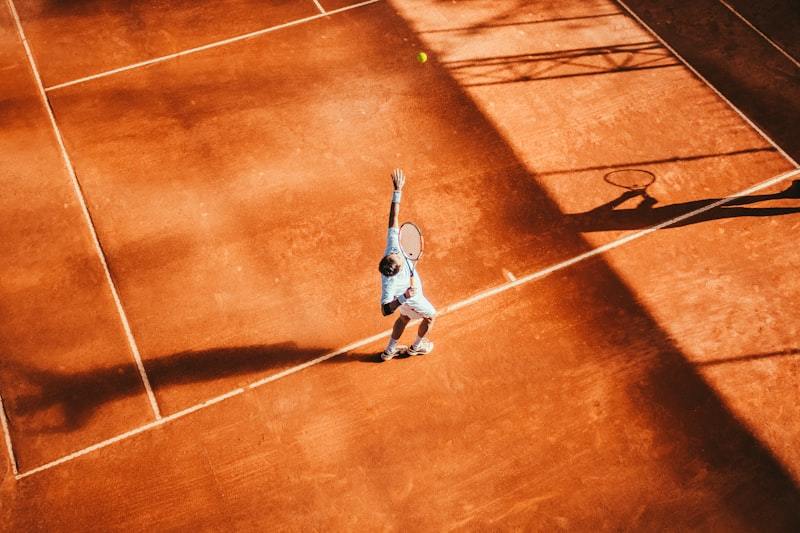
The skirt-short system is the defining product architecture of court sports apparel, and it is also where growing brands encounter the most sample-stage surprises. A tennis or padel skirt is not simply an outer skirt layer sewn over a pair of shorts. It is an integrated two-layer system where the outer skirt, inner short, waistband, ball pocket, and leg gripper must work together through lateral movement, repeated bending, and ball-storage actions.
The inner short is typically the first development variable that requires attention. Brands coming from a leggings or training-short background often assume the inner short is a simpler version of a standard compression short, but court-specific inner shorts need a different balance. They must provide enough coverage and opacity for the range of motion involved in serving and baseline movement, while remaining thin and smooth enough that they do not create visible bulk under the outer skirt. The leg opening needs to be sized and finished so it does not ride up during lateral movement—a common failure point when inner shorts are cut using general training-short patterns.
Ball pocket placement is the second critical variable and one that directly affects usability. Most tennis skirts position one or two ball pockets on the inner short, typically at the side thigh. The pocket needs to hold one or two tennis balls securely during movement without creating visible distortion in the outer skirt silhouette. Padel skirts sometimes position the pocket differently—often at the back waistband or with a larger single pocket—because padel balls are slightly different in pressure behavior and because padel players may carry balls differently between points. The pocket opening, depth, and closure method (elastic edge, internal grip strip, or both) should be defined and sampled separately rather than treated as an afterthought.
Opacity control under court conditions is the third variable that separates court skirts from general activewear. Court sports place the garment under direct sunlight, on-court lighting, and dynamic poses where the fabric is stretched across the body in ways that static fit photos do not capture. A fabric that passes a basic opacity check in a development office may show visible inner-short lines or transparency during a serve motion shot from the side. Opacity should be reviewed with the confirmed fabric under stretch and in lighting conditions that approximate court use, not only on a dress form under indoor lighting.
Top Construction for Racket-Sport Movement: Support, Straps, and Back Design
Court sports tops need to support a specific movement envelope that general training tops are rarely designed around. The serve motion in tennis and the overhead smash in padel involve a full overhead arm extension combined with torso rotation, which means the top's shoulder straps, armhole, and back design must allow unrestricted upward reach without the garment shifting, riding up, or exposing areas the wearer does not intend to expose.
Strap design is the first decision point. Racerback styles are common in court sports because they keep straps away from the shoulder blades during rotation, but the specific racerback shape matters. A narrow racerback that works for yoga may cut into the shoulder during repeated serve motions. A wider racerback or a cross-back design distributes pressure differently and may suit players who prioritize shoulder comfort during long matches. Brands should define the strap configuration before fabric selection, because the strap structure and the fabric's recovery behavior interact: a fabric with strong recovery may allow a narrower strap, while a softer fabric may require a wider strap to maintain position during play.
Support direction is the second decision point. Court sports involve moderate-to-high impact from running, jumping, and rapid directional changes, but the continuous nature of a match—often 60 to 90 minutes—means the support system needs to balance hold with long-duration comfort. A shelf bra with a wide underband offers one direction; a design with removable cups and an inner support layer offers another. The appropriate support architecture depends on the brand's target customer and the size range being developed. An inclusive size range, for example, may require wider underbands, reinforced strap attachment points, and a different underband construction than a size range that stops at a smaller cup-to-band ratio.
Back design is the third variable. Open-back styles are popular in court sports because they provide ventilation and visual appeal, but the degree of openness affects the top's ability to stay in place during overhead movement. A very low back cut without a cross strap may shift during serves; a keyhole back with a secure closure offers a middle ground. The back design should be reviewed alongside the planned support system, because the back structure contributes to the garment's overall stability during racket-sport movement.
Fabric Direction for Court Performance: Moisture, Abrasion, and UV Exposure
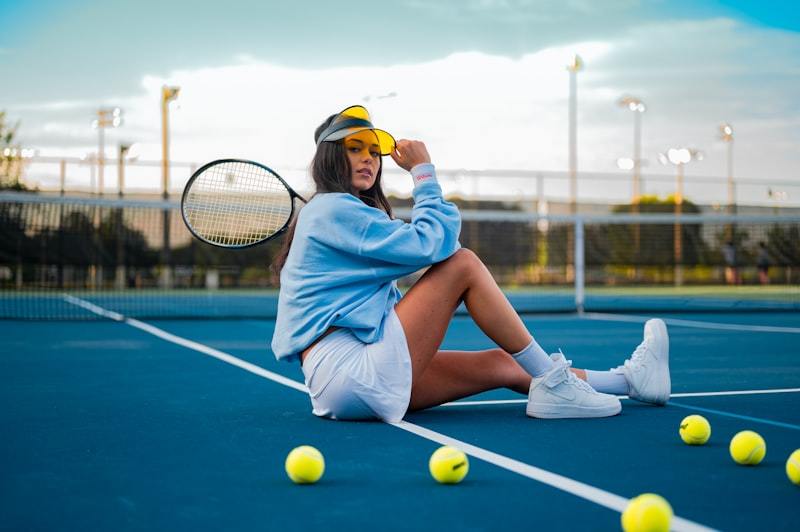
Court sports fabric requirements differ from general activewear fabric requirements in three areas: moisture management under prolonged sun exposure, abrasion resistance from repeated ball contact and court-surface interaction, and UV exposure considerations that affect both the wearer and the fabric itself.
Moisture management in court sports is not only about wicking. A tennis or padel player may spend 90 minutes or more on court, often in direct sun, generating sustained perspiration. The fabric needs to manage moisture across an extended period rather than for the 45-to-60-minute window typical of a gym session. Fabrics with a higher synthetic-fiber content— nylon or polyester blends with elastane for stretch—tend to manage sustained moisture better than high-cotton blends, but the specific knit structure, weight, and finishing treatment also affect how the fabric behaves when saturated. A fabric that wicks well in a lab test but becomes heavy and clingy after 60 minutes of play creates a different wear experience than one that maintains its hand feel and drape through a full match.
Abrasion resistance matters in court apparel in ways that brands new to the category often overlook. Tennis players may slide on hard courts, and padel players regularly make contact with the court surface and surrounding walls. The inner short, skirt hem, and any side-panel areas that contact the court surface during slides should use fabric with sufficient abrasion resistance to avoid pilling or surface damage after repeated use. If the brand plans to offer the line in lighter colors, abrasion-related surface wear becomes more visually apparent and should be reviewed during fabric selection rather than discovered through returns.
UV exposure is the third fabric variable. Court sports are predominantly outdoor activities, and prolonged sun exposure affects both the wearer and the garment. UPF-rated fabric options can be reviewed for tops and skirts depending on the brand's target market and performance positioning. Beyond wearer protection, UV exposure also affects fabric colorfastness. Colors that look consistent after a development review under indoor lighting may show differential fading between body panels, trim, and stitching after a season of outdoor use. Brands planning a court line should review colorfastness expectations with their manufacturer before confirming the color palette and fabric selection.
Fit Standards That Differentiate Court from General Training
Fit standards are where court-specific development requirements become most concrete, and where brands without court-apparel experience often rely on general training fit blocks that do not translate well to racket-sport movement.
The skirt waistband is the first fit variable that needs court-specific definition. Court skirts typically sit at the natural waist or slightly below, and the waistband needs to stay in place through serve motions, lateral lunges, and repeated bending. A waistband that works for a training short—where movement is predominantly forward and vertical—may roll, dig in, or shift during the rotational and lateral patterns of court sports. The waistband width, internal grip strip, and closure method (elasticated, drawcord, or flat-front with elastic back) should be defined with court movement in mind rather than adapted from training-short specifications.
Skirt length and flare are the second fit variable. Court skirts range from approximately 11 to 15 inches in length depending on the brand's aesthetic and the target market, but the functional consideration is whether the length and flare provide enough coverage during movement without restricting the legs. A narrower skirt silhouette may look clean in static product images but limit stride length during wide lateral movements. A wider flare provides more freedom but may create excess fabric that interferes during quick direction changes. The balance between coverage, movement freedom, and visual silhouette should be defined before sampling, and the first sample should be reviewed on a fit model through court-specific movement patterns—not only through static standing poses.
Inseam length and leg-opening finish on the inner short are the third fit variable. The inner short inseam typically ranges from approximately 3 to 5 inches, but the functional requirement is that the leg opening stays in place without riding up and without creating a visible compression line at the thigh. A silicone gripper strip at the leg opening can help with stay-in-place performance, but its width and placement affect comfort and should be reviewed during sampling. Brands developing an inclusive size range should plan to test leg-opening comfort and stay-in-place performance across multiple sizes, because a single gripper specification may not perform consistently across a wide size spread.
Padel vs Tennis: Where the Development Requirements Diverge
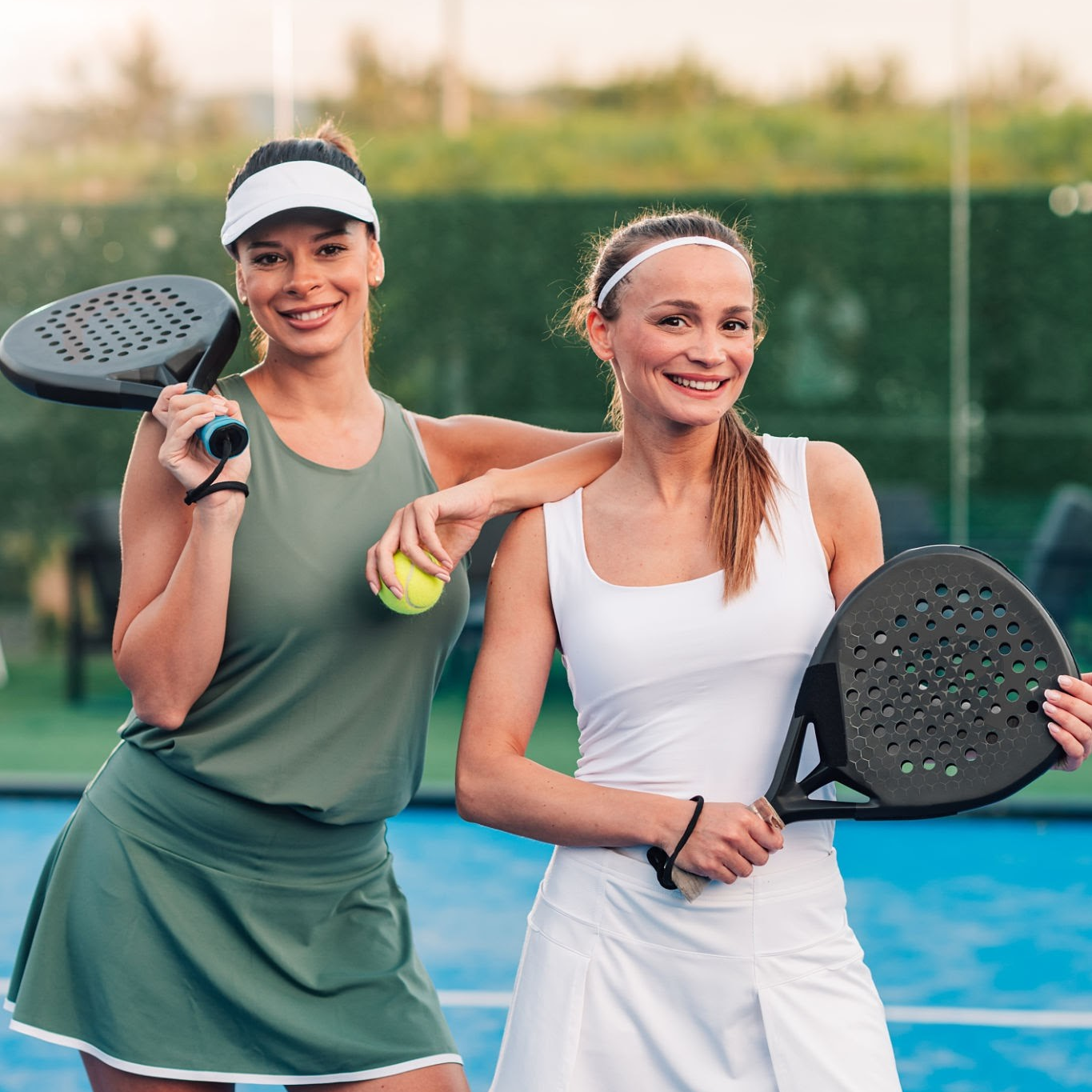
Many growing brands assume tennis and padel apparel can share a single product architecture, and in some respects they can. Both require skirt-short systems, tops designed for overhead racket-sport movement, and fabrics that manage moisture and opacity under court conditions. But there are specific areas where the two sports create different development requirements, and brands that ignore these differences risk producing a line that satisfies neither segment fully.
The first divergence is in the skirt-short system. Padel is typically played on artificial turf or acrylic surfaces in enclosed courts, which means players slide less and make less abrasive contact with the playing surface compared to tennis players on hard courts. This affects the abrasion-resistance requirements for the inner short and skirt hem. Padel apparel can typically use slightly lighter-weight fabrics and less aggressive abrasion-resistant paneling than tennis apparel for hard-court use. However, padel courts are often smaller and the game involves more rapid exchanges at close range, which can mean more frequent and sharper directional changes. The inner short's stay-in-place performance and the waistband's stability under quick lateral cuts may be even more critical for padel than for tennis.
The second divergence is in pocket configuration. Tennis skirts almost always include ball pockets, typically one or two on the inner short at the side thigh. Padel players sometimes prefer a different pocket placement—back-waistband pockets or a single larger pocket—because padel balls are handled differently between points and because padel's faster rally pace means balls are retrieved from pockets more frequently. A brand developing a shared court platform should consider whether a single pocket configuration works for both sports, or whether separate tennis and padel skirt variants with sport-specific pocket placement make more sense for the target customer.
The third divergence is in visual design language. Tennis apparel has a longer visual tradition that includes cleaner lines, heritage color blocking, and a more polished court-presentation aesthetic. Padel apparel, as a younger category, often draws from a more casual, street-influenced design language with bolder color blocking, logo placement, and pattern direction. A brand that uses the same visual design direction for both sports may find that the result feels too formal for the padel consumer or too casual for the tennis consumer. The fabric and construction platform can be shared; the color, trim, and styling direction may need sport-specific treatment.
Decision Check: Is Your Brand Ready to Begin Court Apparel Development?
Before requesting samples, confirm the following:
- Skirt-short system architecture defined: Inner short inseam, leg-opening finish, ball pocket placement and closure, and outer skirt length and flare are specified in the development brief
- Top construction variables confirmed: Strap configuration, support direction, and back design are selected based on racket-sport range of motion rather than general training standards
- Fabric direction reviewed for court conditions: Moisture management for extended-duration wear, abrasion resistance for court-surface contact, and UV-related colorfastness expectations are discussed with the manufacturer
- Court-specific fit standards established: Waistband stability, skirt coverage during lateral movement, and inner-short stay-in-place performance are defined as review criteria for the first sample
- Tennis vs padel product architecture decision made: The brand has decided whether to develop a shared court platform or sport-specific variants, and the decision is reflected in the pocket configuration and fabric direction
If three or more criteria are confirmed, the direction is ready for a structured sample request. If fewer than three are resolved, additional development planning will reduce sample revision cycles and control cost.
Manufacturer Insight
A common pattern in court-apparel development is that brands test the first skirt sample on a fit model using general activewear movement checks—a few squats, a forward lunge, a standing twist—and approve the sample. The skirt passes these checks because general activewear movement does not expose the failure points: the inner short riding up during repeated lateral cuts, the waistband rolling during a full serve motion, or the opacity failing under side-angle sunlight at the moment of ball contact. When these issues surface later—during a wear test, a photoshoot, or worse, a customer return—the brand is already past the sampling window and facing a choice between accepting the issue or restarting development with a different fabric and construction. The most reliable approach is to define court-specific fit review criteria before the first sample is cut and to review the sample through actual court-sport movement patterns, even if that means taking the sample to a tennis court or padel facility for movement testing rather than relying only on an indoor fit session.
FAQ
What is the MOQ for a private label tennis or padel apparel line?
The current public MOQ starts from 100 pcs per style. Final color, size, fabric, trim, logo, and customization planning depends on the confirmed project. A tennis or padel line that includes multiple styles—for example, a top, a skirt, and a dress—would have separate MOQ requirements per style, and the total program quantity affects fabric sourcing, trim minimums, and production scheduling.
How long does sample development take for court sports apparel?
Sample development usually takes about 10-15 days, depending on style, fabric, trim, logo, revision requirements, and confirmed details. Court-specific products with integrated skirt-short systems, ball pockets, and specialized waistband construction may require additional time if the construction involves multiple layers or if new patterns need to be developed from reference images rather than from existing blocks.
Can development start from reference images, or is a tech pack required?
Development can start from either. Brands with a complete tech pack that includes measurements, construction details, fabric direction, and trim specifications can begin with OEM review. Brands starting from reference images, sketches, or early product direction can begin with ODM development, where the manufacturer supports fabric review, style recommendation, and sample planning based on the confirmed project scope.
What affects the quotation for a court sports apparel line?
Quotation can be reviewed after the product specifications and project requirements are confirmed. Variables that affect quotation include fabric selection, construction complexity, trim and logo method, quantity, color count, size range, packaging, and any required testing or certification documentation. Court-specific products with integrated inner shorts, ball pockets, and multi-layer construction typically involve more production steps than single-layer training apparel, which is reflected in the cost structure.
Should a brand develop one combined tennis-and-padel line or separate lines?
A shared court platform with sport-specific styling variants is often the most practical starting point for growing brands. The core construction—skirt-short system, top support architecture, and fabric direction—can be shared across tennis and padel, while color, trim, and pocket configuration can be differentiated by sport. Brands with a larger budget and a clear sport-specific customer base may choose to develop separate lines from the start, but this increases the initial style count, MOQ commitment, and development complexity.
What size range should a court sports line cover?
The size range depends on the brand's target market and customer base, but an inclusive size range requires additional development attention for waistband stability, inner-short stay-in-place performance, and support architecture across a wider cup-to-band ratio spread. Brands planning an expanded size range should discuss grading rules, fit-block adjustments, and construction reinforcement points with the manufacturer before sampling, because the structural requirements that work for a narrower size range may not transfer directly to a broader one.
How does bulk production timing work for court apparel?
Bulk production often takes about 25-30 days after pre-production details and approvals are confirmed, depending on project scope, materials, processes, quantity, and scheduling. Court apparel with multi-layer construction, specialized trims, and sport-specific pocket details may require additional production coordination compared to single-layer general activewear, and brands should plan their development calendar with this in mind, particularly if the launch is tied to a seasonal tennis or padel tournament cycle.
What quality checks apply to court sports apparel specifically?
The quality workflow combines pre-production review, AQL 2.5-based inspection, in-process checkpoints, and final inspection. For court sports apparel, additional attention is typically given to skirt-short integration (checking that the inner short and outer skirt are correctly aligned and secured), ball pocket construction and closure security, waistband stability under tension, and opacity review under stretch and lighting conditions that approximate court use. Current certification information can be reviewed during supplier evaluation based on the project and documentation requirements.
Final Takeaway
Court sports apparel is not a general activewear category with a skirt added. The development requirements are specific, structural, and testable: a skirt-short system that stays in place through lateral movement, a top that supports overhead racket-sport range of motion, fabric that manages moisture and opacity under prolonged outdoor conditions, and fit standards defined by court movement patterns rather than by gym training blocks. Brands that define these four layers before sampling enter the development process with a clear brief and predictable revision cycles. Brands that skip these layers typically discover the same issues at the sample stage—skirt opacity, strap shifting, waistband rolling, inner-short riding—and face revision costs that could have been avoided. Whether the line serves tennis, padel, or both, the most reliable approach is to treat court sports as its own product architecture from the start, not as a variation of training.
About HUCAI Sportswear
- Founded in 1998, specializing in women's activewear and sportswear manufacturing
- OEM and ODM development support for sports bras, leggings, shorts, tops, skirts, dresses, and matching sets
- Structured sample development process with court-specific fit review and sample-to-bulk consistency control
- AQL 2.5-based inspection as part of the quality workflow
Current certification information can be reviewed during supplier evaluation based on the project and documentation requirements. Recycled or certified material options can be reviewed based on project requirements.