
Wide-Leg, Straight-Leg or Flare? Expanding an Activewear Bottoms Line Beyond Leggings
Wide-leg, straight-leg and flare bottoms are moving out of streetwear lookbooks and into women's activewear ranges across the US, UK and Australian markets. For growing brands that have built their first collection around leggings and shorts, the question is no longer whether to add another legging color, but whether to widen the whole bottom architecture. That decision changes more than the pattern. Silhouette choice changes how fabric drapes, where compression and ease sit, how hems behave in movement, and how the style coordinates with the sports bras and tops already in your line. For a private label activewear brand or an ODM buyer planning a capsule, understanding these trade-offs before sampling — with a manufacturer such as HUCAI Sportswear — is what separates a sellable bottom family from a pile of samples that never quite work. This guide explains the product-development logic behind each silhouette so you can brief a women's activewear manufacturer with clearer expectations.
Quick Answer
Flare, straight-leg and wide-leg bottoms are not three versions of the same legging. Each silhouette carries a different product role, fabric behavior and pattern workload: flare styles need drape and hem control below the knee, straight-leg styles need balanced ease through the hip and knee, and wide-leg styles need lightweight recovery so the volume does not become heavy. Brands should define the activity range, target customer, fabric drape and hem behavior before sampling, and they should review whether the new styles belong in the same fabric family as existing leggings or need a separate material direction. HUCAI Sportswear supports this kind of bottoms expansion through ODM collection planning and sample development, so the first round of samples tests a clear product role rather than a vague silhouette idea.
Table of Contents
- Who This Article Is For
- Why Bottoms Lines Are Expanding Beyond Leggings
- Flare, Straight-Leg and Wide-Leg: Three Product Roles
- Fabric Drape, Recovery and Weight
- Pattern Decisions: Waist, Hip, Knee and Hem
- Sample Checks and Movement Review
- Capsule Planning With Tops and Sets
- Decision Check
- Manufacturer Insight
- FAQ
- Final Takeaway
Who This Article Is For
- Primary reader: growing activewear brands planning to move beyond a leggings-only bottom line.
- Secondary reader: ODM buyers and private label buyers evaluating flare, straight-leg or wide-leg styles for a first or second capsule.
- Product stage: collection planning to pre-sample definition, when product roles and fabric families are still being decided.
- Problem being solved: turning a silhouette idea into a development brief that covers fabric, fit, grading, hem behavior and coordination with existing tops and sets.
- Who may not need this article: brands with an established bottom architecture who are only re-ordering a proven legging style, and buyers who already have an approved tech pack for a specific silhouette.
What you gain from this article: a clearer bottom-line expansion framework covering silhouette product roles, fabric and pattern decisions, sample review points, and capsule coordination, so the next conversation with your manufacturer starts from specifications instead of adjectives.
Why Bottoms Lines Are Expanding Beyond Leggings
Activewear assortments now mix movement-focused styles with pieces that carry the same wardrobe value as everyday trousers. Brands such as Beyond Yoga, Adanola and LSKD show the same pattern from different angles: a core of performance bras and leggings, surrounded by relaxed bottoms that work for commute, travel, studio and low-intensity days. For a manufacturer, this is a structural change, not a styling trend.
When a brand adds flare, straight-leg or wide-leg styles, the bottom line stops being one pattern scaled up and down. Each new silhouette introduces its own questions: how the fabric should drape, how much ease the knee needs, where the hem should sit, and how the style behaves when the customer sits, squats, walks or trains in it. These questions sit with pattern and fabric decisions long before the first sample is cut.
From a sourcing perspective, the expansion also changes planning. A brand that used one legging fabric for four colors may now need to compare two or three material directions, review separate sample priorities, and decide how the new styles share colors and trims with existing custom leggings and training shorts. Getting this structure right early is what makes an expanded bottom line feel intentional rather than fragmented.
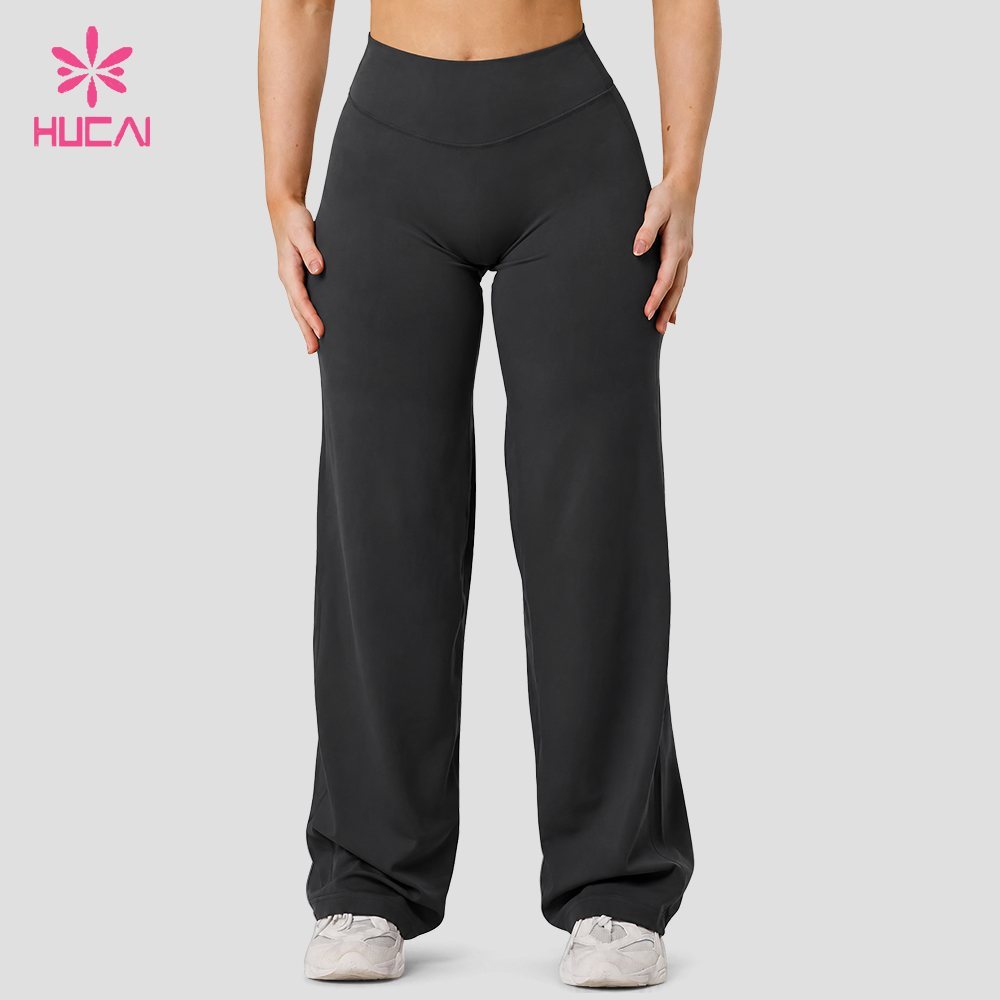
Flare, Straight-Leg and Wide-Leg: Three Product Roles, Three Fit Systems
The first step is to stop comparing the three silhouettes by fashion terms and start comparing them by product role. Flare, straight-leg and wide-leg place different demands on fabric, fit tolerance and hem behavior, which means each style deserves its own development brief even when they share a color story.
| Silhouette | Product role | Key development questions | Where fit risk appears |
|---|---|---|---|
| Flare (fitted through hip and thigh, widening from the knee) | Studio-to-everyday styling, movement with visual line, capsule coordinate piece | Knee ease, hem width and opening, fabric drape below the knee, hem movement in stride | Hem catching or twisting, knee pulling when seated, front rise tension |
| Straight-leg (consistent width from hip to hem) | Versatile everyday and light-training bottom, bridge between legging and trouser | Hip-to-hem width balance, knee ease, waistband stability, opacity at higher stretch | Knee bagging after wear, tightness across hip, waistband roll on longer sits |
| Wide-leg (volume from hip or mid-thigh to hem) | Relaxed movement, travel and lounge crossover, low-compression option | Fabric weight and drape, hem width, waist-to-hip fit, how much ease the body needs | Heavy fabric pulling the waistband, too much volume at the hem, loss of shape after wash |
Each silhouette also changes how much compression is appropriate. A flare style can use a supportive waist and thigh with a relaxed lower leg. A wide-leg style usually shifts toward comfort and drape rather than compression, while a straight-leg style sits in between and depends heavily on the intended activity. These are development directions to confirm with your supplier, not fixed rules, because the same named silhouette can be engineered differently for different brands.
Fabric Drape, Recovery and Weight: Why the Same Fabric Does Not Work in Every Silhouette
The most common assumption in bottoms expansion is that the legging fabric already in the range can simply be widened. In practice, fabric behavior changes with silhouette. A knit that performs well under high tension in a legging may not have the drape or surface behavior a flare hem needs, and it may feel too heavy or too restrictive in a wide-leg cut. Fabric review for new bottoms should cover four directions rather than a single fabric choice.
- Drape and hand feel: how the fabric falls in a wider panel and whether the surface looks intentional at the hem.
- Stretch and recovery balance: how much the fabric returns after the knee bends, hips stretch and waistband pressure builds during long wear.
- Weight and opacity: heavier fabrics hold shape but can pull waistbands; lighter fabrics need opacity review at higher stretch levels.
- Surface and wash behavior: how the fabric resists creasing, pilling visibility and edge distortion after laundering, which becomes more visible on wider panels.
For brands coordinating new bottoms with existing tops, it is also worth comparing whether the new styles share the activewear fabric family of the current leggings or need a separate material direction. Sharing one fabric family keeps color, lab dips and MOQ planning simpler. A separate material is justified when the silhouette requires drape or weight that the core legging fabric cannot deliver without risking fit or finish problems.
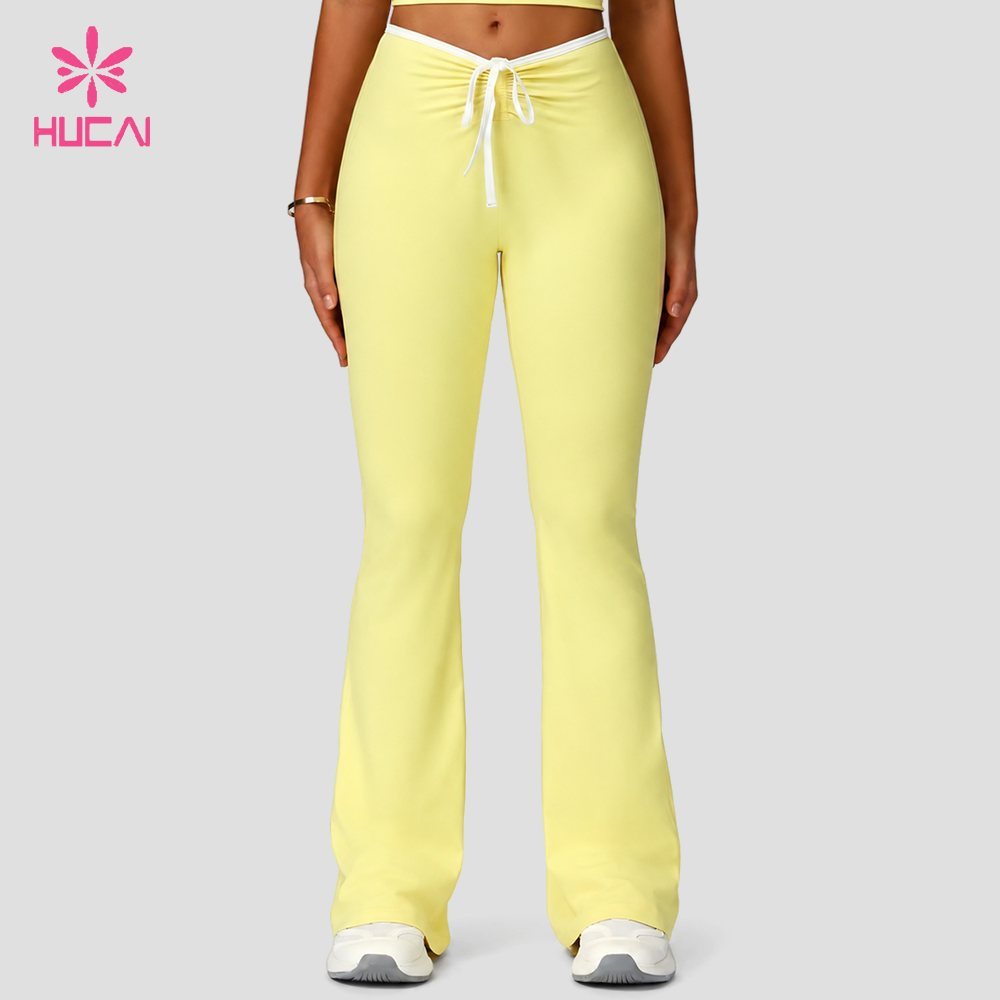
Starting from reference images for a flare, straight-leg or wide-leg style? Share the images, target customer profile and activity range, and HUCAI Sportswear can review fabric direction, fit logic and sample priorities before the first pattern is cut. Review the ODM service approach or start the conversation with your product direction.
Pattern Decisions: Waist, Hip, Knee and Hem
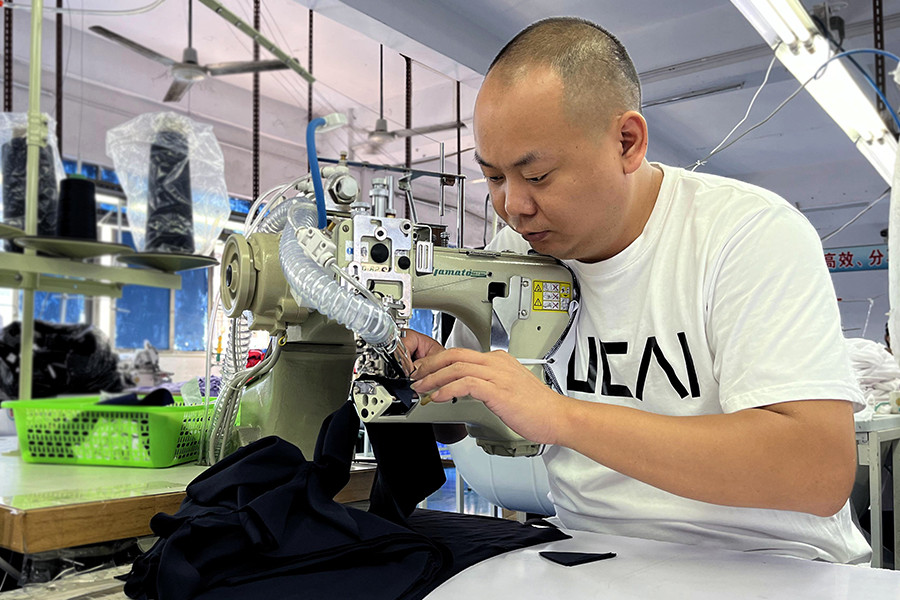
Pattern work for expanded bottoms is where most of the real development happens. The four areas below change the most when a brand moves beyond leggings.
Waistband and front rise
A wide-leg or flare style carries more fabric weight from the waist, so the waistband structure, front rise and back rise need review together. A waistband that works on a high-tension legging can roll or dig when the lower garment is looser and heavier. Brands should confirm waistband height, elastic or drawcord direction, and pressure tolerance before sampling.
Hip and thigh ease
Straight-leg and wide-leg styles need enough ease across the hip and thigh to move, but too much ease creates an undefined silhouette. The right balance depends on the target customer profile and the intended activity range, which means fit tolerance should be written into the brief instead of left to the sample maker.
Knee behavior
Knee bagging is a recurring issue in non-legging bottoms. The pattern must allow the knee to bend and recover without creating a permanent bag, which links directly back to the stretch and recovery of the chosen fabric. This is a pattern-and-fabric interaction, and it should be checked in movement rather than on a hanger.
Hem width and opening
Hem width defines the silhouette, and it also creates practical questions. A flare opening needs to clear footwear and move with the stride. A wide-leg hem that is too wide can drag, while one that is too narrow changes the silhouette entirely. Grading also matters here: the hem and the knee must be graded so that the proportion of the flare or width survives across the size range.
Sample Checks and Movement Review
New silhouettes should be reviewed differently from a new legging color. Static photos rarely reveal what goes wrong, so the sample check should include movement, seating and wash stages. A practical sample review for flare, straight-leg and wide-leg styles covers the following:
- Walk and stride check to review hem movement, front rise pulling and any fabric noise or sticking.
- Seated and squat review to check waistband pressure, knee bagging and recovery after the position is released.
- Layering check with the tops and sports bras the style will be merchandised with, to review proportion and waistband interaction.
- Wash and dry review to check hem distortion, edge curl and shade behavior after the first few launderings.
Each check should produce a written observation that the development team can act on. When several checks point to the same issue, for example hem distortion plus knee bagging, the cause is often the fabric direction rather than the pattern alone, and the fabric should be revisited before the second sample round. HUCAI Sportswear builds this kind of review into sample development so that fit, fabric and construction issues are identified before pre-production planning starts. Sample development usually takes about 10-15 days depending on style, fabric, trim and revision requirements, which is why a clear first-sample brief matters.
Capsule Planning: Coordinating New Bottoms With Tops and Sets
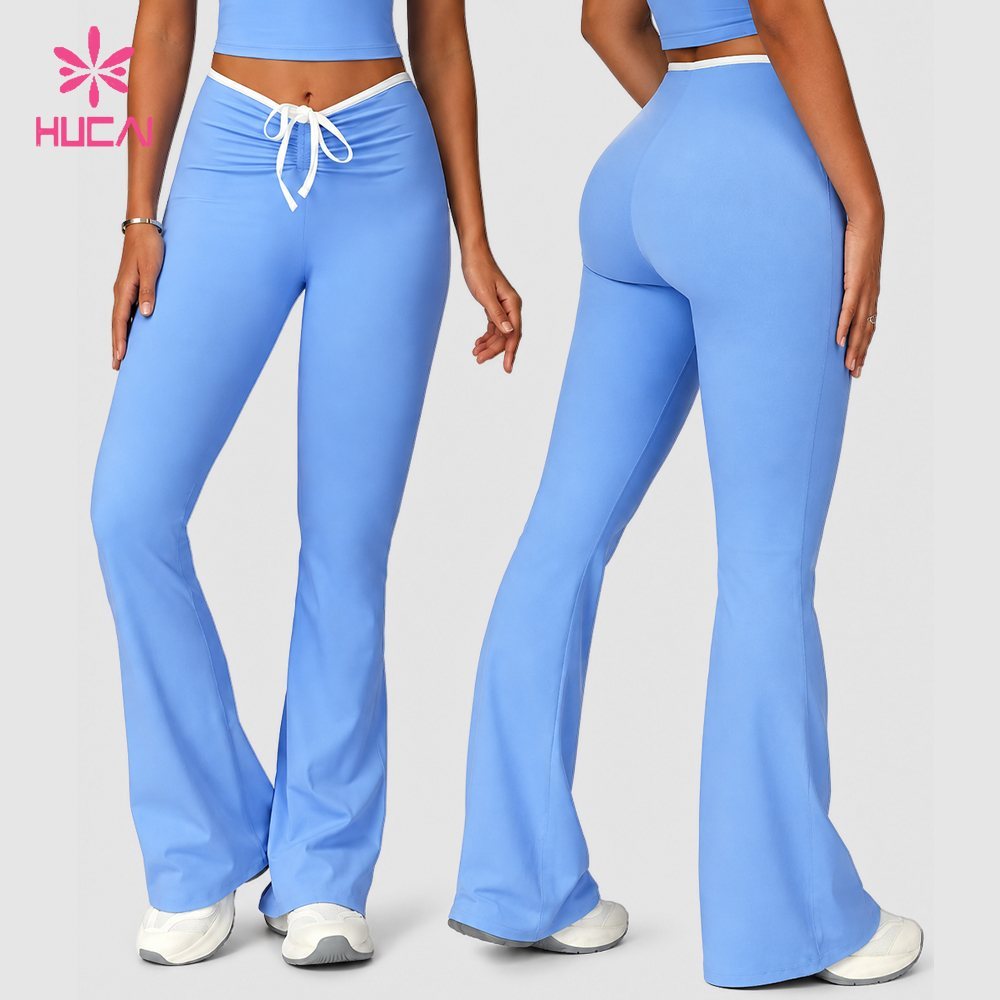
Expanding the bottom line also changes how the capsule is planned. A flare or wide-leg bottom rarely launches alone; it works with a sports bra, tank or light layer that shares the color story. That coordination introduces planning decisions that should be made before sampling, not after the first bulk order.
- Product hierarchy: decide which styles are the core performers, which are the coordinate pieces, and which are experimental tests.
- Fabric families: limit the capsule to a practical number of material directions so color, trims and bulk follow-up stay controllable.
- Sample sequence: sample the style with the highest development risk first so its learnings inform the rest of the capsule.
- Color and MOQ planning: MOQ from 100 pcs per style is the current public baseline, and final color, size, fabric, trim and style planning depends on the confirmed project. Coordinating colors across a legging, a flare pant and a matching top keeps quantities efficient when the plan is shared early.
Brands planning a coordinated capsule can link the new bottoms to the existing matching set manufacturer framework, where bra and bottom pairs share fabric, color and trim decisions. The same logic extends naturally when the third piece is a flare or wide-leg bottom instead of another legging.
Decision Check: Which Bottom Silhouette Should Your First Development Round Include?
Before requesting samples, confirm the following:
- Product role: what activity range and wearing occasions the style must cover, and how it differs from the leggings already in the line.
- Target customer profile: the body profile, size range and fit tolerance the pattern should be built around.
- Fabric direction: whether the style shares the existing legging fabric family or needs a separate drape-and-weight direction, and which review tests will confirm it.
- Pattern priorities: waistband structure, hip and thigh ease, knee behavior and hem width agreed before the first pattern is cut.
- Coordination plan: which tops, sports bras or light layers the bottom will be sampled and merchandised with, and how colors and trims will be shared.
If three or more criteria are confirmed, the direction is ready for a structured sample request. If fewer than three are resolved, additional development planning will reduce sample revision cycles and control cost.
Manufacturer Insight
A common failure pattern in bottoms expansion is taking the legging fabric, widening the hem, and calling the result a flare or wide-leg style. In many reference-led projects, the first sample then shows one of three problems: the flare does not drape and instead clings or twists, the straight-leg pushes at the knee and bags after wear, or the wide-leg feels heavy and pulls the waistband down. The cause is usually the same. When the product role changes, the fabric and the pattern must be re-set together. A silhouette is not created by widening a pattern in isolation; it is created by matching drape, recovery, weight and construction to the new role, then checking the result in movement before bulk planning. That is why manufacturers experienced in bottom development review fabric and pattern as one system rather than as two separate decisions.
FAQ
Can legging fabric be used for flare pants?
Sometimes, but only after review. A legging knit engineered for high-tension fit may not drape well through a flare hem, and it can twist or cling below the knee. Fabric behavior should be reviewed in a wider panel before the pattern is finalized, and a separate drape-focused material direction may be more appropriate.
What fabric properties matter for wide-leg active pants?
The main properties to review are drape, weight, stretch and recovery, opacity and surface behavior. A wide-leg style carries more fabric volume, so the waistband must not be pulled down by weight, the fabric must recover after sitting and bending, and opacity should be checked at the stretch levels the garment actually reaches.
How should flare opening be graded across sizes?
Flare openings should be graded together with the knee and hip so the proportion of the flare survives across the size range. Grading only the hem width creates inconsistent shapes in larger and smaller sizes. Measurement grading should be reviewed on the pattern before cutting the first sample.
Do straight-leg pants need compression?
Compression is a development choice, not a requirement. A straight-leg style can be built with light shaping through the waist and hip and a relaxed lower leg, depending on the intended activity. What matters is confirming the compression and ease direction in the brief instead of leaving it open during sampling.
What causes knee bagging in non-legging bottoms?
Knee bagging is usually a fabric recovery issue combined with insufficient knee ease in the pattern. When the fabric does not return after the knee bends, the extra material stays at the knee and reads as a bag. Both the fabric direction and the pattern ease should be reviewed together in a movement check.
How can brands coordinate new bottoms with matching tops?
Coordination starts with shared decisions on color, fabric family and trim before sampling. If the top and the bottom use different fabric directions, the same color can look different between the two styles, so lab dips and shade control should be planned across the pair rather than per style. ODM collection planning can structure this coordination for a first or second capsule.
What is the MOQ for adding a new bottom silhouette?
The current public MOQ starts from 100 pcs per style. Final color, size, fabric, trim, logo and packaging planning depends on the confirmed project, so it is worth consolidating new silhouettes into the same fabric and color plan as existing styles to keep quantities efficient.
How long does sample development take for a new bottom style?
Sample development usually takes about 10-15 days depending on style, fabric, trim, logo and revision requirements. Once the pre-production details and approvals are confirmed, bulk production often takes about 25-30 days depending on project scope, materials and scheduling. New silhouettes with fabric review needs may require additional planning before the first sample is cut.
Final Takeaway
Expanding an activewear bottoms line beyond leggings is a real product-development project, not a pattern change. Each new silhouette carries its own product role, fabric behavior, pattern workload and coordination plan. Brands that define these points before sampling produce bottoms that sit clearly in the collection, share fabric and color logic with existing styles, and move into bulk with fewer surprises. The next step is to turn the silhouette idea into a brief: define the activity range, the target customer, the fabric direction and the sample priorities, and review the result in movement before bulk planning. For brands without a full product development team, HUCAI Sportswear supports this bottoms expansion through ODM planning and sample development, or through OEM review when an established specification already exists. Explore the OEM path for established specs or discuss your bottoms development plan with the team.
Ready to develop a new bottom silhouette? If you have a tech pack and confirmed specifications, share them for OEM review. If you are starting from reference images or a collection direction, start with ODM development so fabric, fit and sample priorities are clarified first. Still evaluating? Compare how the new bottoms will coordinate with your existing leggings range and quality control workflow before committing to a sample round.
About HUCAI Sportswear
- Founded in 1998, specializing in women's activewear and sportswear manufacturing in Dongguan, China.
- OEM and ODM development support for sports bras, leggings, shorts, tops, bottoms expansion and matching sets.
- Structured sample development, fabric and trim review, and sample-to-bulk consistency control.
- AQL 2.5-based inspection as part of the quality workflow.
Current certification information can be reviewed during supplier evaluation based on the project and documentation requirements.