
Building an Early-Fall Activewear Capsule With Relaxed Bottoms, Soft Layers and Performance Cores
Early-fall activewear assortments are no longer built around one hero legging plus a set of fill-in colours. Across US, UK and Australian activewear ranges, the observable shift is toward small multi-role capsules: a performance core in bras and leggings, a relaxed bottom that carries the outfit beyond the studio, and a soft layer that covers the transition weeks. For a growing brand, the commercial risk is rarely the design idea itself. The risk sits in the development bill behind it. Every added silhouette can introduce a new fabric family, a new lab dip, a separate size grading curve and an additional sample round. HUCAI Sportswear sees this pattern regularly in ODM capsule briefs: six styles that look related on a mood board but share almost no development decisions underneath.
This article breaks a capsule into the roles it has to fill, then explains which fabric, fit, colour and sampling decisions can be shared across those roles and which ones cannot.
Quick Answer
An early-fall activewear capsule works when every style has one defined role: performance core, relaxed bottom or soft layer. Two performance styles, one or two bottoms and one or two layers are usually enough for a first capsule. Plan it around no more than two fabric families and two or three coordinated colours so that lab dips, sampling and MOQ can be shared across styles. That keeps the range visually varied while keeping colour approval, sample cost and bulk consistency controllable.
Table of Contents
- Who This Article Is For
- What a Capsule Actually Is in Manufacturing Terms
- Start With the Performance Core, Not the Trend Piece
- Adding a Relaxed Bottom Without Breaking the Fabric Plan
- Adding a Soft Layer and Keeping Layering Ease
- Consolidating Fabric Families, Colour and Trims
- Sequencing Samples and Planning MOQ Before You Commit
- Decision Check
- Founder's Technical Insight (Jean Yuan)
- FAQ
- Final Takeaway
Who This Article Is For
- Primary reader: Growing activewear brands assembling their first or second seasonal capsule with a manufacturer.
- Secondary reader: Startup brands that already have a clear direction and reference images but no confirmed fabric or colour plan.
- Product stage: Planning and pre-sampling. The range concept exists; fabric families, colour count and sample order usually do not.
- Problem being solved: Turning a mood board into a capsule that can actually be sampled, colour-approved and produced without multiplying development cost.
- Who may not need this article: Established brands that already operate a consolidated fabric library and a fixed seasonal colour standard, or buyers placing single-style repeat orders.
What you gain from this article: A role-based way to structure a capsule, a practical limit on fabric families and colours, and a sample sequence that keeps fit-critical styles moving first instead of last.
What a Capsule Actually Is in Manufacturing Terms
A capsule is not a smaller version of a seasonal range. In development terms, a capsule is a small group of styles that deliberately share decisions. Those shared decisions are what make the group commercially manageable: one fabric family used across several styles, one colour standard applied across the group, one trim and elastic specification, one size grading logic, and one defined order in which samples are made.
When a capsule is planned only as a mood board, each style arrives at the factory as a separate project. Fabric sourcing restarts, lab dips restart, and every sample is reviewed against a different expectation. The result is not a capsule. It is several small collections running in parallel through the same sample room.
The practical test is simple. Before requesting a quotation, list every style in the capsule and write down what it shares with the style above it. If the answer for most styles is "the same colour family only", the capsule still needs consolidation work.
Start With the Performance Core, Not the Trend Piece
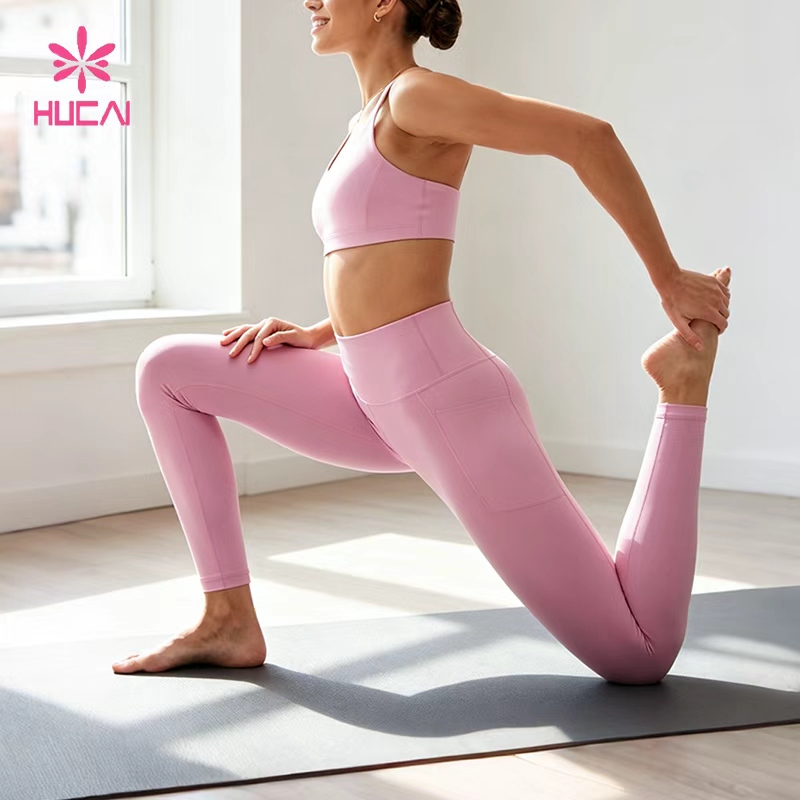
The performance core is the part of the capsule with the highest wear frequency and the least tolerance for fit error: the sports bra and the leggings. These are also the styles where a buyer cannot compensate for a development gap with styling. If the support direction, the waistband behaviour or the opacity requirement is wrong, the whole capsule inherits the problem, because the relaxed bottom and the soft layer are normally designed to sit on top of the core.
Before sampling, the core needs four decisions in writing:
- Support and compression direction. Not a label such as light, medium or high, but a description of what the garment must do during the intended activity.
- Underband and waistband construction. Height, elastic specification, and how the band is expected to behave in movement.
- Opacity and recovery requirement. How the fabric must behave when stretched over the intended body areas, and how it should return after extension.
- Fabric family for the core. One family for the core is usually enough; a second family should be justified by a real functional difference, not by a visual preference alone.
For fabric acceptance, naming a recognised test method works better than comparing opinions. ASTM D2594 covers stretch properties of knit fabrics, and AATCC 135 covers dimensional change after home laundering. Naming the standard means both sides agree on the test, the conditions and the acceptance level before fabric is approved, rather than after the first sample arrives.
Two core styles are usually sufficient for a first capsule: one bra with a defined support target and one legging with a defined rise and waistband construction. The second core style is where a buyer should resist adding a third. Every additional core style increases the number of fit-critical samples, and fit-critical samples are the ones that generate revision rounds.
Adding a Relaxed Bottom Without Breaking the Fabric Plan
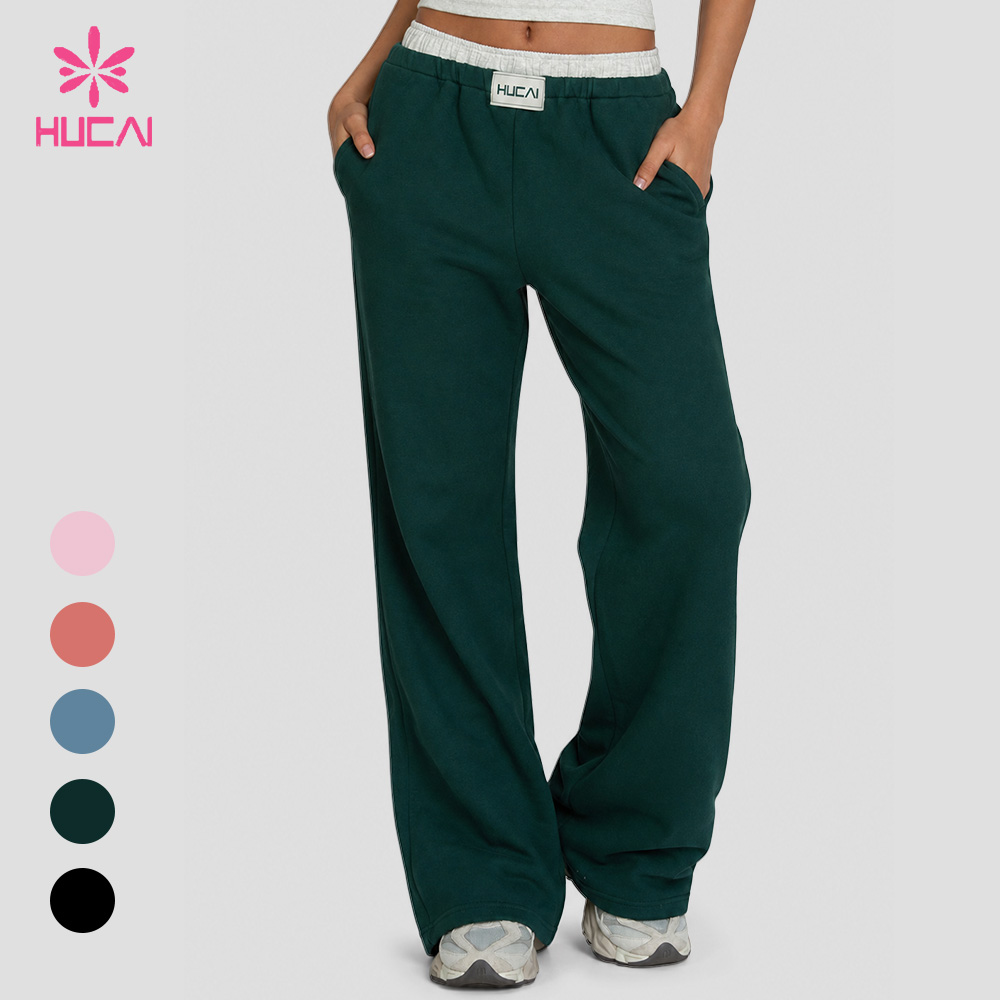
A relaxed bottom is the style that extends the capsule beyond training. It is usually a jogger, a straight-leg pant or a wide-leg lounge pant, and it is where buyers most often assume that the legging pattern can simply be widened. That assumption is the source of most relaxed-bottom problems.
Leggings fabric is selected for recovery and compression. A relaxed bottom needs drape, and drape behaves differently. When a legging pattern is scaled outward without reworking the knee, hem and waistband, the symptoms appear in wear: fabric that clings instead of falling, knee areas that bag after sitting, a hem that flares unevenly, or a waistband that no longer matches the fit logic of the rest of the capsule.
This also shows up in consumer discussion. Across fitness and activewear communities, recurring complaints about relaxed activewear bottoms are rarely about colour or style. They are about fabric behaviour: clinging, knee bagging, and a waistband that loses shape. Those are construction and material symptoms, not design preferences.
The development decision is therefore narrow and concrete: does the relaxed bottom share the core fabric family, or does it take one new blend?
- Share the core family: fewer lab dips, one fewer shrinkage profile, faster sampling. The pattern has to do more work to create drape, and the silhouette should stay close to a tapered or straight fit.
- Add one new family: better drape and a wider silhouette are possible, but this consumes the capsule's second fabric allowance. It should be spent here only if the relaxed bottom is a commercial anchor rather than a supporting piece.
For a first capsule, sharing the core family and adjusting the pattern is usually the lower-risk route. It keeps the capsule reducible to a single fabric approval conversation.
Adding a Soft Layer and Keeping Layering Ease
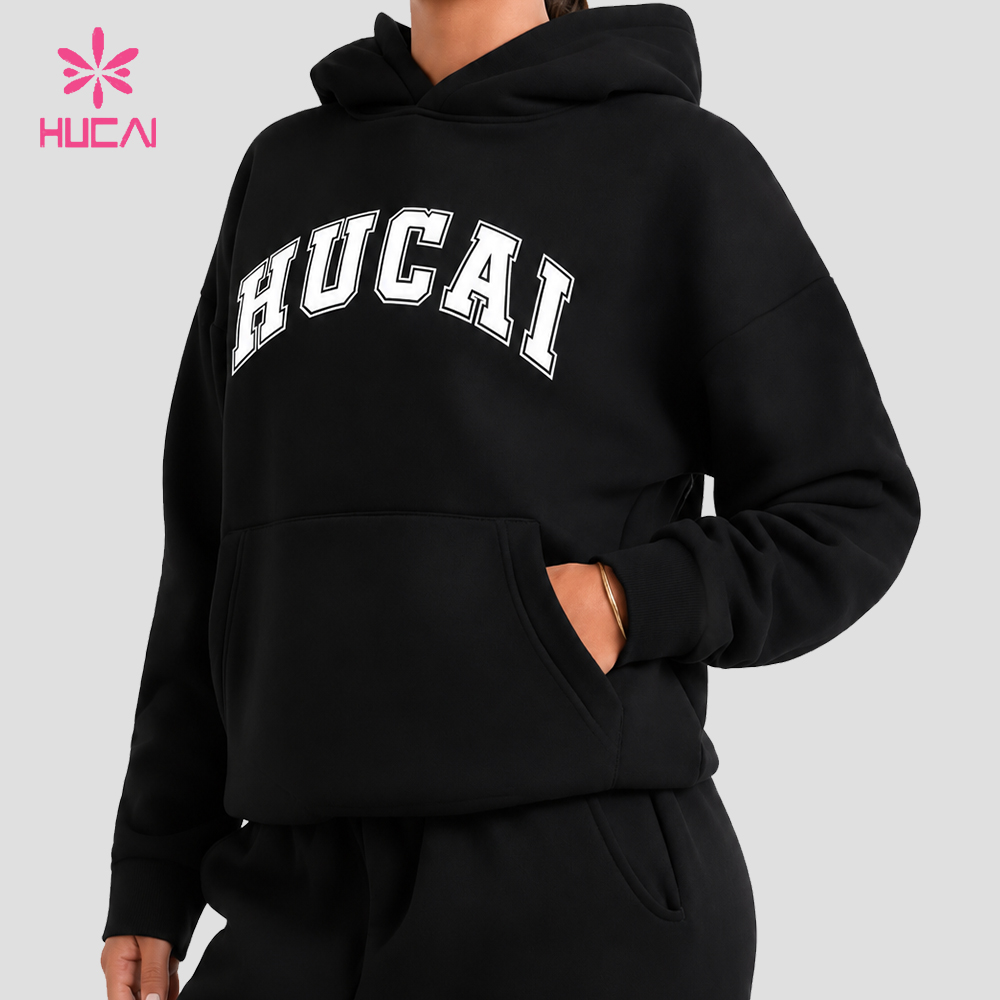
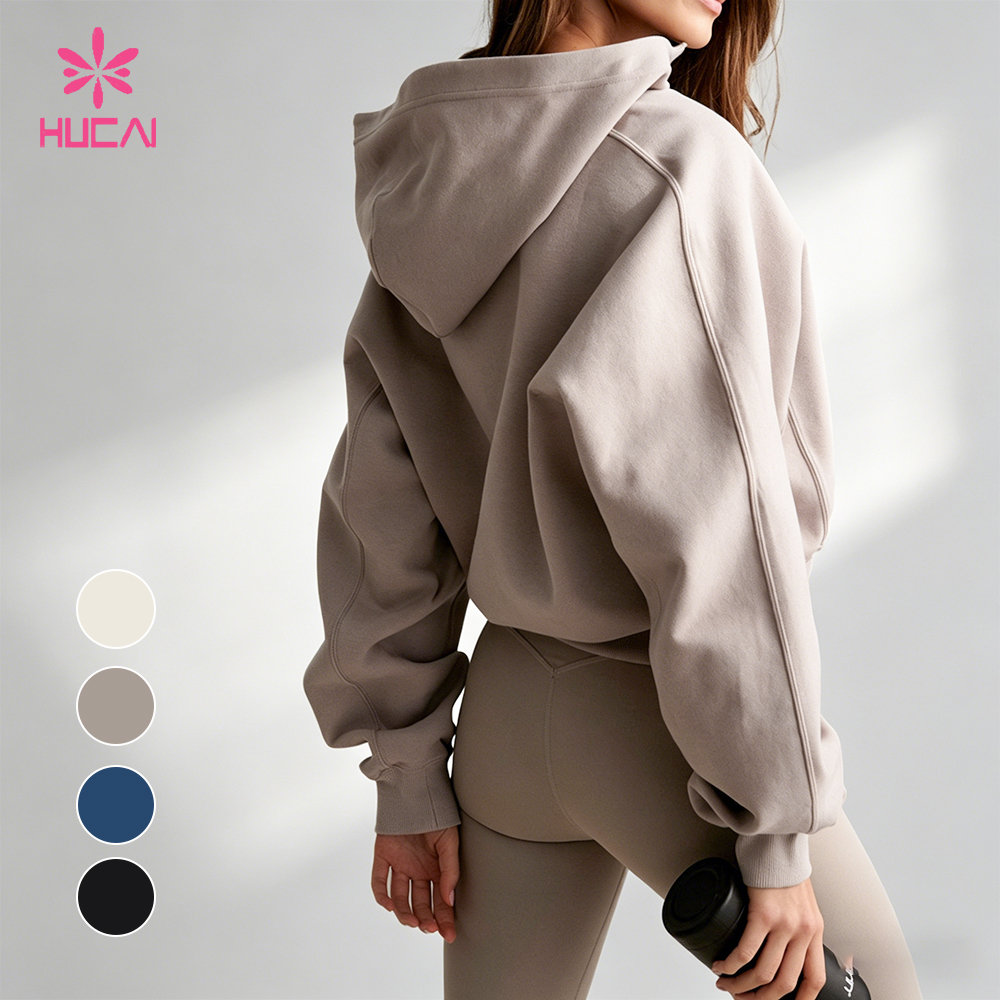
The soft layer is the piece that makes an early-fall capsule read as seasonal. In current assortments from established activewear labels, this role is filled by light jackets, soft knit overshirts, oversized hoodies and lighter long-sleeve layers rather than by technical outerwear. Observed across brand assortments, the intent is coverage and transition, not weather protection.
The engineering question is layering ease. A layer is not worn on a hanger. It is worn over the bra or over the core top, and that changes what has to be measured:
- Armhole and sleeve mobility. The layer must clear the armhole of the core without pulling the body panel out of shape.
- Hem relationship to the waistband. A hem that lands exactly on the waistband of the legging or jogger creates bulk at the widest point instead of a clean line.
- Fabric weight balance. A layer that is too heavy for the rest of the capsule makes the core pieces feel thin by comparison; a layer that is too light loses the seasonal read.
- Restraint in trims. When the visible design is minimal, the perceived value has to come from fabric surface, proportion and finishing rather than from added hardware.
Layering ease is one of the few things that cannot be validated from a measurement chart alone. It has to be checked on a body over the actual core sample, because the interaction between two garments is what fails, not either garment on its own. HUCAI Sportswear reviews layering ease against the capsule's own core samples during fitting, so the layer is adjusted to a real base piece rather than to a standard form.
Consolidating Fabric Families, Colour and Trims
This module is where a capsule is either made efficient or quietly made expensive. Every fabric family added multiplies the operational steps: separate sourcing, separate lab dips, separate shrinkage and recovery data, separate sample fabric ordering and separate bulk lot planning. Colour count multiplies again, because MOQ planning is normally applied per colour per style.
A practical working limit for a first capsule is two fabric families and two to three coordinated colours. This is an operating limit rather than an industry standard: it keeps the capsule inside one fabric approval cycle and one colour approval cycle.
Colour consolidation has one technical trap worth naming. The same colour standard applied to two different fabrics does not automatically produce the same visual result. A matte knit and a brushed surface hold dye and reflect light differently, so a set that reads as matched on a lab card can read as misaligned once the garments sit side by side. Control it by approving colour per fabric family under an agreed light source, and by reviewing the standard in a stretched state rather than flat only.
Trim consolidation follows the same logic. One elastic specification, one drawcord, one zipper type and one label construction across the capsule reduce the variables in sampling and in bulk, and make the label, hangtag and packaging specification easier to apply consistently.
- Fabric families: two maximum for a first capsule.
- Colours: two or three, applied across styles rather than per style.
- Trims: one specification per component type.
- Colour approval: agreed light source, flat and stretched states, per fabric family.
Where a brand has a material direction that depends on recycled or certified inputs, recycled or certified material options can be reviewed based on project requirements and available documentation. The material decision should be made before the fabric family count is fixed, because a substitution made after sampling restarts the fabric, shrinkage and colour work already completed.
Sequencing Samples and Planning MOQ Before You Commit
Sample order is a scheduling decision with a direct cost consequence. Fit-critical styles should be sampled first, because they are the styles most likely to generate a revision round, and a revision on a core style can change the pattern logic used by the rest of the capsule.
A workable sequence for a six-piece capsule:
- Performance core, part one. The bra or the core legging, whichever carries the support or opacity requirement.
- Performance core, part two. The remaining core style, developed against the correction logic from part one.
- Relaxed bottom. Developed once the core fabric decision is settled, so drape is judged against a known material.
- Soft layer. Developed last and fitted over the core samples, so layering ease is validated against real pieces.
Timing should be planned with the same restraint as the design plan. Sample development usually takes about 10-15 days, depending on style, fabric, trim, logo, revision requirements and confirmed details. Bulk production often takes about 25-30 days after pre-production details and approvals are confirmed, depending on project scope, materials, processes, quantity and scheduling. Both windows depend on decisions being confirmed, not on the calendar alone.
MOQ planning is where consolidation pays off most visibly. The current public MOQ starts from 200 pcs per style, while final colour, size, fabric, trim and customization planning depends on the confirmed project. Colour count is the main lever: a capsule that applies two colours across four styles creates fewer colour-specific planning units than one that gives every style its own colourway, even though both look equally varied on a lookbook page.
Decision Check: Is This Capsule Ready to Be Sampled?
Before requesting samples, confirm the following:
- Roles are assigned: every style is labelled as performance core, relaxed bottom or soft layer, with no style left unassigned.
- Core decisions are written: support direction, band construction, opacity and recovery requirement are documented for the core styles.
- Fabric families are limited: no more than two families, and the second one is justified by a functional difference.
- Colour plan is consolidated: two or three colours applied across the group, with an agreed light source for approval.
- Trim specification is single: one elastic, one drawcord and one label construction across the capsule.
- Relaxed bottom route is chosen: either shared core fabric with a reworked pattern, or one new family with the shrinkage data reviewed first.
- Layer is fitted over a core sample: layering ease is validated on the body, not on a form.
- Sample order is defined: fit-critical core styles are scheduled first, the layer last.
If five or more items are confirmed, the capsule is structured well enough to begin sampling in a controlled sequence. If fabric families, colours or sample order are still open, resolving them first will reduce revision rounds more than it will delay the start.
Planning a First Capsule?
Share the target season, the roles you want to fill, and any reference images. HUCAI Sportswear's ODM capsule planning review covers role assignment, fabric family consolidation, colour planning and the sample sequence before you commit to a brief.
Founder's Technical Insight: Jean Yuan's Development Note
When a brand sends us a capsule brief with five or six fabrics, the sample room sees the problem before the first pattern is cut. It is not that the fabrics are wrong individually. It is that each one carries its own shrinkage behaviour, its own recovery curve and its own colour response, so the same size grading produces a different fit across styles that were drawn to look identical on paper.
In my experience, the most common early-stage mistake is treating fabric variety as a way to make a small capsule look richer. It does the opposite in production. Two fabric families absorb revision rounds in a predictable way. Five or six split the capsule into separate approval tracks, and each track waits on its own lab dip and its own shrinkage data before bulk cutting can be confirmed.
What we check closely in the sample room before cutting any bulk yardage:
- Confirm the number of fabric families and challenge any family that exists for visual reasons alone.
- Confirm shrinkage and recovery data per family, tested under the same conditions, before the first sample is sewn.
- Confirm one colour standard per family, approved in flat and stretched states under an agreed light source.
- Confirm which style is fit-critical, and sample that one first so the grading logic is corrected before it is copied.
- Confirm that the layer is fitted over the actual core sample, not over a standard form.
At HUCAI Sportswear, capsule briefs move through one coordinated development sequence: fabric and trim review, pattern and sample development, sample revision, pre-production confirmation and sample-to-bulk consistency control. Consolidation is not a limitation we apply for convenience. It is the reason a small capsule can be sampled, colour-approved and produced without the sample room running six separate projects at once.
FAQ
How many styles should an early-stage capsule include?
Four to six styles is a practical working range for a first capsule: one or two performance core styles, one or two bottoms and one or two layers. The number matters less than whether each style has a defined role. A six-style capsule where two styles duplicate the same role is harder to develop than a four-style capsule with four clear roles.
How many fabric families are practical for one capsule?
Two is a practical limit for a first capsule. One family covered by several styles keeps fabric sourcing, shrinkage data and sample fabric ordering inside a single track. A second family is reasonable when the relaxed bottom or the layer genuinely needs different drape or weight behaviour, but it should be a functional decision rather than a visual one.
Should all pieces in a capsule share the same colours?
They should share a small coordinated palette rather than each taking its own colourway. Two or three colours applied across the group keeps colour approval and MOQ planning manageable. Note that the same colour standard can read differently on a matte knit and on a softer brushed surface, so approval should be done per fabric family under an agreed light source.
Which style should be sampled first?
The fit-critical core style should be sampled first, normally the bra or the legging that carries the support, opacity or recovery requirement. Those styles are the most likely to need a revision round, and correcting them early prevents the same grading or construction error being repeated across the rest of the capsule.
How can MOQ be consolidated across a capsule?
Consolidation works mainly through colour and fabric, not through design. The current public MOQ starts from 200 pcs per style, while final colour, size, fabric, trim and customization planning depends on the confirmed project. Applying two or three colours across several styles creates fewer colour-specific planning units than assigning each style its own colourway.
When should a brand add jackets or relaxed pants?
Add the relaxed bottom once the core fabric decision is settled, and add a layer once the core samples exist. Developing a relaxed bottom or a layer before the core is confirmed usually means reworking it later, because drape and layering ease both depend on the core material and fit. The layer is normally the last piece developed in a capsule, not the first.
Do relaxed bottoms need a different fabric from leggings?
Not necessarily. A relaxed bottom can be developed from the core fabric family if the pattern is reworked for drape, knee ease and hem behaviour rather than simply widened. A separate family gives better drape and supports a wider silhouette, but it consumes the capsule's second fabric allowance and adds an independent colour and shrinkage approval.
What usually delays a first capsule?
Open decisions delay a capsule more than factory capacity does. Unconfirmed colour standards, fabric substitutions made after sampling, and an undefined sample order are the three recurring causes. Sample development usually takes about 10-15 days, depending on style, fabric, trim, logo, revision requirements and confirmed details, and that window depends on the brief being confirmed rather than on the schedule alone.
Final Takeaway
An early-fall capsule is a development plan before it is a design statement. Define the roles first, write down the core decisions, hold the capsule to two fabric families and a small coordinated palette, and schedule the fit-critical styles ahead of the layer. Those four choices are what keep the range visually varied while keeping colour approval, sampling and MOQ inside one controllable sequence.
The next practical step is not a full brief. It is a one-page role map: each style named, its role stated, and the fabric and colour it inherits from the style above it. HUCAI Sportswear reviews capsule briefs at exactly that stage, before pattern development begins, because that is the point where consolidation still costs nothing to change.
Next Step
Ready to develop: send your reference images, target season and intended roles for ODM capsule review. Starting from a concept: share the direction and the palette you are considering, and confirm fabric, colour and sample priorities before sampling. Still evaluating: review the fabric selection guide and the sample policy before preparing a brief.
About HUCAI Sportswear
- Founded in 1998, specializing in women's activewear and sportswear manufacturing
- OEM and ODM development support for sports bras, leggings, shorts, tops, layers and matching sets
- Structured sample development and sample-to-bulk consistency control
- AQL 2.5-based inspection as part of the quality workflow
Current certification information can be reviewed during supplier evaluation based on the project and documentation requirements.