
Barrel-Leg Active Pants: How to Engineer Volume Without Losing Movement Fit
Barrel-leg active pants change the engineering problem, not just the outline. The silhouette carries visible volume through the hip and thigh and still has to walk, lunge, sit and step without collapsing at the knee, twisting in the seat or dragging on the shoe. For a growing brand building its first lounge-to-training bottom, that tension between volume and movement is the entire brief. It is settled in the development room, long before any bulk decision, and it is a pattern, fabric and sampling question rather than a styling question. In the volume bottoms that reach our sample room at HUCAI Sportswear, the same three causes repeat: volume placed at the wrong height, a fabric direction with weak recovery, and a leg opening wider than the intended movement can support.
Quick Answer
A barrel-leg active pant reads as designed volume only when the extra width is placed between the hip and the mid-thigh and then released gradually toward a hem that settles without swinging. Three development decisions control that: the hip-to-knee-to-hem ratio, a fabric direction with enough drape to fall and enough recovery to return, and a waistband or yoke stable enough to carry the added weight of the leg. All three are confirmed through sampling, not by measuring a reference image.
Table of Contents
- Who This Article Is For
- What "Barrel Leg" Means in Pattern Terms
- The Three Ratios That Decide How Volume Reads
- Fabric Drape, Recovery and the Volume Body
- Waistband, Rise and Yoke Stability Under a Fuller Leg
- Seam and Panel Engineering for Movement
- Sample-Stage Movement Testing and Revision Control
- Decision Check
- Founder's Technical Insight (Jean Yuan)
- FAQ
- Final Takeaway
Who This Article Is For
- Primary reader: growing women's activewear brands developing a first or second bottoms programme and testing a volume silhouette.
- Secondary reader: established brands adding a barrel-leg or wide-leg bottom next to an existing fitted leggings line.
- Product stage: product definition through sample review, usually working from reference images, an early capsule direction or a partially written tech pack.
- Problem being solved: the reference looks right in a photo but the sample reads flat, stiff, too wide at the hem, or loses its shape after a few wears.
- Who may not need this article: brands that only need an identical copy of one reference pant and are not defining their own fit, grading or size range.
What you gain from this article: a ratio-based way to brief a barrel-leg or wide-leg bottom, the fabric behaviours that decide whether the volume holds or collapses, and the sample-stage movement checks that prevent a full re-pattern after bulk cutting has already started.
What "Barrel Leg" Means in Pattern Terms
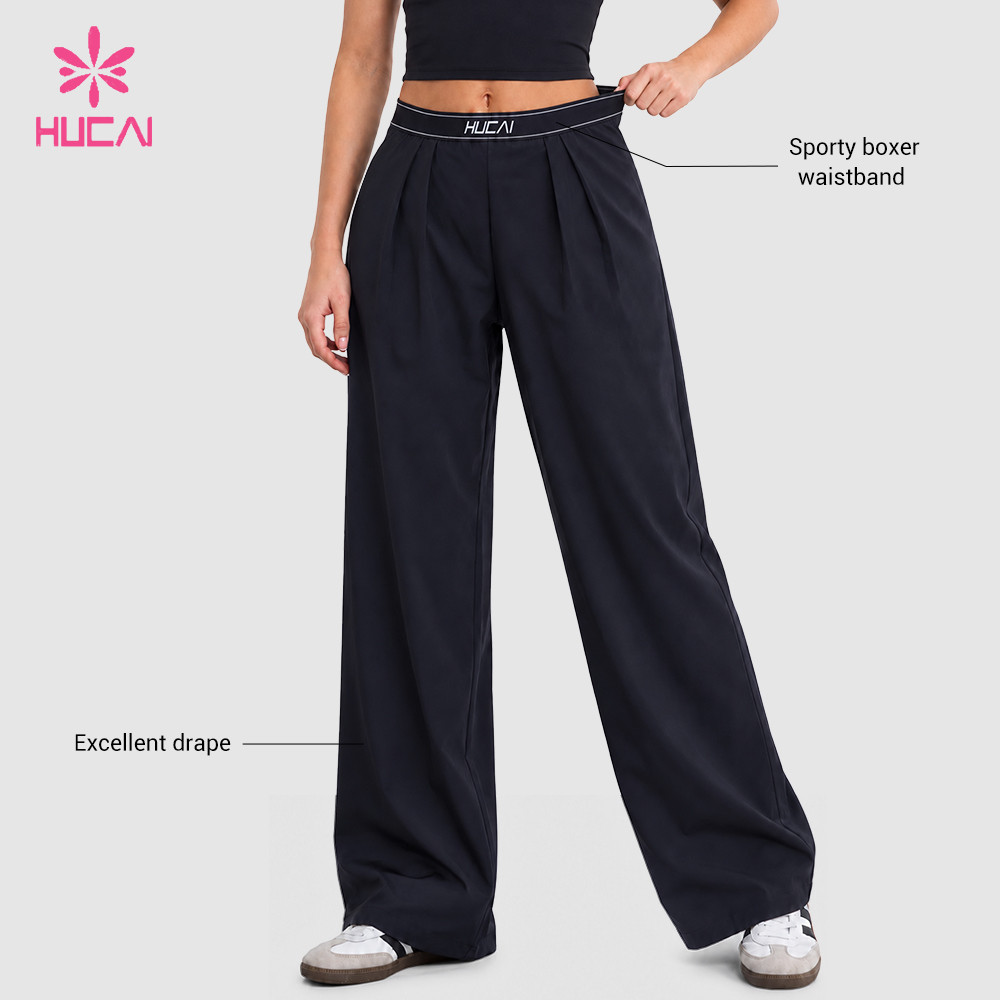
Barrel leg is defined by where width is added and how it is released — not by how wide the hem looks. Across publicly released volume bottoms from established activewear and lifestyle labels, the same placement recurs: the leg is enlarged through the hip and upper thigh, the knee is left relatively free, and the width is then eased back toward a hem that falls close to straight. That placement is a pattern decision. It cannot be read off a photograph.
Three constructions produce a similar outline, and they behave differently in wear:
- Pleat or tuck volume at the high hip, released into a straight fall. Reads structured and tailored; the fold depth has to be graded carefully or it disappears at the smaller sizes.
- A bowed side seam that swells through the mid-thigh and returns toward the hem. Reads softer and moves more readily, but the curve is sensitive to fabric recovery.
- A uniformly wider leg with a rounded hem opening. The simplest to produce, and the easiest to mistake for a barrel shape when the knee is not left free.
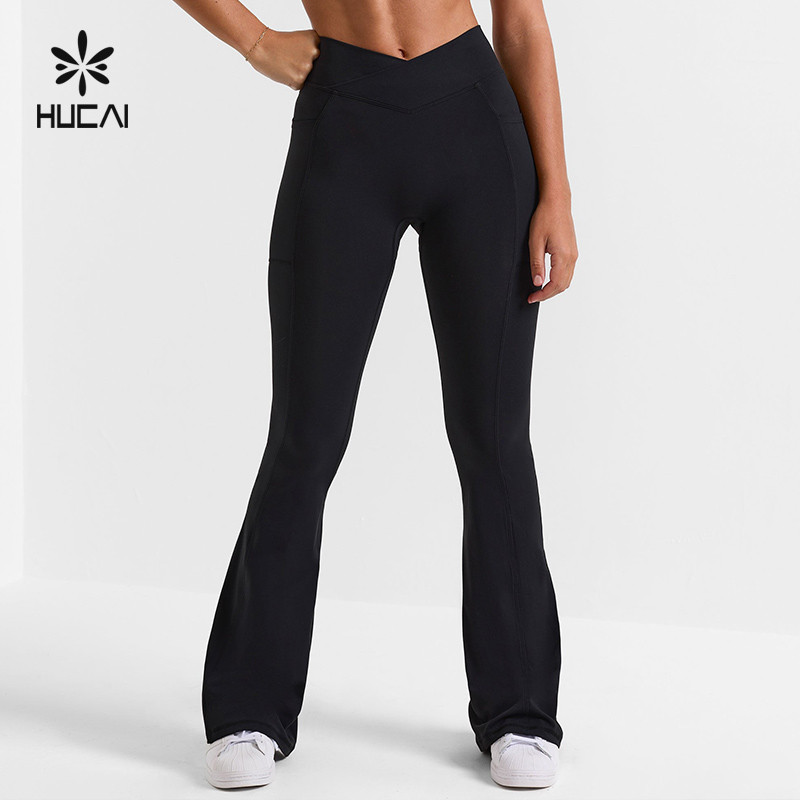
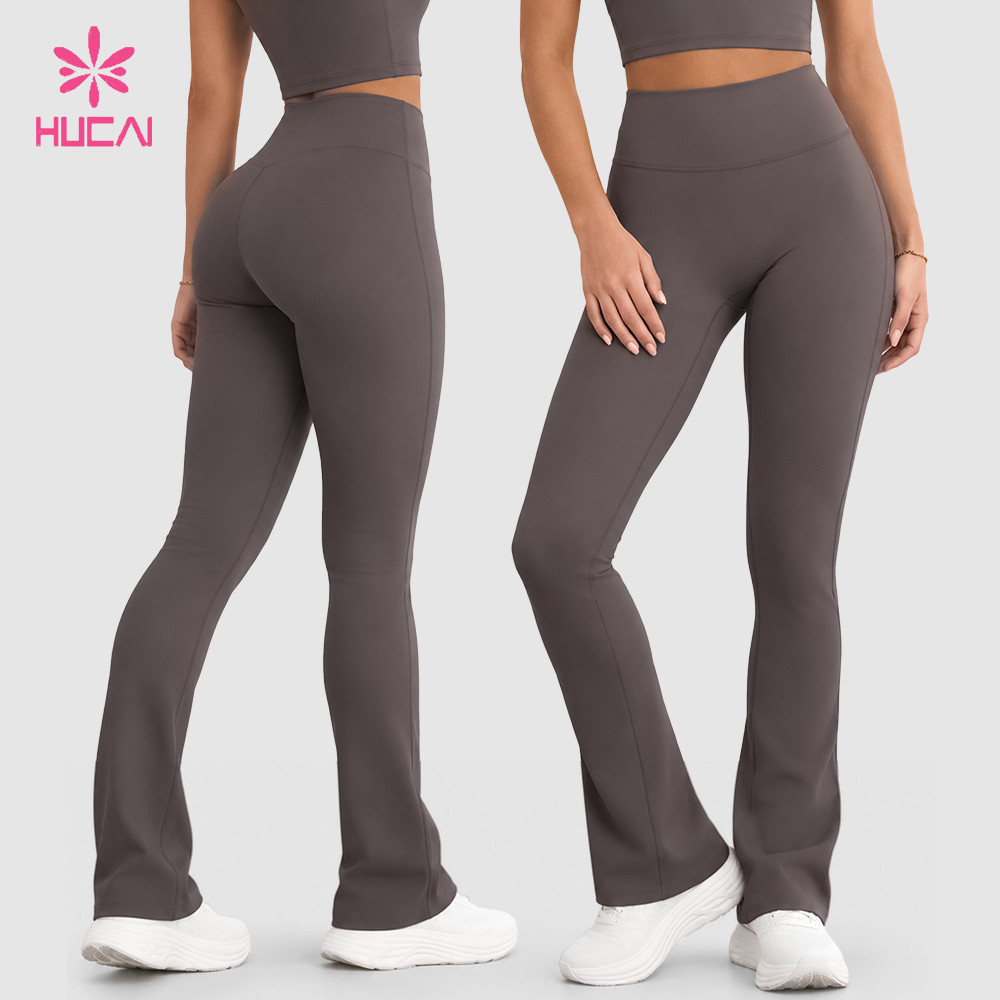
This is also where barrel leg separates from flare and from a plain wide leg. Flare adds width mainly from the knee downward, so the volume arrives where the knee needs room to travel. A wide leg holds a broadly constant width from hip to hem. Barrel leg sits between the two: it carries most of its width above the knee and then holds a controlled line down the leg. If a development team copies the outline without the placement, the first sample usually reads as a modified flare rather than a barrel.
The Three Ratios That Decide How Volume Reads
Once the placement is agreed, three relationships govern the result: hip width against knee width, knee width against hem opening, and leg length against the depth of the volume. Get these wrong and the sample either loses its shape or stops moving properly.
The knee is the pivot. Volume above the knee reads as design; volume at the knee reads as drag. That means the width should be eased back before the knee line, not after it. The hem opening is the second control. An opening that is too wide swings, catches on the shoe and photographs as an accident. An opening that is too narrow collapses the volume and turns the garment back into a relaxed legging. A barrel-leg hem usually wants a slightly rounded or near-straight fall rather than a wide flare.
Leg length matters more on this silhouette than on a fitted legging. Full length carries the volume down to the foot and hides where it is released. Cropped or 7/8 length exposes the widest point of the leg, so the ratio has to be tighter and the hem finish has to be deliberate.
The intended movement belongs in the brief at this point, not later. A lounge and commuting bottom can carry more volume and a softer hem than a light-training bottom, where the leg has to clear the floor during lunges and step-ups. Ask the question before the pattern is cut: what does the wearer actually do in this pant? Volume that suits a studio and street brief can fail a training brief at the hem alone.
Fabric Drape, Recovery and the Volume Body
A volume silhouette is more sensitive to fabric than a fitted legging, because the fabric has to fall rather than cling, and it still has to return. Four properties decide the outcome: drape, surface hand feel, stretch and recovery, and opacity.
Drape decides whether the fabric hangs or flares outward. A firmer hand holds the pleat or tuck cleanly but reads rigid and swings less naturally. A softer, heavier drape falls better but can lose the structure that makes the volume intentional. The right point sits between them, and it is usually found by reviewing two or three fabric directions against the same pattern rather than by choosing a fabric first.
Recovery is the property that most often decides whether a volume bottom survives wear. Stretch without recovery stretches out at the knee and the seat, and once the fabric has relaxed the line is gone. That is why a HUCAI Sportswear fabric review covers stretch and recovery, shrinkage and behaviour after wash — the areas covered by recognised test frameworks such as ASTM, ISO and AATCC methods. Those methods are the testing framework; whether a given fabric passes is a project-specific result that has to be confirmed on the actual material.
Opacity requirements also change with the silhouette. A fuller leg moves differently across the knee and the seat, so the opacity target should be set for the intended use rather than assumed from a fitted legging. Surface direction matters too: a smooth surface gives a cleaner fall, while a brushed or textured surface can soften the line. Recycled or certified material options can be reviewed based on project requirements and available documentation.
Waistband, Rise and Yoke Stability Under a Fuller Leg
A fuller leg adds weight, and that weight pulls on the waist. Waistband construction should therefore be engineered for the load rather than carried over from the fitted legging pattern.
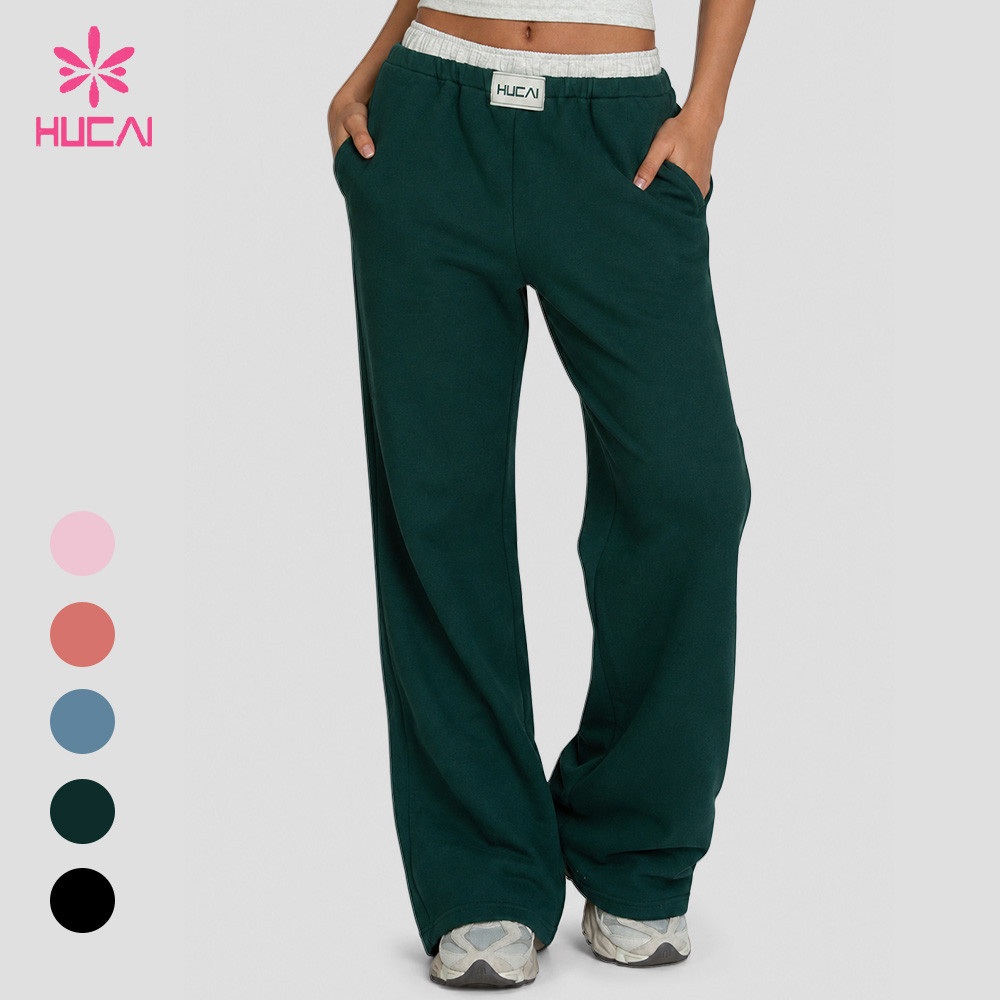
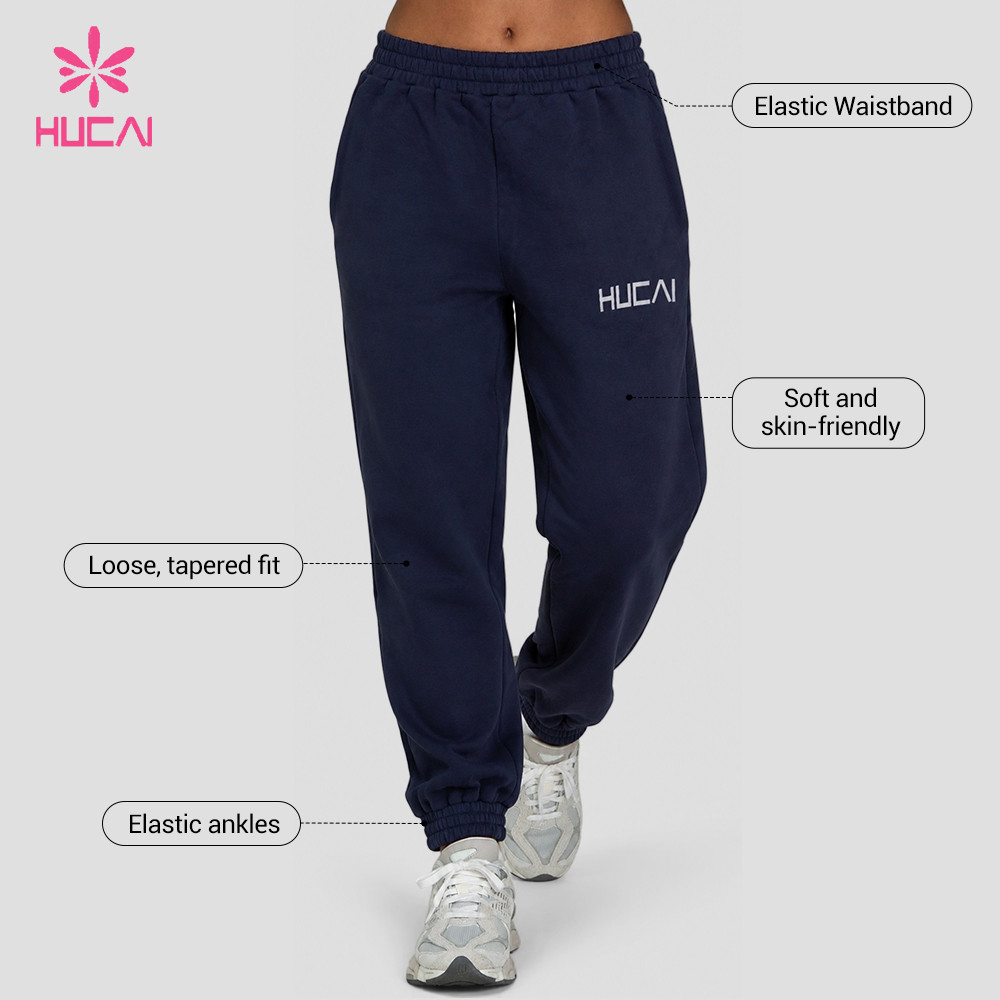
The variables that matter are band height and width, the number of layers, the elastic type and its tension, and whether the shape is better carried by a straight band or a shaped yoke. A band that works on a close-fitting legging often gaps or rolls once the leg below it is heavier, because the load path through the garment has changed. Rise placement matters for the same reason: where the band sits relative to the hip decides whether the added volume hangs from the waist or drags it downward.
Below the band, the crotch and gusset depth set the movement allowance. A gusset that is adequate for a fitted legging can restrict a fuller leg during a lunge or a deep squat, because there is more fabric travelling through the same range. Where a fold-over waistband is used, the fold has to be sized for the heavier leg and stable enough not to migrate during wear.
Pockets deserve a separate decision on this silhouette. A side or back pocket adds local weight exactly where the drape is being judged, so an unplanned pocket can distort the fall of the leg. If pockets are required for the market, they should be positioned and weight-tested as part of the sample, not added after the shape is approved.
Seam and Panel Engineering for Movement
On a volume bottom, seams are structural rather than decorative. They decide where the fabric is allowed to move, and each choice carries a different development consequence.
| Construction choice | Development consequence |
|---|---|
| Straight side seam | Simplest to cut and grade; the volume sits in the overall leg width and the shape depends almost entirely on fabric drape. |
| Curved or bowed side seam | Places the volume by construction; needs accurate notching and a pattern that grades cleanly, and is more sensitive to recovery. |
| Separate volume panel | Gives the clearest control of where width is added; adds a seam line that must be checked for stiffness across the knee. |
| Clean front panel with a shaped yoke | Reads refined and supports a structured waist; the yoke shape has to carry the leg weight without pulling. |
| Decorative seam on the volume leg | Can stiffen the fall and create a visible break in the drape; test before it is locked into the pattern. |
| Gusset construction at the crotch | Sets the movement allowance for lunging and squatting; depth must be reviewed against the fuller leg. |
The working rule at HUCAI Sportswear is that any added seam line reduces the fabric's freedom to move, so seams should be placed where the garment is not required to stretch. Volume works better when the extra width is engineered into the panel shapes and the seams are kept where they support the structure. This is the stage to raise the question with the pattern team rather than after the sample arrives.
Sample-Stage Movement Testing and Revision Control
A barrel-leg sample has to be judged in movement, in the correct size, and after wash. Static fit photography hides almost everything that matters on this silhouette.
- Movement set: walk, step-up, lunge, squat, sit and reach. Watch for hem contact with the shoe, drag at the knee, waistband shift and seat stretch-out.
- Wear reset: wear the sample for a short period, then check whether the volume has held or relaxed into a different shape.
- Grade check: review the smallest and largest sizes in the range, not only the middle size. A fold depth or bowed seam that reads well at one size can collapse or over-open at the ends of the range.
- Measurement check: confirm the key measurements against the approved chart, including hip, knee and hem width, and in-seam length.
- Wash check: confirm shrinkage and appearance after wash before the shape is approved for bulk.
Once the sample passes at HUCAI Sportswear, it becomes the bulk reference for the order. Approved measurements, workmanship standards and the confirmed fabric and colour are what carry the shape from sample into production, and the pre-production stage should confirm those standards before cutting. Approving this silhouette from a static photo is the most common reason a brand pays for a full re-pattern after bulk has already started.
Decision Check: Is This Direction Ready for Sampling?
Before requesting samples, confirm the following:
- Volume placement: the width is added between the hip and the mid-thigh, and the knee is left free.
- Ratio intent: hip, knee and hem relationships are stated, and the intended movement is named in the brief.
- Fabric direction: two or three fabric options are under review for drape, recovery and opacity rather than one fabric being assumed.
- Waist and gusset plan: band construction, rise placement and gusset depth are defined for the heavier leg.
- Test plan: movement testing, grade review and wash check are agreed before the sample is cut.
If three or more criteria are confirmed, the direction is ready for a structured sample request. If fewer than three are resolved, additional development planning will reduce sample revision cycles and control cost.
Next step — two routes. If you already hold a tech pack with measurements, construction and branding defined, send it for OEM development review together with the intended movement and target size range. If you are starting from reference images or a capsule direction, the shape is usually clarified first through ODM development, where fabric, fit, construction and sample priorities are agreed before bulk planning.
Founder's Technical Insight: Jean Yuan's Development Note
When a brand brings us a volume reference, the failure I see most often in the sample room is not the outline — it is the knee break. Teams copy the widest point of the leg correctly and then release the width too late, so the pattern still carries fullness at the knee line. In wear, that fullness has nowhere to go: it folds against the knee on a lunge, rides up on a step, and pulls the side seam forward. The shape in the photo is preserved; the movement is not.
The cause is arithmetic in the pattern rather than any problem with the design. Volume above the knee is free fabric that can fall; volume at the knee is fabric that must compress or travel, and on a four-way stretch knit it will do both unevenly. In my experience the cleanest results come when the extra width is eased back roughly a hand's width above the knee and the hem is then held close to straight.
The second recurring issue is recovery, and specifically what happens at the seat and knee after the garment has been worn. A fabric can pass a stretch check and still have weak recovery, and weak recovery shows up first on a volume leg because there is more fabric under tension across a larger area. That is why we treat recovery and shrinkage testing as a condition of approving the shape, not as a later quality step.
A third point, and one that surprises brands: a curved side seam and a volume panel are not interchangeable. The curved seam places the volume in the pattern geometry, so an error in the curve is an error in the shape. A separate volume panel places the volume in the panel edge, which is easier to correct in a revision but adds a seam that can stiffen the fall. Choose between them knowingly rather than by preference.
What the brand's development team should confirm before cutting fabric or approving bulk:
- Where the volume is released relative to the knee, stated as a measurement rather than a description.
- Whether the approved fabric has documented recovery and shrinkage behaviour, not only stretch.
- Whether the waistband and yoke were re-engineered for the heavier leg, or carried over from a fitted pattern.
- Whether the smallest and largest sizes in the range were tested, not only the middle size.
- Whether the approved sample, measurements and workmanship standard are recorded as the bulk reference.
At HUCAI Sportswear we treat the volume silhouette as a pattern-led development, which is why width placement, fabric recovery and waistband load are reviewed together in the development room and re-confirmed at the pre-production stage. It is a slower conversation than approving an outline, and it is the reason a barrel leg holds its shape after the fifth wash.
FAQ
What is a barrel-leg active pant?
A barrel-leg active pant is a bottom in which extra width is carried through the hip and upper thigh and then eased back toward a controlled hem, producing a rounded, leg-shaping volume rather than a straight or close fit. The silhouette is defined by where the width is added and released, which is a pattern decision confirmed during sampling.
How is a barrel leg different from a flare or a plain wide leg?
A barrel leg carries most of its volume above the knee and holds a controlled line below it. A flare adds width mainly from the knee downward, so the volume arrives where the knee needs to travel, and a plain wide leg holds a broadly constant width from hip to hem. The difference is the placement and release of the width, not the hem measurement alone.
What fabric direction works for a barrel-leg pant?
The fabric needs enough drape to fall and enough recovery to return to shape. Firmer hand feel holds a pleat or structured fall more cleanly, while a softer, heavier drape falls more naturally but needs stronger recovery. The workable point is usually found by reviewing two or three fabric directions against the same pattern, then confirming recovery, shrinkage and opacity through testing rather than from a specification sheet alone.
Does a fuller leg mean a higher MOQ?
The current public MOQ starts from 200 pcs per style, while final colour, size, fabric, trim and customization planning depends on the confirmed project. A volume silhouette does not automatically raise the minimum, but pleat construction, separate panels, pocket placement or special fabric selection can affect how the style is planned and produced.
How long do sampling and bulk production take on this silhouette?
Sample development usually takes about 10-15 days, depending on style, fabric, trim, logo, revision requirements and confirmed details. Bulk production often takes about 25-30 days after pre-production details and approvals are confirmed, depending on project scope, materials, processes, quantity and scheduling. A volume leg often needs one additional fit review because the knee and hem relationships are confirmed in wear.
Should I start with OEM or ODM for a barrel-leg bottom?
Choose OEM when you already have a tech pack, measurements, construction details and branding specifications — the development work is then specification review and sample execution. Choose ODM when you are starting from reference images, an early direction or a capsule theme and need the width placement, fabric and construction clarified before a sample brief exists. Many barrel-leg projects begin as ODM and move into an OEM-style production phase once the sample is approved.
Why does the volume collapse or stretch out after a few wears?
It is usually a recovery problem rather than a pattern problem. A fabric can show adequate stretch and still relax at the knee and seat under load, and a volume leg exposes this faster because more fabric is held under tension across a larger area. Recovery, shrinkage and post-wash behaviour should be reviewed and documented before the shape is approved for bulk.
Can a barrel-leg bottom be developed with pockets, logo and private label branding?
Yes. Private label options can include logo, label, trim, packaging, color, fabric direction and branding placement, subject to development and quantity review. On a volume leg, pocket position and logo method should be decided before the shape is approved, because both add local weight or stiffness where the drape is being judged.
Final Takeaway
Barrel-leg volume is a pattern outcome, not a hem measurement. The shape holds when the width is placed between the hip and the mid-thigh, the knee is left free, the fabric has documented drape and recovery, and the waistband is engineered for the heavier leg. Confirm those four points, test the sample in movement across the size range, and record the approved sample as the bulk reference. Then the volume stays in the garment where it belongs and the movement stays with the wearer.
If the direction is still being defined, the most useful next step is a development conversation rather than a quotation: bring the reference images, the intended movement, the target size range and any fabric preference. If the specification is already written, send the tech pack for OEM review. If the idea is still a capsule direction, start with ODM development, or review custom leggings development and fabric selection to prepare a clearer brief.
About HUCAI Sportswear
- Founded in 1998, specializing in women's activewear and sportswear manufacturing
- OEM and ODM development support for sports bras, leggings, shorts, tops, bottoms and matching sets
- Structured sample development and sample-to-bulk consistency control
- AQL 2.5-based inspection as part of the quality workflow
Current certification information can be reviewed during supplier evaluation based on the project and documentation requirements.