
Mastectomy Sports Bra Development: What Changes in Pocket, Support and Fit Architecture?
A pocketed sports bra can look almost identical to a standard bra in a catalogue photo. The difference sits inside the garment: an internal pocket, a defined opening, and a support structure that has to stay stable whether the pocket is empty or in use. When a brand moves a mastectomy sports bra from reference images into a real development brief, the visible design usually changes very little, but the pattern, the underband, and the fit behaviour change a great deal.
For private label and OEM buyers, the risk is not the front design. It is the hidden construction that decides whether a sample passes a fit trial with a wear-test panel. A pocketed sports bra development project has to define pocket opening direction and placement, the number and finish of pocket layers, how the pocket is anchored, and how the underband and cup area carry the extra structure. This article explains what actually changes in pocket construction, support architecture, and fit stability, and what a brand should confirm before a sample is cut. HUCAI Sportswear approaches this category as a women's sportswear OEM and development partner, not as a medical supplier, and the notes below stay on the engineering side of the garment.
Quick Answer
A pocketed sports bra keeps most of the outer bra architecture but adds an internal pocket, a defined opening edge, and extra support control to keep the pocket stable when it is empty or in use. The main changes for development are pocket opening direction and placement, pocket layer count and finish, underband and side-support structure, and the fabric sets used inside the bra. These four areas are usually confirmed before sampling, because they are the details that fit trials and wear testing most often return for revision.
Table of Contents
- Who This Article Is For
- What a Pocket Changes in the Pattern
- Support Architecture: Underband, Side Control and Cup
- Fit Stability Before the Wearer Moves
- What Must Be Defined Before Sampling
- What Wear Testing and Fit Trials Expose
- Material and Construction Choices
- Decision Check
- Founder's Technical Insight (Jean Yuan)
- FAQ
- Final Takeaway
Who This Article Is For
- Primary reader: growing activewear brands developing a pocketed or mastectomy sports bra as part of an inclusive range.
- Secondary reader: established brands extending an existing sports bra block into a pocketed version.
- Product stage: product definition through pre-sampling, working from a tech pack or from reference images.
- Problem being solved: how the internal pocket and support structure change the pattern, the fit, and the sample review rather than the visible design.
- Who may not need this article: brands sourcing a plain bra with no internal pocket; and individual wearers looking for personal garment or care guidance, since this is a manufacturer-facing development article rather than personal advice.
What you gain from this article: a clearer pocket and support specification for the development brief, a defined list of what to confirm before sampling, and a structured way to review a pocketed sample so that band tension, opening-edge behaviour, and grading are tested rather than assumed.
What a Pocket Actually Changes in the Pattern
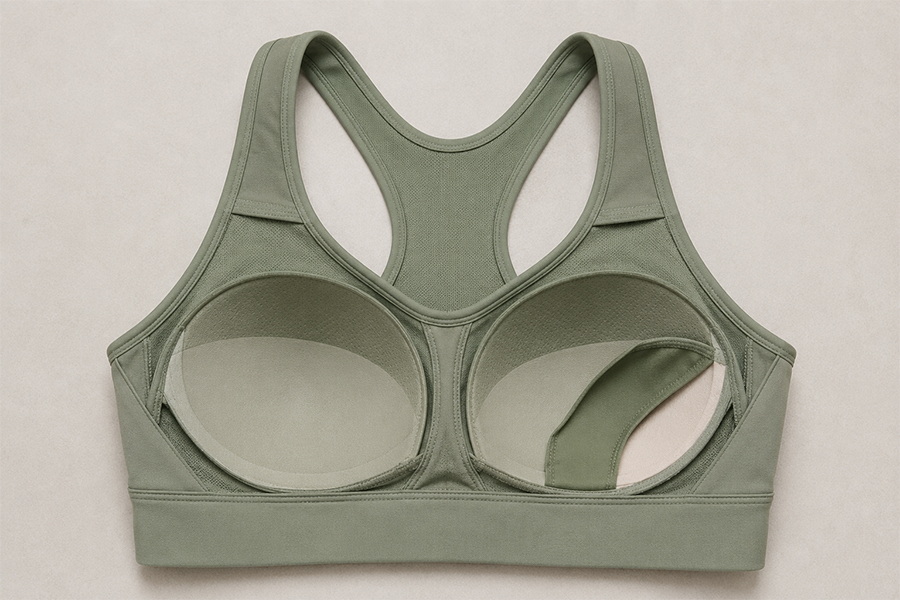
Start with a definition a development team can work from. A pocketed sports bra is a bra with an internal pocket that can hold a soft form or pad. The same construction is described in the market as a mastectomy sports bra when it is developed for wearers who choose to use a form. For the pattern team, the pocket is a structural layer, not a decoration sewn in at the end of the project.
Four decisions drive the pattern. The first is opening direction: a vertical side opening, a top opening under the band, or a centre access point each changes how the pocket sits and how the edge behaves under stretch. The second is opening height and length, where a longer opening is easier to use but leaves more edge to stabilise, while a short opening reduces bulk but can be harder to load. The third is layer count, since a single pocket layer keeps weight down, while a double or lined pocket holds shape better but adds bulk and changes how the front panel stretches. The fourth is anchoring, because a pocket stitched into the underband and side seams behaves differently from a pocket that floats inside the front panel.
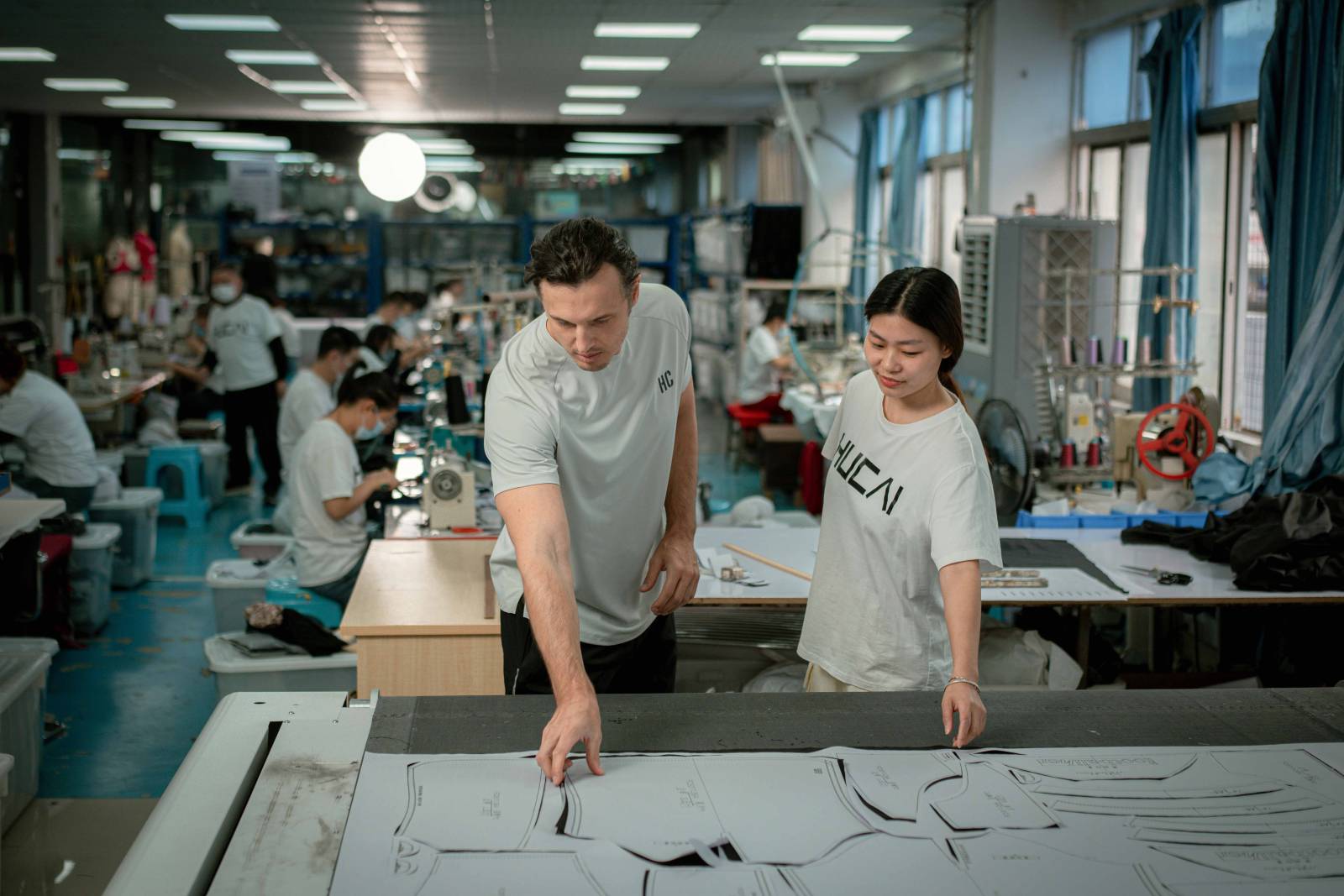
These four points belong on the pattern before anything else, because they decide how the outer support geometry reacts. In HUCAI Sportswear's development room, pocket placement and opening direction are set as a separate pattern layer with their own seam allowance, so the outer support geometry is not pulled out of shape when the pocket is added.
Support Architecture: Underband, Side Control and Cup Solutions
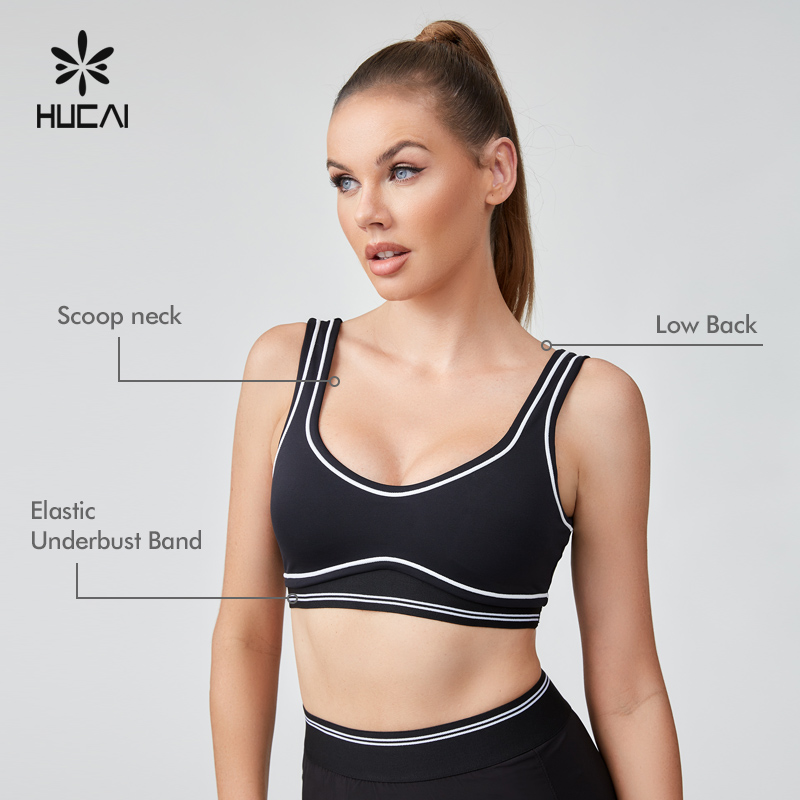
A pocket adds structure to the front of the bra, and that structure has to be carried by the support system rather than by the outer fabric alone. Three areas carry most of that load. The underband is the first: its width, tension, and recovery decide how much of the pocket's weight is supported, and a band calibrated for a plain bra may behave differently once an internal pocket and a form are added. Side and underarm control is the second: coverage through the underarm and side seam helps the front panel stay in place and reduces the chance of the pocket rotating during movement. The cup approach is the third: brands typically choose between a moulded cup, a removable pad, or an internal sling that supports the pocket, and each choice changes both the pattern and the grading.
This is where a pocketed version usually diverges most from the base bra. A practical approach is to keep one outer bra block and develop the support around the pocket as a defined module, so the pocketed and non-pocketed versions can share fabric and trims. Brands planning a support-level range can review the sports bra support level collection to keep those modules consistent across studio, training, and running directions.
Fit Stability: What Changes Before the Wearer Moves
Static fit can look correct and still fail once the wearer moves. In a pocketed bra, the first thing a fit trial should test is the empty pocket, because an empty pocket behaves differently from a loaded one. Tension across the front panel changes when a form is added, so the sample should be reviewed in both states rather than only one.
Four stability points are worth reviewing in a structured way. Look at the opening behaviour, that is, whether the pocket edge gapes, folds, or curls at rest and under light stretch. Look at band roll-down and side shift after a short wear period, since these usually trace back to band tension rather than to the pocket itself. Look at comfort at the opening edge against the skin, which depends heavily on the seam finish chosen for a smooth construction. Finally, compare the pocketed front panel against the base bra, because the extra layer often changes how the front reads even when the measurement chart is unchanged.
A fit trial is a review of the product against confirmed measurements; it is not a guarantee of fit for every wearer. The purpose is to catch the construction causes, such as edge finish, band tension, and pocket anchoring, before the pattern is graded.
What Must Be Defined Before Sampling
Most pocketed-bra sample revisions come from unresolved construction decisions rather than from fabric choice. Before a sample is cut, the brief should lock a short list of items: pocket opening direction, height, and length; pocket layer count, lining, and edge finish; pocket anchor points on the band and side seams; underband width, tension, and recovery target; the cup solution, whether moulded, removable, or an internal sling; grading rules around the pocket and the opening; and the fabric sets for shell, lining, and pocket, together with label and trim placement.
Among these, grading around the pocket is the step teams most often postpone, because it is invisible in a single-size sample. It only appears when the pattern is scaled, which is exactly when a revision becomes expensive. HUCAI Sportswear reviews these points against a tech pack or a reference-led brief and flags the ones that are not yet defined, so the first sample tests the construction instead of guessing it. Buyers who are starting from reference images rather than a full tech pack can use ODM development to turn the references into a pocket specification first.
What Wear Testing and Fit Trials Expose
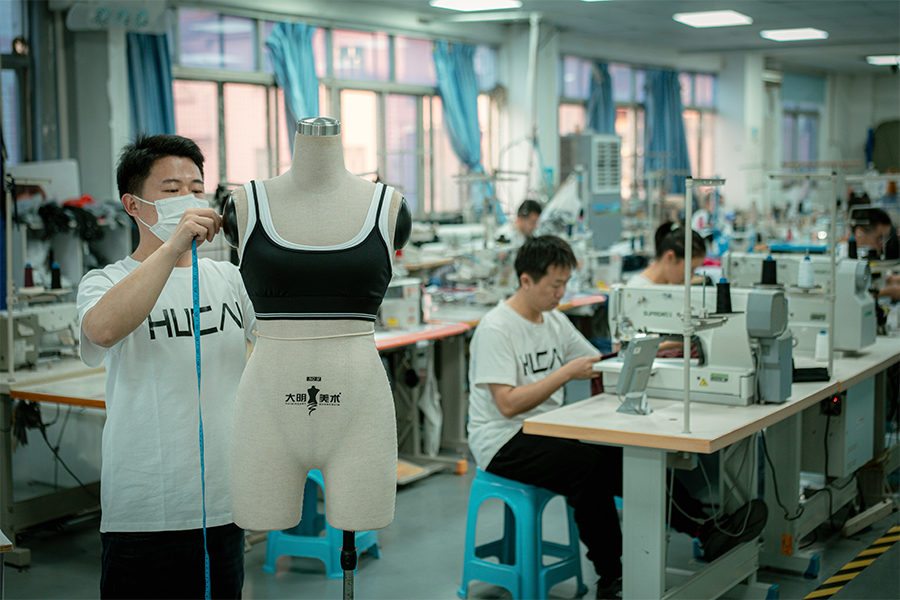
A single fit session is not enough for a pocketed construction. Wear testing tends to surface issues that fit photos hide. Movement checks come first: begin with light studio movement, then a more active sequence, and observe band position, side shift, and any rotation of the pocket. Donning and removal is second, and it is a product-use question the brand defines with its own wear-test panel: whether the opening is practical to access without distorting the front panel.
Repeat wear and laundering is third, and it matters more here than in a plain bra. The pocket lining and the shell may recover at different rates after washing, which is why opening-edge stability and band recovery should be observed across repeated cycles rather than once. The interaction with an outer layer is fourth: how the pocketed bra sits under a top, and whether the extra bulk changes the silhouette the brand is showing on a product page.
These checks are the practical reason to keep sample reviews structured, and they follow the same review logic used in the sample development policy. They also explain why a pocket should be developed as part of the base pattern rather than added after the outer bra is already approved.

Material and Construction Choices That Affect Pocket Behaviour
Fabric decisions change how a pocket behaves almost as much as the pattern does. Stretch and recovery come first: a soft, high-recovery knit holds a pocket edge better than a low-recovery fabric that stays stretched after wear. Edge softness is next, since the lining and the opening finish affect comfort where the pocket meets the skin, and brands frequently ask for a smooth construction at the opening for this reason. Opacity is third, because an added pocket layer changes how the front panel reads, so opacity should be reviewed with the pocket in place rather than on the shell alone.
Construction comes with the fabric. The seam type used to close the pocket, and the way the band is attached, decide how much of the pocket's weight the support system actually carries. Trims such as braided elastics, sliders, and soft seam tapes should be selected for the same stretch direction as the shell, so the pocket and the band move together instead of fighting each other. HUCAI Sportswear reviews fabric and trims together against the pocket specification, and recycled or certified material options can be reviewed based on project requirements and available documentation.
Decision Check: Is This Pocketed Sports Bra Direction Ready for Sampling?
Before requesting samples, confirm the following:
- Opening specification: pocket opening direction, height, length, and finish are confirmed.
- Pocket build: layer count, lining, and anchor points on the band and side seams are defined.
- Support structure: underband width, tension, and side-support behaviour are specified for the pocketed version.
- Cup solution: moulded, removable, or internal sling approach is decided, not left open.
- Grading rules: how the pocket and opening scale across the size range is confirmed.
If three or more of these are confirmed, the direction is ready for a structured sample request. If fewer than three are resolved, defining them first will usually reduce sample revision cycles and control cost.
Moving From a Brief to a Pocket Specification
Buyers with a defined brief can send measurements, construction details, fabric direction, and branding specifications for OEM development review. Buyers who are starting from reference images can review the sports bra development process first, then share the target category, size range, and sample priorities so the pocket specification is built before a sample is cut.
Founder's Technical Insight: Jean Yuan's Development Note
The most common early mistake I see in pocketed bra projects is treating the pocket as a final step. A team approves the outer bra first, then asks for an internal pocket to be added, and the first sample comes back with a band that pulls, an opening edge that curls after washing, or a front panel that feels different from the original bra.
The cause is usually mechanical rather than cosmetic. Adding a pocket layer changes the effective stretch of the front panel, and the pocket lining rarely recovers at exactly the same rate as the shell. When the two fabrics recover differently, the opening edge rolls; when the front panel stiffens, it loads the underband more than the original block was set for. In my experience, that is why a pocket that looks simple in a sketch becomes difficult in bulk.
What I ask the development team to do before cutting: cut the pocket and the shell as one pattern system, confirm band tension with the pocket both empty and loaded, and add a pre-production check for opening-edge stability and band recovery after laundering. In HUCAI Sportswear's sample room, we treat the pocket as part of the base block rather than as an accessory, because that is the version that holds up in bulk.
FAQ
What is a mastectomy sports bra in product-development terms?
It is a pocketed sports bra: a bra with an internal pocket that can hold a soft form or pad, developed as a garment for wearers who choose to use a form. The development work focuses on pocket construction, support structure, and fit stability. It is a garment product, not a medical device, and the development decisions in this article are manufacturing decisions rather than medical guidance.
Is OEM or ODM a better fit for a pocketed sports bra project?
It depends on how complete your inputs are. If you already have a tech pack, a measurement chart, and defined construction details, OEM review is the right starting point. If you are working from reference images and an early concept, ODM development helps turn those references into a pocket specification, fabric direction, and sample priorities first.
What should brands define before sampling a pocketed bra?
Confirm pocket opening direction, height, and finish; pocket layer count and anchor points; underband width, tension, and recovery target; the cup solution; and the grading rules around the pocket. These points are usually fixed before cutting, because they are the details most likely to drive a sample revision.
How does pocket construction change the pattern?
It adds a structural layer to the front panel, which changes the effective stretch of that panel and can change how the underband carries load. Opening direction, layer count, and anchoring method each require their own pattern decisions, and the pocket is usually set as a separate pattern layer so the outer support geometry is not distorted.
How long does sample development usually take?
Sample development usually takes about 10-15 days, depending on style, fabric, trim, logo, revision requirements, and confirmed details. For a pocketed bra, the timeline is shorter when the pocket and support specifications are already defined before the sample is requested.
What is the MOQ for a pocketed sports bra?
The current public MOQ starts from 200 pcs per style, while final color, size, fabric, trim, and customization planning depends on the confirmed project. Pocketed construction, lining choice, and the size range can all affect how the order is planned.
What usually causes fit revisions in pocketed bra development?
Most revisions trace back to underband tension, opening-edge behaviour, or grading around the pocket rather than to the visible design. Reviewing an empty pocket and a loaded pocket separately, and checking band recovery after washing, helps catch these causes before bulk production.
Can you provide certification documentation for this category?
Current certification information can be reviewed during supplier evaluation based on the project and documentation requirements. Certification status, scope, and relevance are confirmed against the specific project rather than assumed for every order.
Final Takeaway
A pocketed sports bra is decided by its hidden construction, not by its front design. Pocket opening direction and finish, layer count and anchoring, underband and side-support structure, and the cup solution are the variables that determine whether a sample passes a fit trial and whether the graded pattern holds up in bulk. For most growing brands, the practical next step is to define these points before cutting, so the first sample tests a real specification rather than an assumption. Developing the pocket as part of the base block, as HUCAI Sportswear does in its sample room, is the version most likely to stay consistent from sample to bulk.
Next step: have a tech pack and defined measurements for a pocketed bra? Send them for custom sports bra manufacturing review. Working from reference images instead? Start with the development note above, then share your category, size range, and pocket priorities so the specification can be built before sampling.
About HUCAI Sportswear
- Founded in 1998, HUCAI Sportswear is a women's activewear and sportswear manufacturer based in Dongguan, China.
- OEM and ODM development support for sports bras, leggings, shorts, tops, and matching sets.
- Structured sample development, fabric and trim review, and sample-to-bulk consistency control.
- AQL 2.5-based inspection as part of the quality workflow.
The current public MOQ starts from 200 pcs per style, while final color, size, fabric, trim, and customization planning depends on the confirmed project.
Current certification information can be reviewed during supplier evaluation based on the project and documentation requirements.